12month15day after tomorrow16On the day, the Central Economic Work Conference was held in Beijing, during which it was repeatedly proposed to vigorously boost market confidence.2023What measures are expected to boost market confidence in the coming year? The meeting identified 'expanding domestic demand and consumption' as the top priority for next year. In addition, recently, the Central Committee and the State Council jointly issued the 'Outline of the Strategic Plan for Expanding Domestic Demand (2022 - 2035The (2023) Annual Report also made a systematic plan on how to expand consumption. What is your outlook for the subsequent consumer sector? Which sub-sectors are worth special attention?
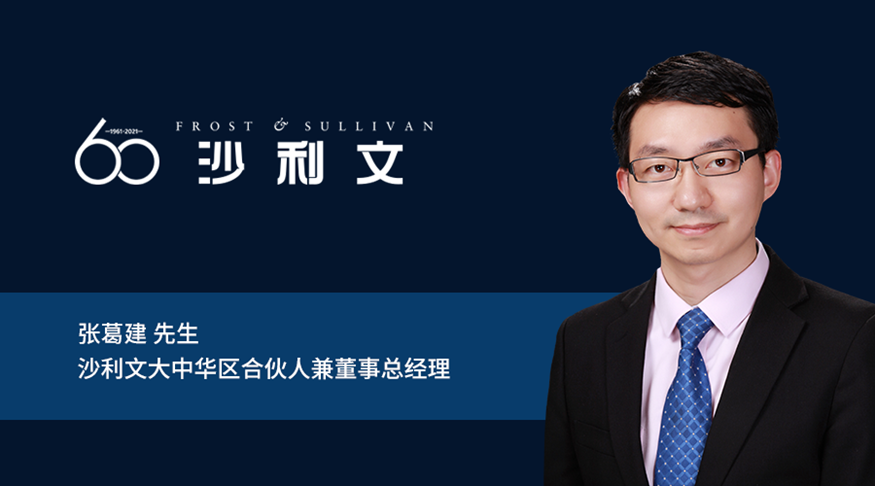
Frost & SullivanFrost & SullivanZhang Jian, Partner and Managing Director of Frost & Sullivan's Greater China Region, was interviewed by Titanium Media for the special edition of "Ten Years of Tribute" in the Capital Market Observation column.2023The development of China's capital market in [year].
Titanium Media
Q
12month15day after tomorrow16On the day, the Central Economic Work Conference was held in Beijing, where it was repeatedly proposed to vigorously boost market confidence.2023What measures in the year are worth looking forward to that could boost market confidence?
Zhang Jian stated that, given the current economic environment, China's economy will face short-term challenges from low overseas economic expectations and tightening policies next year. However, in the long run, China's inflation level is relativelySteady, and there will be no rapid tightening for the time being. In addition, with the implementation of the 'New Ten Measures',2023The macroeconomic development in the year will witness relatively rapid growth.
From an industry perspective,2023The year's noteworthy boosting focuses are on the healthcare industry, real estate industry, and livelihood/consumer-related industries. The pharmaceutical industry will gradually increase its demand for drugs and medical devices related to epidemic prevention as the epidemic prevention policies are optimized, and will expand outward towards the use of drugs for COVID-19 treatment. There are mainly two logical aspects involved, namely COVID-19-specific drugs and emergency supplies. Specifically, this includes the related industrial chains of Azvudine, antipyretics, and pain-relieving drugs.
Regarding the livelihood 'consumption' related industries, the Central Economic Work Conference pointed out that efforts need to be made on domestic demand. Restoring and expanding consumption will be given priority, with attention focused on improving housing, elderly care services, culture and media, etc.
Among them, the real estate industry deserves special attention. It emphasizes the prevention of risks in the real estate market and requires promoting a smooth transition of the real estate industry towards a new development model. As a pillar of the national economy, preventing real estate market risks is key to effectively preventing major economic crises and financial risks. A new development model for the real estate industry has been basically established. The key aspects of the 'new' model are mainly reflected in two areas. Firstly, the real estate market must have both a market presence and a robust housing system with guaranteed affordability. This implies that related policies such as rental security housing and long-term rentals are expected to be strengthened in the future. Secondly, China's real estate development model will bid farewell to the old development pattern characterized by high debt, leverage, and turnover rates.
The new real estate model emphasizes ensuring people's livelihoods and the stability and safety of high-quality real estate enterprises. It is expected that2023The overall financing environment for enterprises in the year will be greatly and substantially improved, helping high-quality real estate developers to restore their normal operational capabilities and further enter a track of stable development.
Q
This year's Central Economic Work Conference identified 'expanding domestic demand and consumption' as the top priority for next year. In addition, recently, the Central Committee and the State Council jointly issued the 'Outline of the Strategic Plan for Expanding Domestic Demand (2022 - 2035The (2023) Annual Report also made a systematic plan on how to expand consumption. What is your outlook for the subsequent consumer sector? Which sub-sectors are worth special attention?
As China further optimizes its epidemic prevention and control policies and measures, it is expected that the consumption sector will2023It will gradually and significantly boost economic growth starting from the year. Zhang Jian believes that the subsequent consumption sector will enter a new development stage, which is specifically reflected in the following three points:
Firstly, the consumer sector has great potential for future growth. Our country has the world's largest middle-income group, with per capita GDP having exceeded1.2The amount of ten million US dollars marks an important step towards joining the ranks of high-income countries, while also indicating that the quantity and structure of consumption among our residents are changing, and we are about to enter a new phase. In terms of policy, China's macro policies will further leverage efforts from both supply and demand sides to better unleash consumer potential. The optimization and upgrading of consumer spending combined with modern production methods make China one of the most growth-oriented consumer markets in the world at present.
Second, the service consumption segment is accelerating development and continuously expanding. The proposal of the 'Outline Strategic Plan for Expanding Domestic Demand' not only conforms to the trend of consumption upgrading but also cultivates new types of consumption while enhancing traditional ones. Before the pandemic (2019The proportion of residents' service consumption in (annual) is about46%Service consumption in healthcare, education, culture and tourism, leisure, elderly care, sports, and other sectors has long become a new growth point for urban and rural residents' consumption. It is expected that in the future5During the year, the proportion of consumer spending on resident services is expected to rise to50%The growth rate of service consumption will continue to be higher than that of commodity consumption, thereby becoming an important driving force supporting consumption growth and the accelerated construction of a new service industry system.
Thirdly, the upgrade of consumption channel platforms is promoting new digital consumption formats. Before the COVID-19 pandemic, China's e-commerce retail sales accounted for nearly half of global e-commerce sales, making it one of the countries with a relatively high level of digitalization; the outbreak of the pandemic has further accelerated the trend of consumers shifting from traditional retail to online retail. Data from the National Bureau of Statistics shows that2021In [year], the national online retail sales reached13.1trillion yuan, a year-on-year increase14.1%Among them, the online retail sales of physical goods reached10.8trillion yuan, breaking through for the first time10trillion yuan, a year-on-year increase12%, average growth over two years13%The growth rate is significantly higher than that of offline consumption.
The continuous deepening application of a new round of technological revolution has been driving the increasing popularization of online consumption in China. For example: social e-commerce, live streaming sales, community group buying, and so on, have made new online consumption innovations more active, consumer scenarios increasingly rich, and created many new consumer demands. Online 'product recommendations', offline traffic diversion, and the integrated development of online and offline commodity consumption are accelerating.
Zhang Jian believes that with the development of new technologies, cultural entertainment (wearable devices, smart wearables),3CDigital, smart home, and other tracks will all perform well. They facilitate digital consumers' access to the internet anytime, anywhere, and as needed, thereby promoting digital consumption; Derived from traditional healthcare, food and beverages, one-person dining, prefabricated foods, green foods0sugar0Fats, healthy snacks, and other products are also expected to be exciting areas. This is a new direction emerging from the heightened consumer health awareness.
Q
Over the past decade, what do you think has been the biggest change in China's capital market? If you were to share one of your most important investment insights, what would it be?
Zhang Jian pointed out that, first of all, from a data perspective, the biggest change in China's capital market is the expansion of market size. In the past decade, ChinaAThe number of listed companies on the stock market has increased significantly.2012Year-end, Chinese listed companies2,494home, to2022year11month22The day has broken through5,000Home, the number of listed companies ranks second globally. In terms of market value,2012At the end of the year, the market value of China's stock market was approximately23trillion yuan, to2021Reach by the end of the year91.7trillion yuan. And2012China inGDPapproximate54trillion yuan2021yearGDPThen reach114Trillion yuan. Compared with China's economic growth, the market value scale of China's capital market has increased significantly faster than the growth of the Chinese economy.
Secondly, from a structural perspective, the market structure of China's capital market is more diversified. While the total market value has increased, significant changes have also taken place in the market structure. Over these ten years, we merged the SME board and main board of the Shenzhen Stock Exchange into the main board. After the merger, the Chinese market has presented a scenario with the main board, Science and Technology Innovation Board (STAR Market), Growth Enterprise Market (GEM), and Beijing Stock Exchange (BSE).The market structure includes the New Third Board, regional exchanges, and other diversified markets. These markets are gradually being regulated and developing accordingly.
When talking about the most important investment insight he wants to share, Zhang Jian said that understanding one's own risk tolerance is very important.
Firstly, the ability to resist risks is not equal to risk preference; people often confuse the two. Risk preference refers to an individual's liking or dislike for risk, that is, whether one prefers or avoids risk. Just as everyone's personality varies individually, different investors also have varying attitudes towards risk. If someone tends to believe that uncertainty brings opportunities to them, they are considered risk-averse investors; if they tend to think that uncertainty brings unease, then they are risk-averse investors.
However, if there is insufficient capacity to bear the risks behind an overly high risk appetite, this financial management mindset is no different from gambling. Risk tolerance refers to a person's ability to bear the risks they are exposed to, with the core principle being that when risks occur, one can withstand how much investment loss without affecting their normal life. Risk tolerance needs to be comprehensively measured and is related to personal capabilities, asset status, family situation, work situation, etc.
The importance of understanding one's own risk tolerance can be exemplified by the 'grey rhino' event. The 'grey rhino' refers to those high-probability risks that are often highlighted but not given sufficient attention. For example, real estate bubbles occur when housing prices rise and lead to residents taking out loans to buy homes, but they overestimate their risk tolerance. Excessive loans can also lead to the ultimate real estate bubble.
In the case of 'black swan' events, it is also very important to understand one's own risk resistance capabilities. A 'black swan' event refers to an extremely unpredictable and unusual occurrence that usually triggers a chain reaction of negative market responses or even a revolution. For example, the COVID-19 pandemic in recent years has left the world economy still facing many uncertainties. Therefore, understanding one's own risk resistance capabilities and continuously improving risk countermeasures are necessary to analyze the impact of uncertainty on us during emergencies, adopt effective strategies to prevent unknown risks, and avoid greater losses.

*This article is reprinted from 'Titanium Media', with the original title being ' Stabilizing growth, expanding domestic demand, and boosting confidence2023What new "long slopes and heavy snow" opportunities are there in the year? | Weekly Capital Market Observation >> (Click 'Read the Original Article' at the end of the text to read the full report).