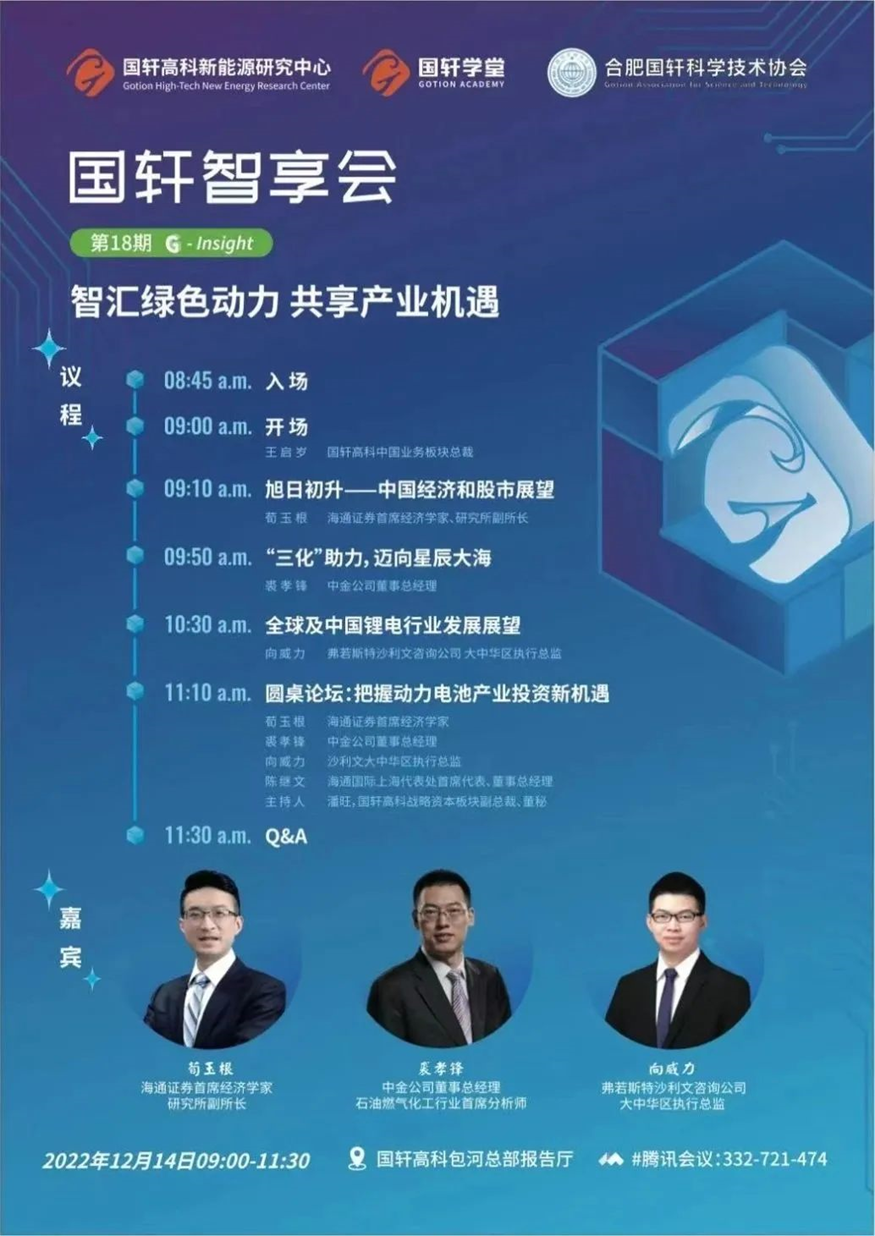
Guoxuan Smart Sharing Session18periodG-Insight
2011In 2012, China was the first in the world to promote the industrialization of new energy vehicles. By taking a different path, Chinese enterprises gained a very valuable time window and won a rare first-mover advantage.2022year, after10After years of development, China's production of new energy vehicles and power batteries has become the world's largest.2022year1 - 10In China, the sales volume of new energy vehicles reached52810,000 units, accounting for China's automobile sales in the same period24%Year-on-year growth1.1times;2022year1 - 10Monthly installed capacity of power batteries in China224GWh, accounting for nearly60%.
In the process of industrial development, Chinese enterprises have undergone technological transformation, accurately selected technical routes, and grasped the directions of electrification, networking, and intelligence. The new energy vehicle industry in China has developed rapidly with policy support, winning high recognition from major global automobile manufacturers and companies. 12month14On the day, Guoxuan Smart Sharing Conference specially held “Integrating Green Power, Sharing Industrial Opportunities”18periodG-InsightEvent, Frost & SullivanFrost & Sullivan,The Executive Director of Frost & Sullivan Greater China, Mr. Xiang Wei, was invited to participate in the event. He shared insights on the development trends of the lithium battery market and participated in a roundtable forum.
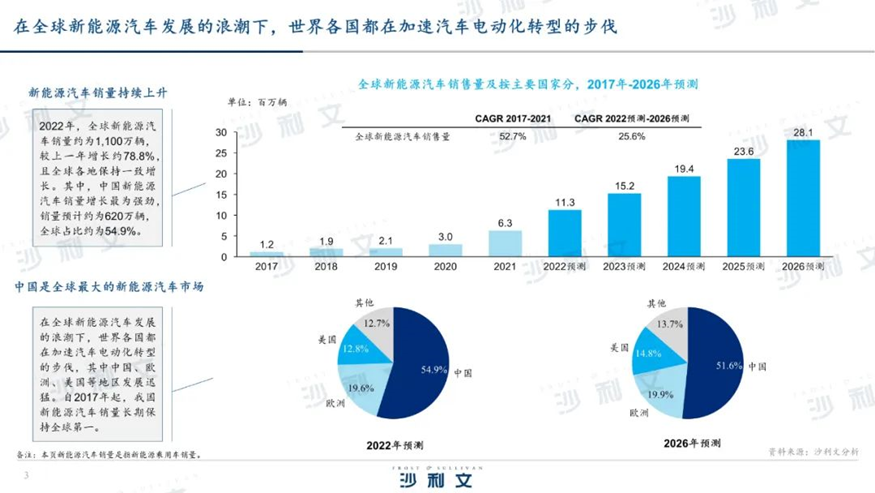
Xiang Weili stated that the development of the entire power battery industry cannot be separated from the booming global new energy vehicle industry. Under the wave of global new energy vehicle development, countries around the world are accelerating their pace of electrification transformation of automobiles.
Data shows that globally, the overall new energy vehicle market has maintained over50%The annual compound growth rate has increased,2022Expected to reach in year1,13010,000 units, compared to2021The year-on-year growth was nearly80%Driven by global environmental protection issues and the energy crisis, the overall sales volume of new energy vehicles will continue to grow globally. It is expected that by2026more than2,80010,000 units,2022till2026The annual compound growth rate for the year will still remain at25%As mentioned above, regions such as China, Europe, and the United States are developing rapidly, starting from2017Since the beginning of this year, China's new energy vehicle sales have long maintained first place globally.
"Driven by policies, technology, and infrastructure development, the new energy vehicle industry will develop around three major aspects: 'energy, intelligence, and connectivity'," said Xiang Wei.
In terms of the types of new energy vehicles, pure electric vehicles have always been the most popular type in both the global and Chinese new energy vehicle markets. They account for70%Market share on the left and right. At the same time, pure electric vehicles will continue to be favored by consumers due to the increasing awareness of new energy vehicles among consumers, support from relevant policies, the improvement of charging infrastructure construction, and the advancement of advanced technologies.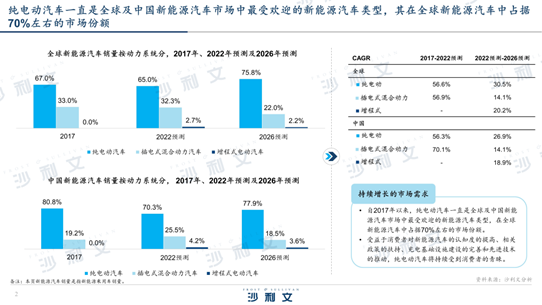
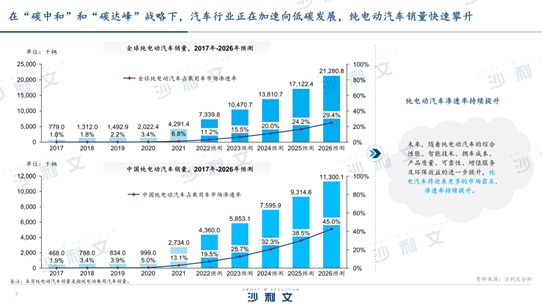
Xiang Weili pointed out that under the strategies of 'carbon neutrality' and 'carbon peak', the automotive industry is accelerating its transition to low-carbon development, with the sales volume of pure electric vehicles rapidly climbing.2022In [year], global sales of pure electric vehicles are expected to reach73410,000 units, expected by2026The year will exceed2,10010,000 units.
In terms of penetration rate, China's penetration rate of pure electric vehicles is much higher than the global average.2022Expected to reach in year19.5%,2026Expected to reach in year45.0%. In the future, with further improvements in the comprehensive performance, intelligent technology, ownership cost, product quality, reliability, value-added services, and environmental benefits of pure electric vehicles, there will be more market demand for pure electric cars, leading to a continuous increase in penetration rates.
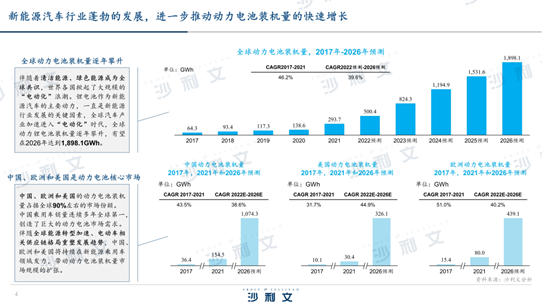
With clean energy and green energy becoming a global consensus, countries around the world have embarked on a large-scale 'electrification' wave. Lithium batteries, as the main power source for new energy vehicles, have always been a key factor in the development of the new energy industry.
The global automotive industry is accelerating into the 'electrification' era, with the installed capacity of power lithium batteries rising year by year, and it is expected that in2026Annual achievement1,898.1 GWhData shows that China, Europe, and the United States are the core markets for power batteries, with installed capacity accounting for the majority of the global total.90%Market share on both the left and right sides. Among them, China's passenger vehicle sales have ranked first globally for many consecutive years, creating a huge demand for power batteries. In the future, driven by the accelerating global energy transition and the reshaping of the electric vehicle-related supply chain pattern, China, Europe, and the United States will continue to make efforts in the field of new energy passenger vehicles, driving the expansion of the market scale for power battery installations.
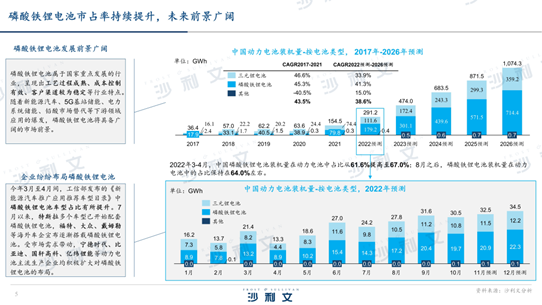
According to Xiang Weili, lithium iron phosphate batteries belong to an industry that is key to national development. They exhibit industry characteristics such as mature processing technology, effective cost control, and relatively stable customer channels. .2022year3month to4During the month, the proportion of lithium iron phosphate battery models in the 'Recommended Models for New Energy Vehicle Promotion and Application' released by the Ministry of Industry and Information Technology increased. With the continuous rise in global lithium prices, lithium iron phosphate batteries have seen a rapid increase in terminal penetration rate due to their cost-performance advantages and have become the mainstream market trend.7Since January, multiple models of Tesla and other brands have started to be equipped with lithium iron phosphate batteries. Overseas automakers such as Ford, Volkswagen, and Daimler have also announced that they will gradually begin incorporating lithium iron phosphate batteries into their fleets. Driven by market demand, mainstream power battery manufacturers such as CATL, BYD, Guoxuan High-Tech, Contemporary Amperex Technology Co., Ltd., and EVE Energy are actively expanding their layout for lithium iron phosphate batteries.
Xiang Weili believes that with new energy vehicles,5GThe explosive growth in downstream applications such as base station energy storage, power system energy storage, and lead-acid market substitution will enable lithium iron phosphate batteries to have broad market prospects.
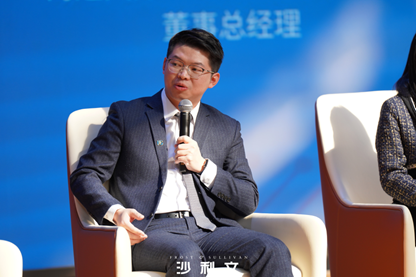
Executive Director, Greater China, Frost & Sullivan To power
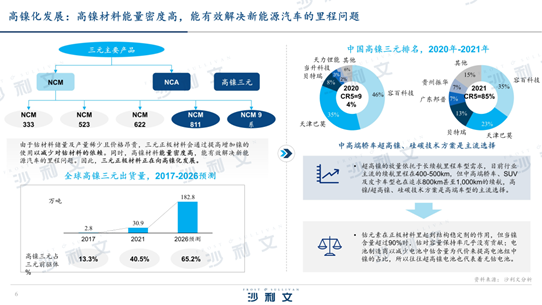
"The high nickel content of ternary batteries is also a trend that Frost & Sullivan has been following. In order to meet the range requirements of the electric vehicle industry, the development of high nickel content is an important direction for ternary batteries." Further explaining to Wei Li, due to the scarcity and high price of cobalt materials, ternary cathode materials will increase nickel usage to reduce dependence on cobalt. At the same time, high-nickel materials have a high energy density and can effectively solve the range problem of new energy vehicles.
In recent years, with811andNCAThe shipments of high-nickel ternary materials, represented by this company, continue to rise. Globally, the proportion of high-nickel ternary materials in the overall ternary materials market2017year13.3%grows to2021year40.5%, is expected to arrive2026The year will grow to65.2%.
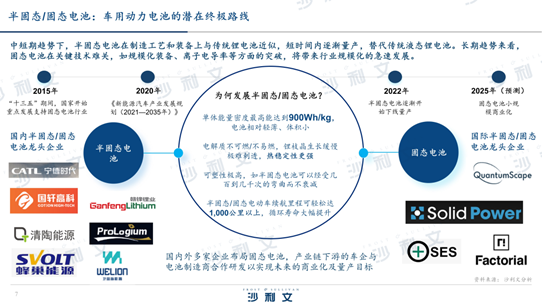
It is also worth mentioning the semi-solid state/The development of solid-state batteries, semi-solid-state/The energy density of solid-state battery cells can reach up to900 Wh/kgThe battery is relatively lightweight and thin, with a small volume, stronger thermal stability, extremely high plasticity, and is semi-solid-state./The cruising range of electric vehicles with solid-state batteries can easily reach1,000For distances over kilometers, the cycle life is significantly improved.
Based on the aforementioned advantages, Xiang Wei believes that in the medium to short term trend, semi-solid-state batteries are similar to traditional lithium batteries in terms of manufacturing process and equipment. With gradual mass production in the short term, they are expected to continue to be installed in high-end and mid-high-end new energy vehicles. In the long term, if solid-state batteries can achieve breakthroughs in key technical challenges such as large-scale equipment and ionic conductivity, it will bring about rapid industry scaling.
According to a study by Frost & Sullivan, due to policy support and the continuous expansion of clean energy power generation layouts, the electrochemical energy storage industry has seen significant growth in recent years in several countries and regions.2021In [year], the global newly installed capacity of energy storage batteries reached53.5 GWh, is expected to be launched in2026Further increased to682.6 GWhThe compound average annual growth rate reached58.5%Currently, exceeding20A government department has issued documents encouraging or mandating the use of energy storage systems in clean energy power plants.
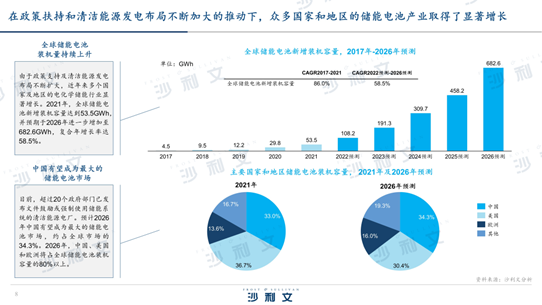
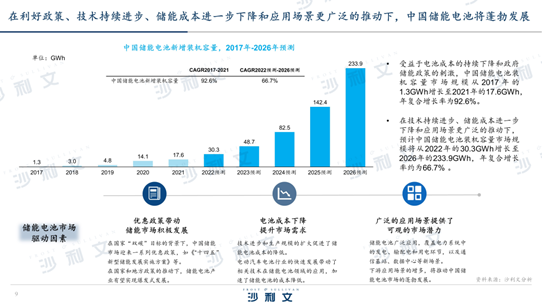
Benefiting from the continuous decline in battery costs and the stimulus of government energy storage policies, the market scale of installed capacity for energy storage batteries in China has grown from2017year1.3GWhGrew to2021year17.6 GWhThe compound average annual growth rate is92.6%. Driven by continuous technological progress, further reduction in energy storage costs, and broader application scenarios, the market scale of installed energy storage battery capacity in China is expected to2022year30.3 GWhGrew to2026year233.9 GWhThe compound average annual growth rate is about66.7%At the same time, it is expected that by2026In 2023, China is expected to become the largest energy storage battery market, accounting for approximately34.3%"With rising electricity costs, mature energy storage technology, and reduced costs, the global demand for energy storage will grow at a high rate, and the penetration rate of energy storage will continue to increase," said Xiang Wei.
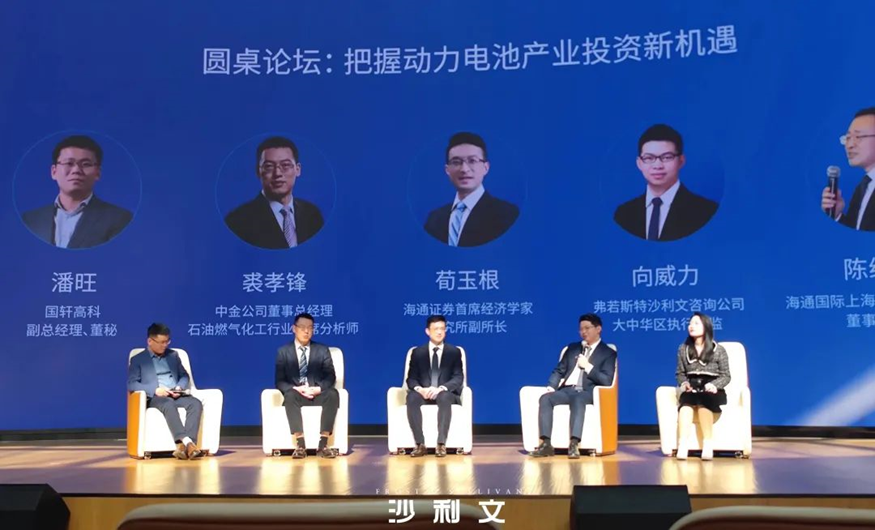
Photos from the Roundtable Forum
During the subsequent roundtable discussion, we joined forces with Xun Yugen, Chief Economist at Haitong Securities, Xi Xiaofeng, Managing Director of CICC, and Yu Meihan, Researcher at Haitong Securities' Research Institute, to discuss (1)2022Characteristics of the new energy industry in [year] and2023Annual development trends and future outlook;2What new major investment opportunities in the new energy vehicle and power battery industries are brought about by the electrification and intelligence of automobiles;3) How to formulate upstream mineral, raw material, and equipment investment strategies;4How overseas capital serves battery enterprise go-global efforts;5A discussion was held on topics such as the overseas expansion advice for Guoxuan High-Tech Battery Enterprises, aiming to explore new investment opportunities in the power battery industry.
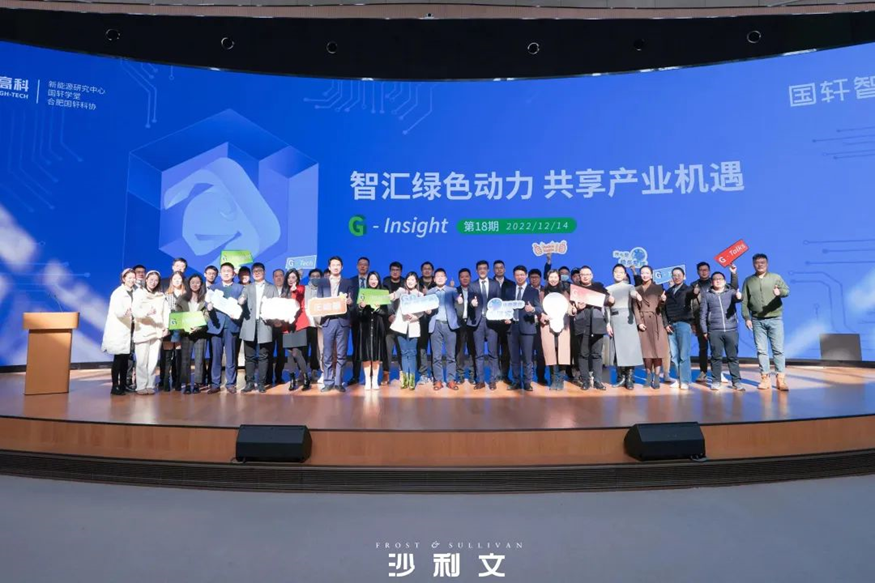
paragraph18Group photo of conference attendees at the Qiguo Xuan Smart Sharing Conference