In recent years, traditional generic drug companies have seen a decline in performance under the impact of centralized procurement. At the same time, there has also been a significant transformation in the domestic innovation drug environment.BiotechThe difficulty of financing has increased, and the industry has encountered a 'cold winter'. Whether the pharmaceutical industry still possesses the characteristics of a 'long uphill climb with thick snow', has become a hot topic of concern.2022In the context of a "cold winter" for new drug capital, how can pharmaceutical companies warm up and return to profitability?2023What tracks in the healthcare industry are worth paying attention to in 2023?
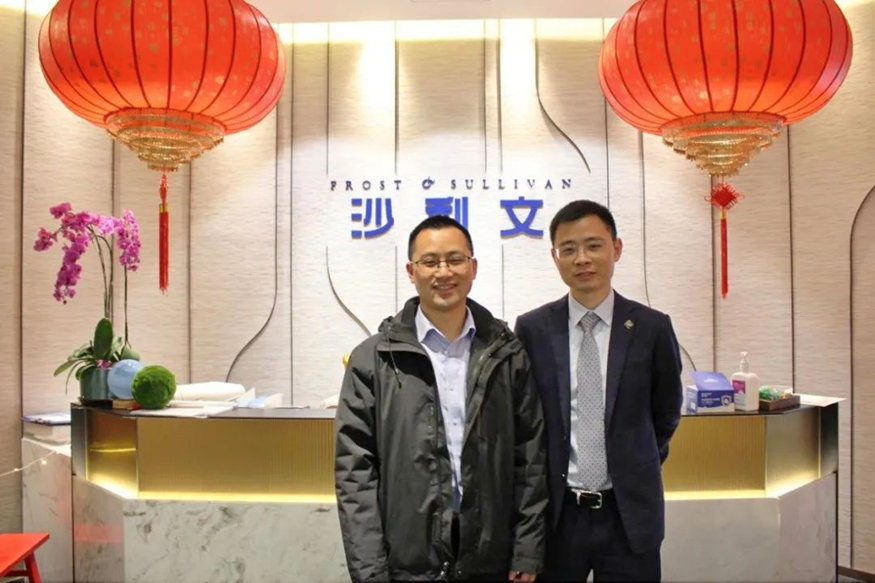
Frost & SullivanFrost & SullivanMao Hua, Partner and Managing Director of Frost & Sullivan Greater China, was interviewed by "Dingxiangyuan".InsightfuldatabaseBU HeadquartersInterview with Wang Hui, Relying on its years of experience and industry insights in growth consulting for pharmaceutical companies, we share the current development status and trends of the pharmaceutical industry.
Fragrant Osmanthus GardenInsightfuldatabase
Wang Hui: Postponed recently2022The national medical insurance negotiation has conveyed positive signals, and there have also been signs of moderation in the centralized procurement of generic drugs, gradually reducing the impact on enterprises. Do you think this is a positive sign for the development of the pharmaceutical industry? What are your thoughts on this?
It is mainly divided into two levels.
At the first level, this is definitely a positive signal. Previously, centralized procurement had definitely reached the 'heel', but now it may only reach the 'knee'. This could be a positive sign. National regulatory authorities have also realized that if prices are cut indiscriminately, it may indeed affect supply and also the enthusiasm of enterprises to bid, which is not conducive to the original intention of centralized procurement policy design.
The second level is that centralized procurement is a strategy for the operation of China's pharmaceutical industry at this stage, and it is a necessary phase. Firstly, while the state maintains the 'pool' of medical insurance funds, it also needs to allow newer therapies with clinical value to enter. Therefore, in order for expensive cell and gene therapies to be included in medical insurance, there is no need to squeeze out the space for some products that have been relatively more sustainable. Secondly, for enterprises, products that sell well at high prices definitely do not need to enter centralized procurement. After all, enterprises do not want to see adjustments in their supply chain and organizational structure due to inclusion in centralized procurement, and they may not necessarily be able to increase profits.
However, if a company continues to develop according to the previous model, it is indeed not conducive to the improvement of the internal R&D team. Therefore, something that is very routine or process-oriented is needed. It only requires product assurance and does not require the company to do much marketing or public relations. The main focus should be placed on innovation and R&D. Therefore, centralized procurement is neutral and is a path and process within the normal evolution of policies.
Wang Hui: In recent years, traditional generic pharmaceutical companies have seen a decline in performance under the impact of centralized procurement. At the same time, there has also been a significant change in the domestic innovation drug environment.BiotechThe difficulty of financing has increased, and the industry is facing a 'cold winter'. Do you think the pharmaceutical industry still possesses the characteristics of a 'long uphill slope and thick snow'?
I still have a long-term positive outlook on biotechnology, or rather, the pharmaceutical and healthcare industries.
First, traditional biological targeted drugs, small molecule targeted drugs, insulin, monoclonal antibodies, bispecific antibodies, andADCRelatively speaking, it has solved the issue from0reach1Problems, for example,ADCIn the field, companies such as Rongchang Biotech, Bai'ao Tai, and Lepu Biotech have already gone public. Next, it definitely has to be more commercial-oriented, andADCWe are digging into more new targets, so we are more rigorous in our corporate valuation.
Second, for early-stage projects, two have already been approvedCAR-TCell therapy companies have gone public, but gene therapy companies are still relatively small in scale and have not yet moved towardsIPO listingThe stage. So I think,2023yearIPO listingThe market is definitely better than2020The year has to be good, with such a large volumeIPO listingGrowth also takes some time.
Wang Hui: Any industry has its own life cycle, and the pharmaceutical industry is no exception. Currently, the investment and financing market for innovative drugs in China has gradually shifted from the fervor of early years towards rationality. What do you think about this? During this period, what characteristics do you believe pharmaceutical companies need to possess to survive the cold winter and return with warmth?
There are mainly four major aspects.
The first is to return to value. Value can be explained in three ways: The first is clinical value, which refers to the product that a company produces having to satisfy clinical needs. Whether it's an improved new drug or generic medicine, the value of the product or service must be considered; the second is market value, regardless of whether you areBiotech, or still want to beBiopharma companyOne cannot expect to keep burning money on R&D indefinitely; products must be sold in the market to support the team, repay shareholders, and reflect market value. The third type is investment value, where investors hope to invest in future-oriented enterprises, whether it is for financial returns or to complement the industry.
Second is long-termism. Some of the companies that went public earlierLicense in progressSome of the products that came inFast follow-upForeign access routes and targets result in a relatively shorter cycle. However, in the future, as the requirements for homogenization become more stringent and for innovation even higher, companies need to have long-term layout plans.
Third is prematurity. This is in line with long-termism. Enterprises need to plan their products well, considering the sales model during Phase I or II clinical trials—whether they will sell directly or find partners such as Sinopharm, Shanghai Pharmaceutical, or other pharmaceutical companies for distribution; if their own sales channels are not viable, they need to negotiate with the introducer earlier.License expirationEnterprise development planning is recommended to be conducted once a year, as market conditions change every year.
Fourth, it is necessary to utilize a variety of resources to enable enterprises to survive in the capital environment. For exampleCRO firmThe company entersBiotech,BiotechI've also started doing itCRO companyBusiness, including Cinda's own effortsCDMOBusinesses are making full use of their resources to survive.
Wang Hui: As is well known, the market environment is constantly changing, and only by continuous innovation is there a fundamental way out for the development of consulting services. So, how does Frost & Sullivan achieve market foresight, keep up with changes in the economic environment, and meet the most urgent consulting needs of clients?
There are mainly two major points: Firstly, we must adhere to the positioning that guided the establishment of Frost & Sullivan, which is to provide growth consulting services for businesses. , Therefore, continuous self-learning and self-challenge are necessary to discover new technologies, new service models, and the latest trends in the industry. Second, our Frost & Sullivan has split up the organizational structure. The consulting department is separated and only responsible for serving the needs of clients. At the same time, the investment and financing team is also independent, tasked with keeping abreast of the latest trends, viewpoints, policies, companies, and developments in the industry, which are updated regularly.
Wang Hui: The sources of financial capital are unstable, especially in the current environment where the pharmaceutical industry faces a 'cold winter' for capital. It is difficult for financing enterprises and projects to match with suitable financial institutions. How does Frost & Sullivan address issues such as information asymmetry and lack of business trust between investors and financiers? What successful experiences can be shared?
As an information service provider, our Frost & Sullivan must collect perspectives from customers, invested enterprises, and investment firms. We then use our Frost & Sullivan's investment and financing platform as a link to connect enterprises with investors and financiers. As a value judge and third party, our Frost & Sullivan can connect the needs of both parties and find a balanced point through comprehensive analysis. Therefore, it is necessary to understand the customer's needs and the psychological expectations of investors.
Wang Hui: Frost & Sullivan reports are often cited in the prospectuses of healthcare listed companies and primary market research studies. Why does Frost & Sullivan have such a particular preference for the healthcare sector? DingxiangyuanInsightfulDatabase is a professional pharmaceutical data intelligence analysis platform focusing on the pharmaceutical industry. How do you evaluate the value of such platforms in helping the development of the pharmaceutical industry? What improvements do you expect them to make in the future?
First, For our entire global company, the life sciences team accounts for a significant proportion of our business. Secondly, enter2010After a year, China's healthcare industry has become a national strategy and is developing very rapidly, creating many opportunities. Therefore, we at Frost & Sullivan made early arrangements.
Based on our previous analysis, the healthcare industry not only has development prospects now but also in the next decade. Therefore, we are long-term optimistic about China's life science industry. The current capital winter is just a necessary phase in the industrial development process. If it continues to advance at a rapid pace, there will be a large amount of bubbles, which is very unfavorable for the development of the entire industry.
I think lilac gardenInsightfulThe database is really well-built. From when we first started building the doctor community to now,To B, which is where the lilac garden is locatedInsightfulThe database undergoes many iterations and continuous updates, with the updated data being very timely and the interface very user-friendly. It truly meetsInsightful, rather than adatabaseIn addition, industry education has also been carried out, aiming to establish more industrial connections based on databases.
Wang Hui: In the past two months, there has been a rebound and warming trend in the pharmaceutical sector, which had been adjusting for nearly a year and a half. What is your prediction?2023Which pharmaceutical sub-sectors are worth looking forward to in the coming year? Will Frost & Sullivan focus on these areas?
There are three aspects.
First, traditional small molecule targeting, biologic macromolecule monoclonal antibodies,ADCWe will continue to pay attention to dual antibodies, especially differentiated ones. For example,ADCWhat are the different targets? Bispecific antibodies do not necessarily require cancer indications; they can also be used for hemophilia and other conditions.
Secondly, we will pay attention to new technologies, mainly focusing on cell therapy and gene therapy. The domestic market is still in its early stages, so we will continue to monitor more clinical trials and discover more innovative gene therapy companies.
Third, service providers in the life science industry chain, including biological reagents andIVDRaw material provider,CRO companyCompanies, especially those focused on innovative therapiesCRO firmCompanies, such as those in cell and gene therapyCRO companyCompanies such as WuXi AppTec and Boryou Biotech. Additionally, there are areas like intelligent manufacturing, such as disposable bioreactors, which solve the problem of intelligent manufacturing in the process of enterprise bioprocess development. There are also digital marketing companies like Medlive and Yuanxin Technology, as well as internet healthcare and medical devices.
*This exclusive interview is published in "Lilac GardenInsightfulDatabase", the original title was Frost & Sullivan grooming:2023The pharmaceutical industry returns warmly in 2023, and here are the growth tracks to watch (Click the title to view the full report).
Recommended Reading
3Frost & Sullivan: Outlook for the FutureCXOThe market head effect will continue to be evident.