The State Administration for Market Regulation has issued the 'Administrative Measures for the Supervision and Administration of Online Drug Sales', which will significantly impact the market for online drug sales worth hundreds of billions and will activate huge potential incremental growth in online prescription drug sales. Over the years, the state has proposed and deployed internet-related policies in multiple policy documents.+Medicine, Internet+Medical care, Internet+medical insurance, internet+Health, in particular, has driven the explosion of the pharmaceutical e-commerce and prescription drug online market.
The data shows,2021Online pharmacy sales scale in China in2234Yuan billion, an increase compared with the previous year40.2%Total revenue of JD Health, Alibaba Health, and Pharmacist Assistant307yuan,206yuan,101Yuan billion, a year-on-year increase58.3%,32.6%,66.4%The market capacity is huge, it will continue to grow in the future, online weight is increasing, and the gross profit margin of online drug sales is relatively high. Pharmaceutical e-commerce has been developing rapidly for many years. However, how to select products and channels, how to promote and operate, how to maintain online prices well, have become real difficulties faced by many pharmaceutical companies.
Against this backdrop,4month1 - 2On11The China Medicine Internet Conference was successfully held in Nanjing. With the theme of 'From Traffic to Content', the conference invited many industry market experts to exchange and share their experiences. Frost & SullivanFrost & SullivanMao Hua, Partner and Managing Director of Frost & Sullivan's Greater China Region, was invited to attend the conference and delivered a speech on 'New Changes and Trends in Pharmaceutical E-commerce'.

Partner and Managing Director of Frost & Sullivan Greater China Region fattening

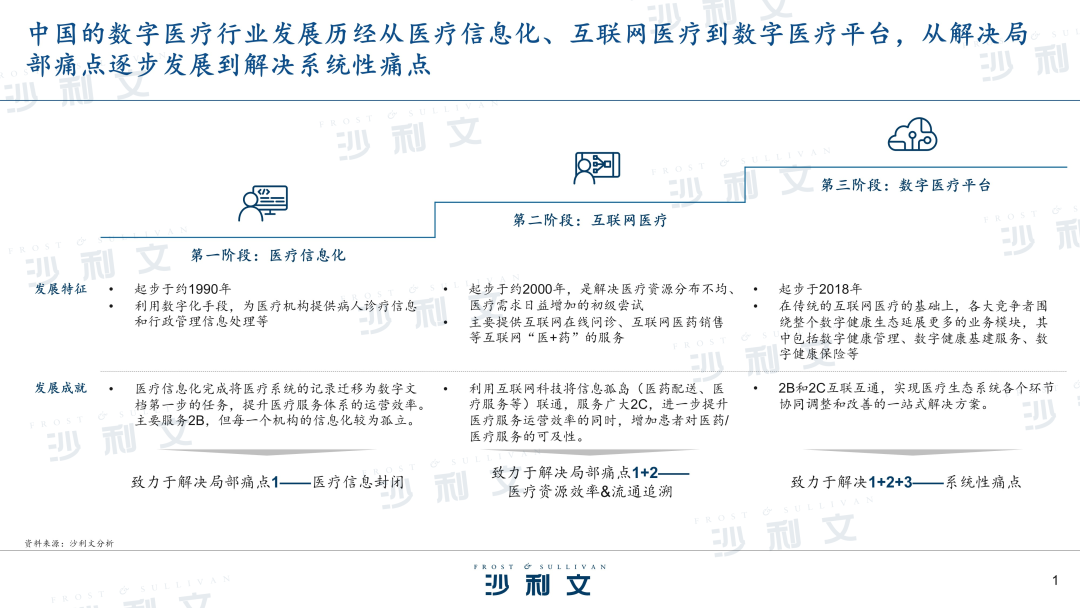
Mao Hua pointed out that the current Chinese healthcare ecosystem faces pain points such as uneven distribution of medical resources, the unbalanced accessibility and supervision of drug and device circulation and traceability, and the lack of safeguards for the single largest payer in the healthcare system. The pharmaceutical system, medical service system, and healthcare insurance system lack an organic platform for data interconnection and interoperability, making it difficult to support the coordinated and efficient operation of the entire healthcare system, as well as the purpose of supervising and serving a large number of patients. The development of China's digital healthcare industry has gone through stages from medical informatization, internet healthcare to digital healthcare platforms, gradually evolving from addressing local pain points to systemic ones.
China's digital healthcare industry consists of six major sectors: pharmaceutical e-commerce, digital consumer healthcare, digital insurance, digital diagnosis and treatment, digital enterprise services, digital health infrastructure, and digital health management. As the most mature and largest sector, pharmaceutical e-commerce holds a prominent position in the industry.
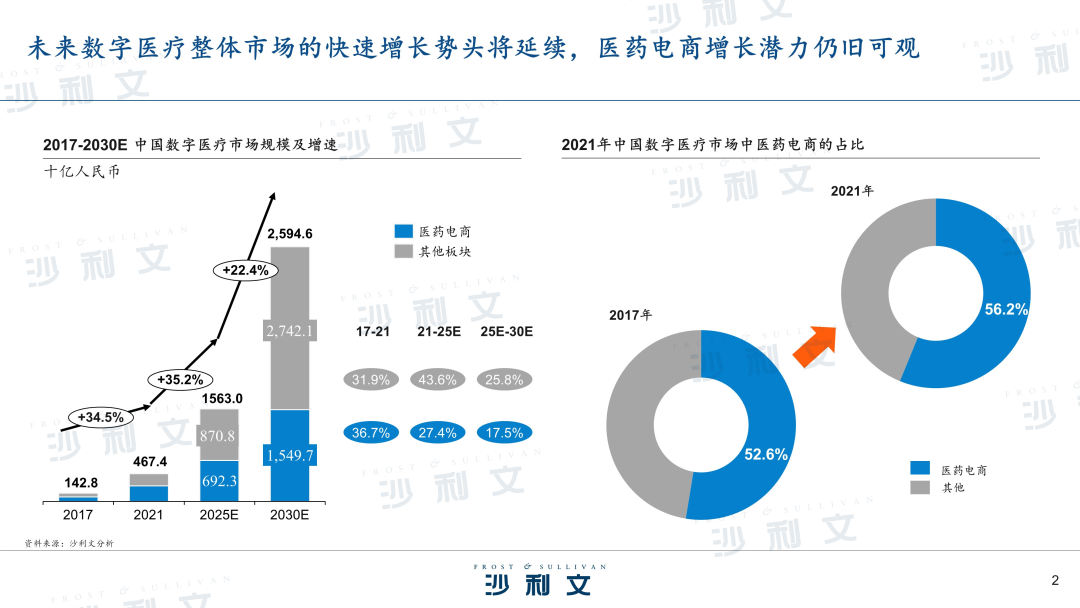
According to a study by Frost & Sullivan, the market size of digital healthcare in China has been growing at a significant rate over the past few years.2017Year to2021The compound annual growth rate reaches34.5%, is expected to arrive2025The market size will grow to15,630yuan,2021Year-end2025The compound annual growth rate will exceed35%Among them, the proportion of pharmaceutical e-commerce is also continuing to grow, reaching2021In [year], the proportion of traditional Chinese medicine e-commerce in China's digital healthcare market has exceeded56%.
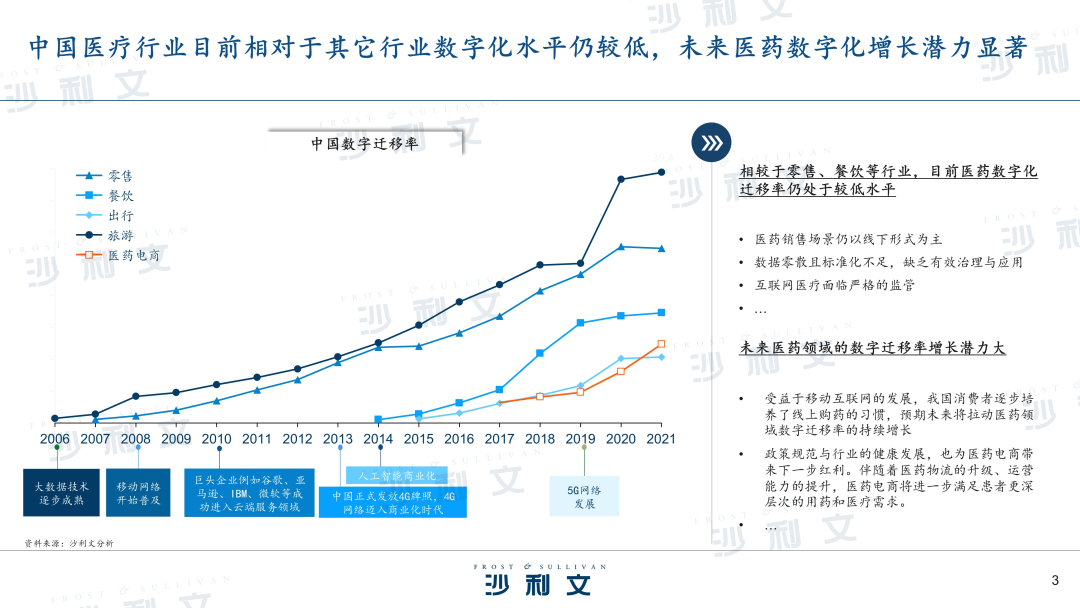
"Compared to industries such as tourism, retail, and catering, the current digital migration rate in the pharmaceutical sector is still at a relatively low level, and there is significant potential for growth in the digital migration rate in the pharmaceutical field in the future." Mao Hua further explained that, benefiting from the development of mobile internet, Chinese consumers have gradually developed the habit of online drug purchasing. It is expected that this will drive a continuous increase in the digital migration rate in the pharmaceutical industry in the future. In addition, policy regulation and the healthy development of the industry will also bring the next dividend to pharmaceutical e-commerce. In the future, with the upgrade of medical logistics and the improvement of operational capabilities, pharmaceutical e-commerce will further meet patients' deeper needs for medication and healthcare.
According to Mao Hua, in recent years, the evolution of pharmaceutical e-commerceB2B,B2C,O2O modelThe three business models have digitally innovated the interaction methods within the pharmaceutical industry chain, saving on circulation costs and improving circulation efficiency, thereby greatly promoting the rapid operation of pharmaceutical distribution.
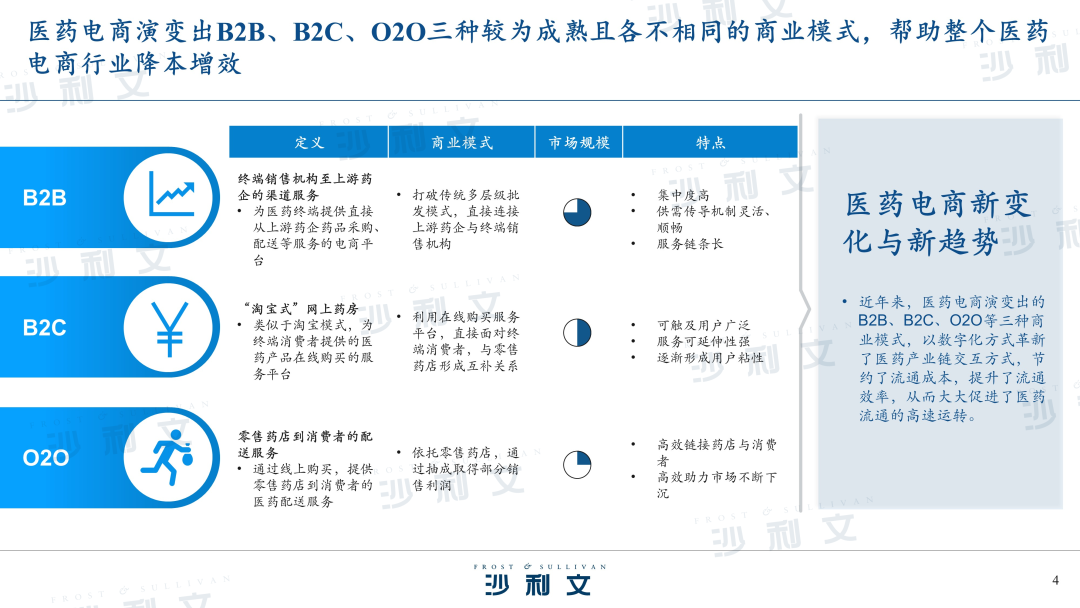
And these three different business models can solve different accessibility pain points, such asB2BAchieve efficient pharmaceutical distribution, improve communication and transaction efficiency between sales terminals and pharmaceutical companies, and significantly reduce drug circulation costs;B2CIn the model, sellers can directly face end consumers, while buyers can expand their range and variety of consumption choices, enabling online price comparison and making transaction prices public and reasonable.O2O modelIt achieves specialized and timely distribution within the drug area through an organic combination of online and offline methods, efficiently meeting consumer needs. "But regardless2B(Medicine circulation) or2C(Medical e-commerce) all require empowerment through digital technology for development1+X"By creating new value-added service items, we aim to enhance market competitiveness," Mao Hua said.
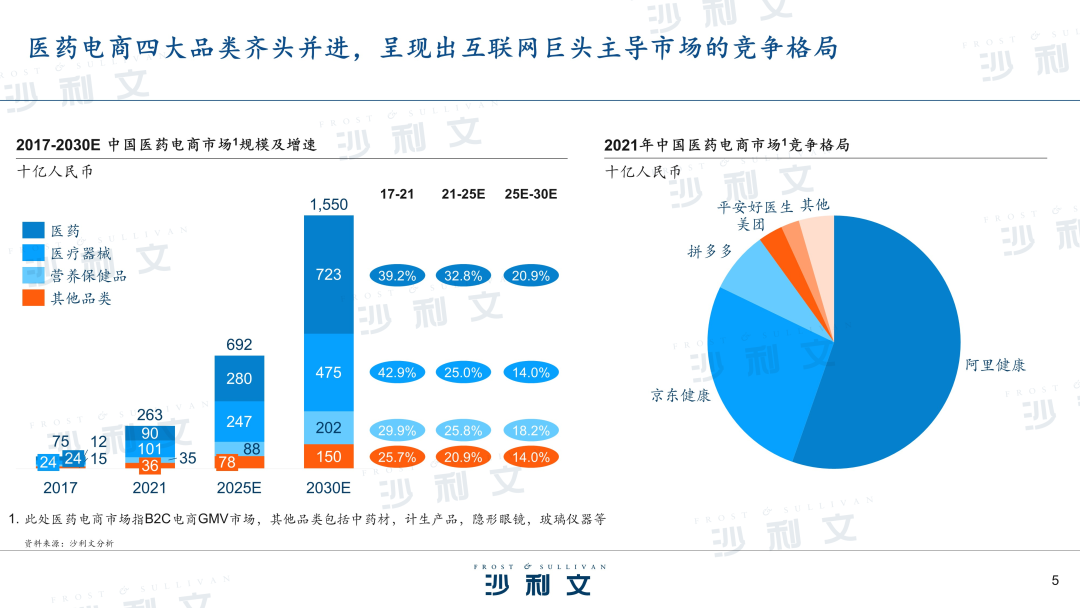
Mao Hua said that looking at the Chinese pharmaceutical e-commerce market, there is currently a competitive landscape where four major categories are advancing side by side and internet giants dominate the market. JD Health and Alibaba Health account for more than80%The market share is mainly in over-the-counter (OTC) drugs, with the category expected to see more significant growth driven by the liberalization of online prescription sales in the future.
About Frost & Sullivan's Healthcare Practice
The Healthcare Practice of Frost & Sullivan has professional analytical capabilities and extensive project experience in the life sciences field. Leveraging the global think tank resources of Frost & Sullivan and the cross-industry business development platform in Greater China, Frost & Sullivan Healthcare has unique core advantages in investment and financing services for the healthcare industry. Frost & Sullivan Healthcare has a wide range of corporate clients in China and in the past20In the year, a vast customer network was established, and a wealth of project experience in various medical sub-fields was accumulated.
Project types include Knowledge Center projects (in-depth content, promotional activities).Pre-IPO financingprojectDCF modelValuation, Business Plan Services),IPO listingWe provide listed projects (industry consulting, clinical audits, fundraising and investment writing), market research, market value management, strategic consulting, etc. We also cooperate with well-known domestic and international information platforms and investment and financing institutions to provide one-stop solutions for enterprises in specialized fields such as pharmaceuticals and medical devices. Our services have received wide attention from investors.