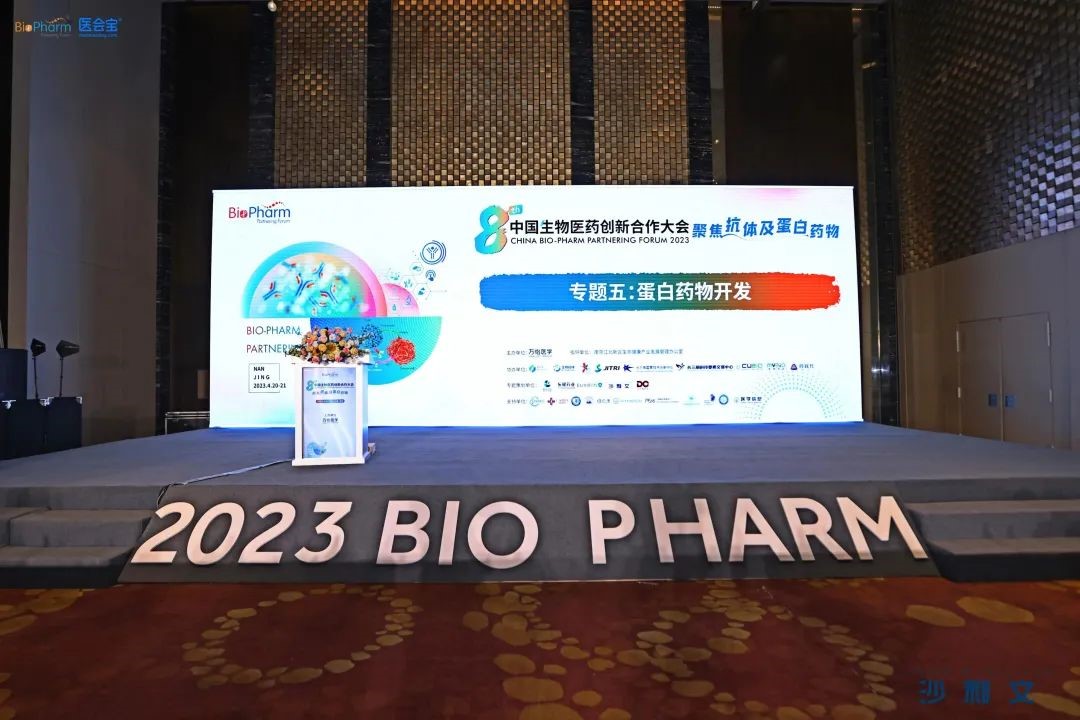
4month20day,BIO-PHARM2023The 8th China Biomedical Innovation Cooperation Conference grandly opened at Nanjing Jinling Hotel. The conference was hosted by Wanyi Medicine, guided by the Nanjing Jiangbei New Area Life and Health Industry Development Management Office, and co-organized by Nanjing Biomedical Valley, Bio-Economy, Nanjing Biomedical Industry Innovation Investment Promotion Association, Jiangsu Provincial Institute of Industrial Technology, Jiangsu Yangtze River Delta National Technology Innovation Center, Yangtze River Delta Science and Technology Factor Trading Center,Cubio Innovation CenterCo-organized by Meibai Medical Health and Pharmaceutical Alliance. The conference focused on antibody and protein drugs, inviting60+Industry leader, conducting2The daily forum connects all parties involved in government, industry, academia, research, and capital through keynote reports, roundtable discussions, one-on-one business negotiations, and special guest dinners, to assist in industrial development.
As one of the special project planning units for this forum, Frost & SullivanFrost & SullivanFrost & Sullivan, abbreviated as 'Frost & Sullivan', was founded in4month21Frost & Sullivan, in collaboration with the organizer of the annual conference, Viant Medical, co-hosted a sub-forum on 'Special Topic 5: Protein Drug Development'. Chen Zhenrong, the Medical Industry Consulting Director for Greater China at Frost & Sullivan, served as the moderator of this topic and delivered a presentation on 'The Current Market Situation and Future Development Trends of Protein Drugs' to the attendees.
The meeting also invited Wuhan Binhui Biotechnology Co., Ltd.CDO Normand JolicoeurFounder of Laitecang (Suzhou) Biopharmaceutical Co., Ltd.&CEOLi Yuehua, Founder and Chief Scientist of Zhongshan Huazi Biotechnology Co., Ltd., Gao Weiping, Co-founder of Lingxin Biotechnology/CSOSoguang Li and Gao Xiang, Director of the Protein Design Department at Beijing Zhide Biology Technology Co., Ltd., jointly discussed and shared forward-looking insights into protein drug development.
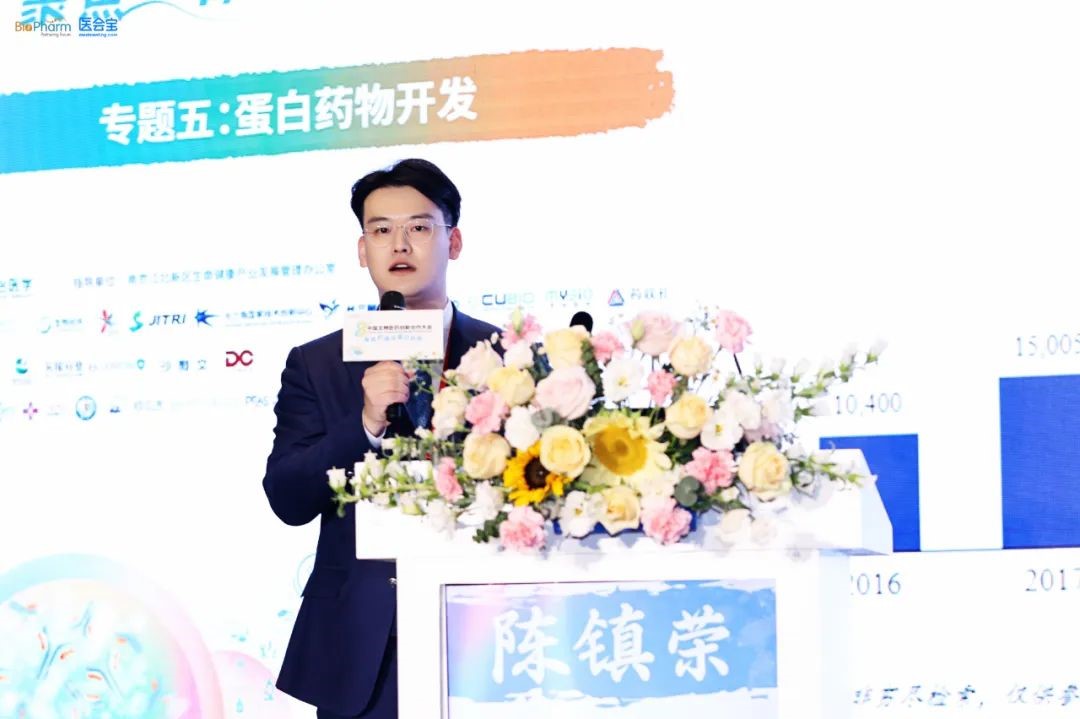
Frost & Sullivan Greater China Healthcare Industry Consulting Director Chen Zhenrong
Chen Zhenrong pointed out,2021In [year], the total financing in the global biopharmaceutical field exceeded58,200One million dollars, affected by many factors2022The total financing amount in the primary market decreased in 2023, with the largest number of financings reaching tens of millions of dollars. In terms of investment and financing sectors, biopharmaceuticals were the most actively invested in.
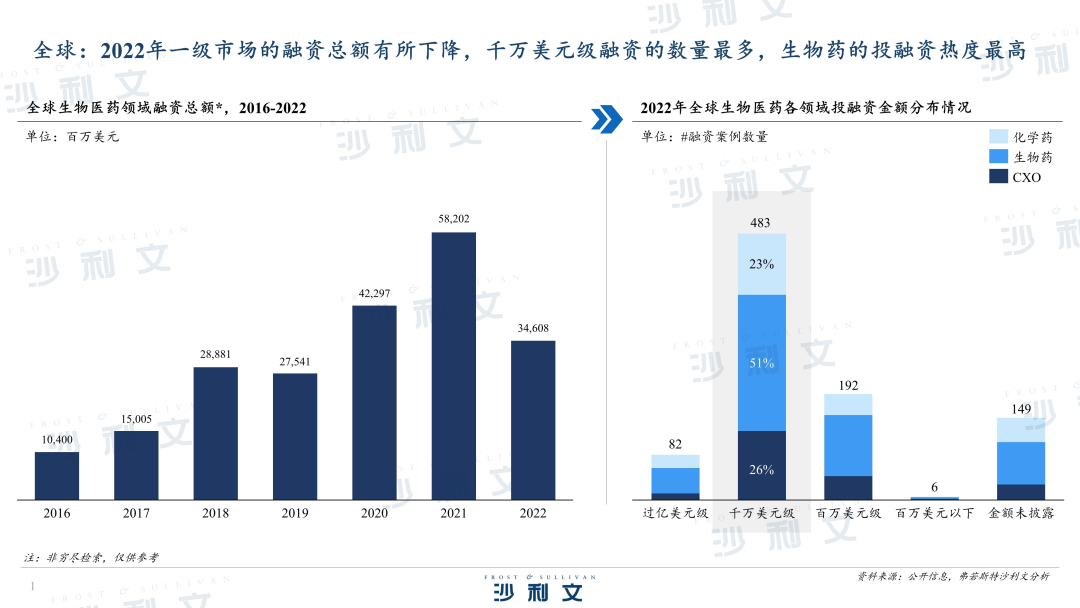
Looking at the investment and financing situation of global biopharmaceutical sub-sectors,2022The financing amounts for various tracks in the primary market vary significantly, with protein drug development still showing strong interest. Antibody conjugate drug(Antibody-drug conjugates,ADC)The track is highly favored by the capital market.
Looking at the domestic situationADCThe market, foreign companies still hold a leading position, chinaBiotechEnterprises tend towards more mature targets, with a serious homogenization of drug R&D routes and a large number of them. National Medical Products Administration Center for Drug EvaluationCDE) on2021The release of the 'Guiding Principles for Clinical Research and Development of Antitumor Drugs Oriented towards Clinical Value' in 2023 may change this situation.
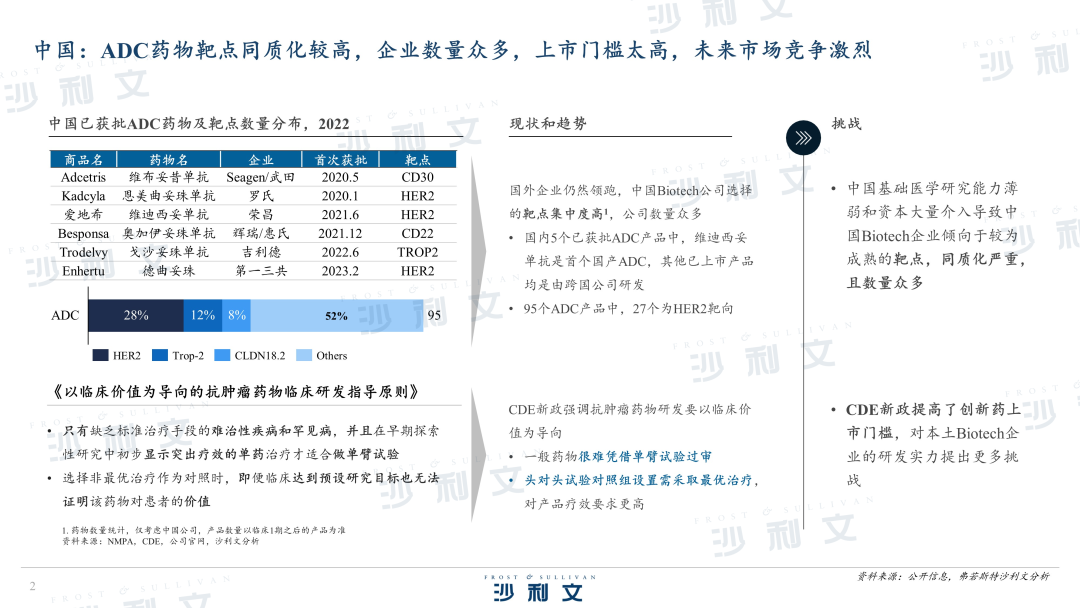
The 'Guiding Principles' emphasize that the development of anti-tumor drugs should be clinically value-oriented, and efforts should be made to provide subjects with the best treatment methods available in clinical practice./Medications, and the development of new drugs, should aim to provide patients with better treatment options as their highest priority. "The increase in the listing threshold for innovative drugs has affected localBiotechThe R&D strength of enterprises poses more challenges." said Chen Zhenrong.
Chen Zhenrong stated that the challenges in protein drug development can be addressed through three strategies: 'bringing in', 'grabbing market share', and 'going global'.
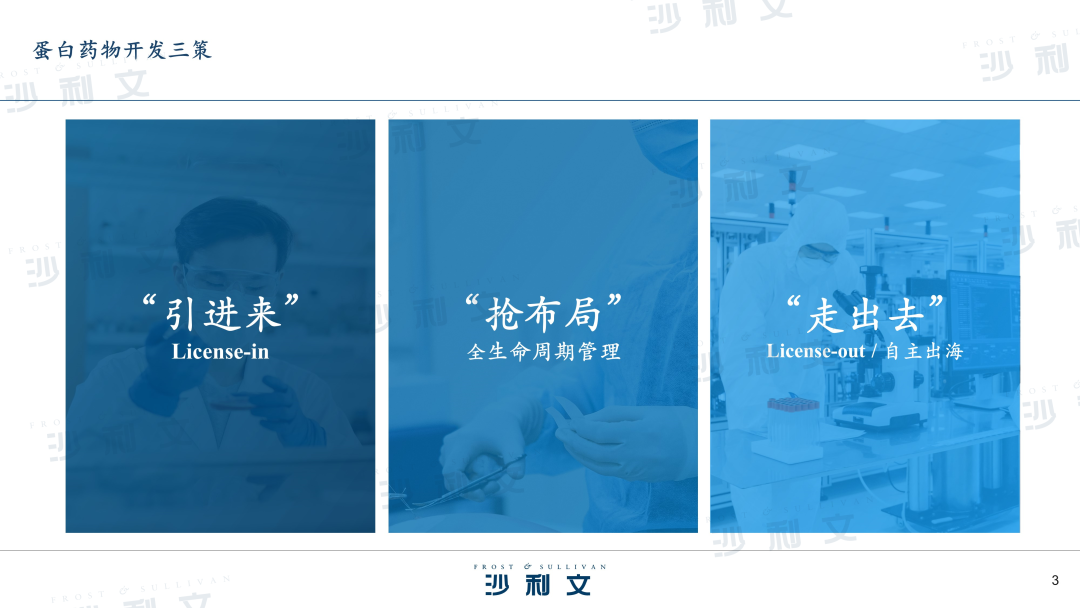
"AlthoughLicense in progressThe model has been questioned in recent years, with the core concern being the company's independent R&D capabilities. However, this model remains a good approach for companies to quickly enter new therapeutic areas or methods." Chen Zhenrong further explained that with strong R&D capabilities paired with an excellent pipeline selection strategy,License InBring external support to enterprises, thereby expanding their own value.
At the same time, companies need to prepare a full lifecycle commercialization strategy before the drug is launched to flexibly address issues that may arise at different stages. Considering the current high homogeneity of protein drugs, how to rationally layout the strategy has become the most critical decision-making issue for companies at present. "Should this project be initiated, should the pipeline continue to progress, is it necessary to consider concentrating funds on the most promising and valuable products, and each decision can affect the company's future development and next round of financing," Chen Zhenrong added.
In addition, in recent years, factors such as the enhanced R&D capabilities of domestic pharmaceutical companies, the great potential of overseas markets, and the gradual integration at home and abroad have further promoted the 'going global' strategy of pharmaceutical companies. Whether it isLicense expirationWhether it is independent overseas expansion, both are conducive to pharmaceutical companies expanding their international market footprint, better participating in global competition, and helping enterprises achieve value growth. As Chinese pharmaceutical companies continue to strengthen their strategic deployment in overseas markets and compete to conduct overseas clinical trials, the overseas market will become an important driving force for corporate growth in the future. "But at the same time, we also need to be awareLicense expirationThe model can be a double-edged sword for corporate financing. On one hand, successLicense expirationRepresents that the company's R&D strength has been recognized by the industry, which reduces subsequent R&D costs for the enterprise and also brings in cash; on the other hand, product equityLicense expirationThe exchanged cash flow may sacrifice the potential value of the product after its future launch, which could also affect investors' valuation of the company. ThereforeLicense expirationThe model actually requires careful consideration by the company before implementation,” said Chen Zhenrong.
About Frost & Sullivan's Healthcare Practice
The Healthcare Practice of Frost & Sullivan has professional analytical capabilities and extensive project experience in the life sciences sector. Leveraging Frost & Sullivan's global think tank resources and cross-industry business development platform in Greater China, Frost & Sullivan Healthcare has unique core advantages in healthcare industry investment and financing services. Frost & Sullivan Healthcare has a wide range of corporate clients in China and in the past20In the year, a vast customer network was established, and a wealth of project experience in various medical sub-fields was accumulated.
Project types include Knowledge Center projects (in-depth content, promotional activities).Pre-IPO financingprojectDCF modelValuation, Business Plan Services),IPO listingWe provide listed projects (industry consulting, clinical audits, fundraising and investment writing), market research, market value management and strategic consulting. We also cooperate with well-known domestic and international information platforms and investment and financing institutions, offering one-stop solutions for enterprises in specialized fields such as pharmaceuticals and medical devices. Our services have received wide attention from investors.