 The 3rd Global Cultural Tourism Accommodation Industry Expo
Yangtze River Delta International Resort Industry Expo
6month2day-6month4day The 3rd Global Cultural Tourism Accommodation Industry Expo The Yangtze River Delta International Resort Industry Expo was officially held in Shanghai. The event is organized by the Global Cultural Tourism Accommodation Industry Expo and co-hosted by Quzhuo Space and Kuaisu Culture Communication (Shanghai) Co., Ltd.1%ClubResort Industry Research Center, Resort ·1% ClubCo-organized by the Review Committee, the event brought together investors, property owners, brands, and the entire supply chain of the global culture and tourism vacation industry, aiming to establish a benchmark for the global culture and tourism accommodation industry.
At this expo, Frost & SullivanFrost & SullivanFrost & Sullivan, abbreviated as 'Frost & Sullivan', in conjunction with LeadLeo, Quzhou Space and its global portfolio of hostels,1%ClubThe Resort Industry Research Center and Shanghai Luson Hotel Management University jointly released2022China's Vacation Industry White Paper 2018 (hereinafter referred to as the 'White Paper') Wang Chenhui, Managing Partner and Executive Vice President of Frost & Sullivan Greater China, Co-founder and President of LeadLeo, attended the event and officially released the white paper. Li Jincan, Chief Analyst of the Consumer Industry at LeadLeo (Shanghai) Research Institute, provided an in-depth interpretation of the report.

Wang Chenhui, Managing Partner and Executive Vice President of Frost & Sullivan Greater China, Co-founder and President of LeadLeo

Li Jincan, Chief Analyst of Consumer Industry at LeadLeo (Shanghai) Research Institute
(The following is the detailed interpretation.)
2022Digital Operation and Management of Hotels in China in 2023
The development of digital operation management in Chinese hotels has gone through four stages: the initial germination period, the initial development period, the rapid development period, and the new policy development period. 2015Since the beginning of this year, data awareness in the hospitality industry has begun to rise.2018In that year, the entire hospitality industry witnessed a surge in technology applications.
2022year1month12On the same day, the State Council issued the "14th Five-Year Plan for the Development of the Digital Economy." In the post-pandemic era, the digital transformation and upgrading of hotels are concentrated in multiple aspects such as service, marketing, operations, and supply chain management. Major industry tracks have also embarked on a new journey to assist hotels with intelligence.

At present, the focus of investment in digital transformation of China's hotel industry is still on digital platform projects at the 'hotel reservation' level. Hotels generally collaborate withOTAThe platform collaborates to open multi-platform hotel reservation channels to consumers, deepening the trend of digital development in the Chinese hospitality industry.
Digitalization has become a major trend in the development of the hotel industry, with many hotel chain brands and individual hotels joining the digitalization camp. Digitalization of sales channels is one of the important aspects of the hotel industry's digitization. In recent years, various branded hotels have gradually transformed towards online operations, andOTAPlatform cooperation, leveragingOTAUtilize the resource and traffic advantages to sell hotel products, bringing more customers to the hotels.

There are currently two major difficulties in the digital operation management of hotels in China. On one hand, both high-star hotels and chain brand hotels suffer losses due to problems with their existing profit models. Today's hotel cost structure compared to20The cost structure before last year has undergone tremendous changes: costs such as property management, labor, depreciation, and maintenance are all increasing, but the price of housing has not risen. As a result, the profitability of this industry is poor.
In addition, some hotels in the industry, especially some small and medium-sized hotel brands, adopt the leasing operation model, which means renting out properties to operate hotels. In this model, a significant portion of the cost structure consists of housing rental costs, which are very high and pose a pressure on enterprises. Coupled with the impact of the pandemic on the hotel industry, hotels under the rental model also lack sufficient funds for digital development and construction. Therefore, the digital transformation of such hotels also faces financial difficulties.

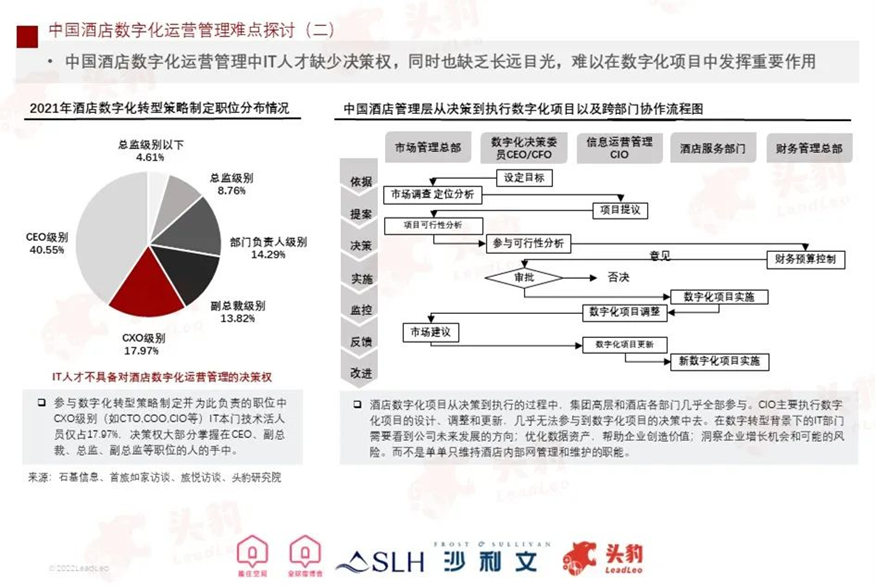
On the other hand, in the process of digitalization projects at hotels, from decision-making to execution, almost all senior management and various hotel departments are involved.CIOMainly responsible for the design, adjustment, and updating of digital projects, with little involvement in decision-making related to digital projects. In the context of digital transformationITThe department needs to see the company's future development direction; optimize data assets to help the enterprise create value; and understand the company's growth opportunities and potential risks, rather than merely maintaining the functions of hotel internal network management and maintenance.
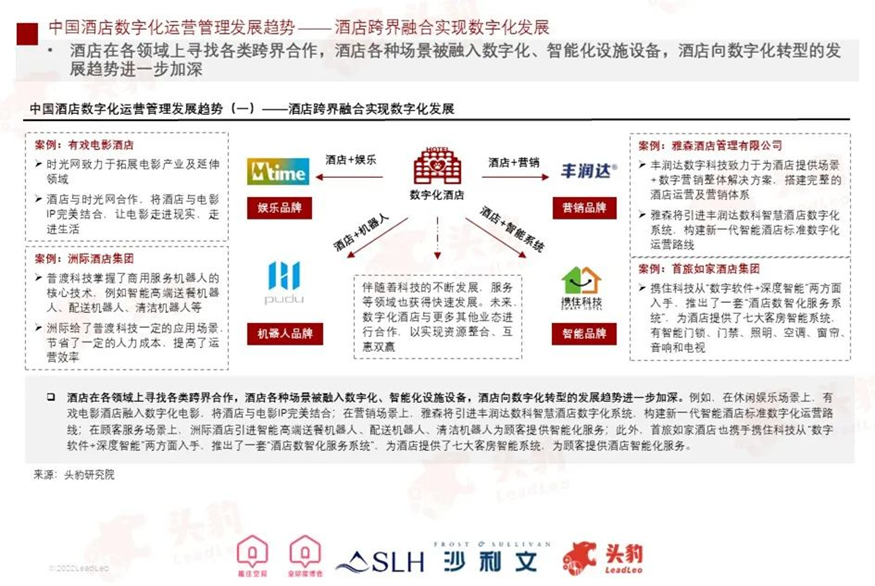
From the perspective of the development trend of hotel digital operation management, hotels are seeking various cross-border collaborations across different fields. Various hotel scenarios are integrated with digital and intelligent facilities and equipment, further deepening the trend of hotel digital transformation.
For example, in leisure and entertainment scenarios, the Playhouse Cinema Hotel integrates digital movies, connecting the hotel with cinemaIP addressPerfect combination; In the marketing scenario, Yason will introduce Fengrun Digital Hotel System, constructing a new generation of intelligent hotel standard digital operation routes; in the customer service scenario, InterContinental Hotels will introduce intelligent high-end delivery robots, distribution robots, and cleaning robots to provide intelligent services for customers; in addition, Beijing LVC Hotels have also joined hands with HomeTech to develop 'Digital Software+Starting from two aspects: 'Deep Intelligence', a 'Hotel Digital Intelligent Service System' has been launched, providing hotels with seven intelligent guest room systems and offering hotelized services to customers.
2022year China's cultural and tourism accommodation traffic ecosystem
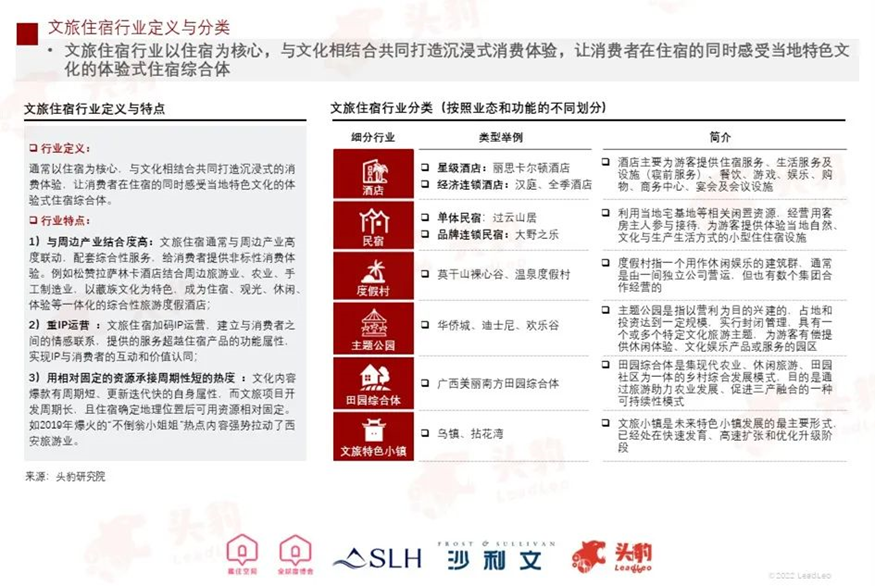
Culture and tourism accommodation industry Usually centered around accommodation, combined with culture to create an immersive consumption experience. It allows consumers to feel the local characteristic culture while staying in a boutique accommodation complex, presenting three major Industry characteristics:
1) High integration with surrounding industries: Cultural tourism accommodation is usually highly linked to surrounding industries, offering comprehensive services and providing consumers with non-standard consumption experiences. For example, the Songzan Lhasa Linca Hotel combines with the surrounding tourism industry, agriculture, and handicraft manufacturing, featuring Tibetan culture as its characteristic, and has become an integrated comprehensive tourist resort hotel for accommodation, sightseeing, leisure, and experience;
2) heavyIP addressOperation : Cultural tourism accommodation sector expandsIP addressOperation, establishing emotional connections with consumers, providing services that go beyond the functional attributes of accommodation products, and achievingIP addressInteraction with consumers and value alignment;
3) Undertake periodic short spikes with relatively fixed resources: Cultural content hits have their own attributes of short cycle and rapid updates and iterations. In contrast, cultural tourism projects have a long development cycle, and the available resources are relatively fixed once the accommodation's geographical location is determined.2019The popular content “Uncanny Auntie” in 2021 strongly boosted tourism in Xi'an.
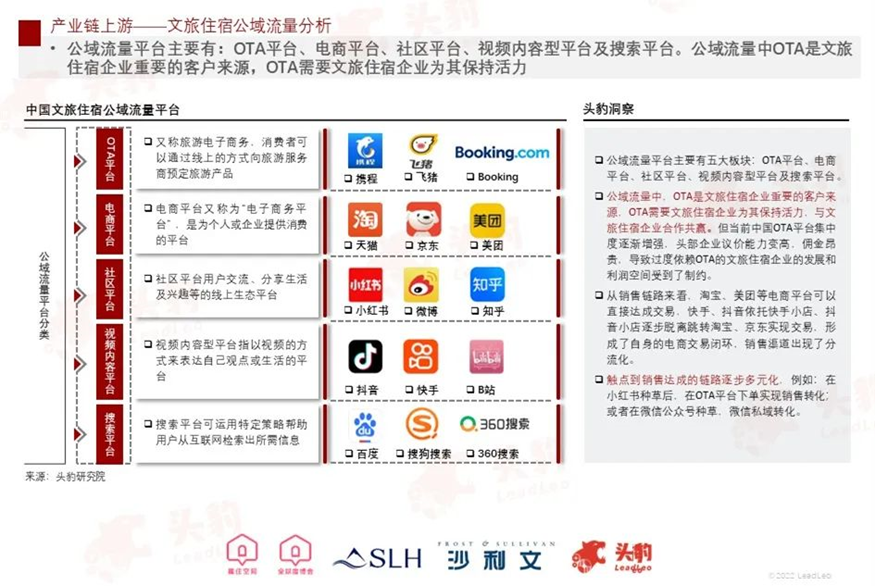
The public domain traffic platform mainly consists of five major sections:OTAPlatforms include e-commerce platforms, community platforms, video content platforms, and search platforms.
In public domain traffic,OTAIt is an important source of customers for culture and tourism accommodation enterprises.OTACultural and tourism accommodation enterprises need to be kept vibrant by the government, and win-win cooperation with them is essential. But current ChinaOTAThe platform concentration is gradually increasing, leading to higher bargaining power for leading enterprises. High commissions result in excessive dependence.OTAThe development and profit margins of cultural tourism accommodation enterprises have been constrained.
From the perspective of sales channels, e-commerce platforms such as Taobao and Meituan can directly conclude transactions. Kuaishou and Douyin have gradually moved away from redirecting users to Taobao and JD.com through Kuaishou Mini Store and Douyin Mini Store, forming their own closed-loop e-commerce transactions, leading to a diversification of sales channels.
The links from touchpoints to sales are gradually diversifying. For example, after recommendations on Rednote:OTAOrder placement on the platform to achieve sales conversion; or promote products through WeChat official accounts and WeCom private domains.
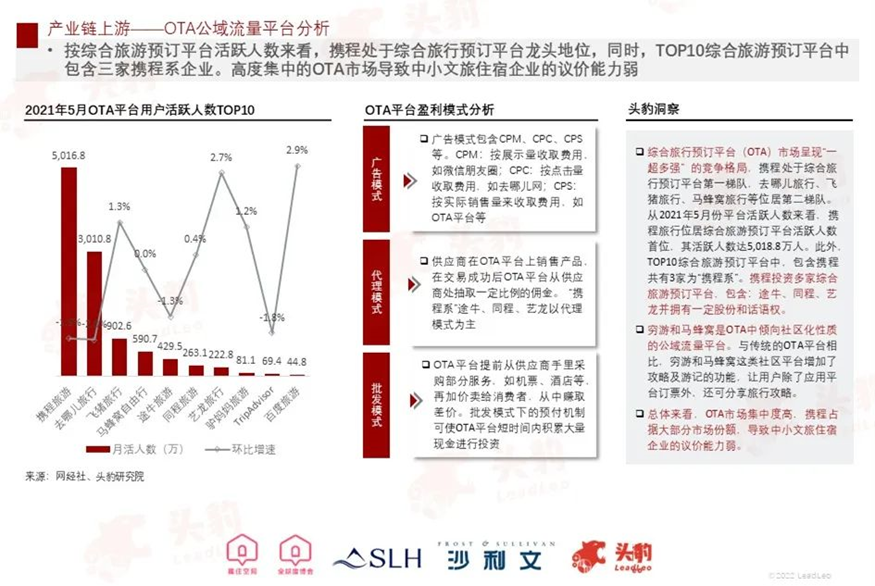
Comprehensive travel booking platformOTAThe market presents an 'one superpower, multiple strong players' landscape. In terms of competitive landscape, Ctrip is in the first tier of comprehensive travel booking platforms, with destinations such as Dazhijie Travel, Fliggy Travel, and Mafenghong Travel ranking in the second tier.Top 10Among comprehensive travel booking platforms, Ctrip is included.3Home is about 'Ctrip'. Ctrip invests in several comprehensive travel booking platforms, including Tuniu, Tongcheng, and Yilong, holding a certain share and voice in these companies.
Poor Traveler and Wasabi Honeycomb areOTAA public domain traffic platform with a community-oriented nature. Unlike traditionalOTACompared to other platforms, community platforms like Qunar and Hema have added features such as travel guides and travel notes. Users can not only book tickets through the app but also share their travel experiences.
Overall,OTAThe market is highly concentrated, with Ctrip occupying the majority of the market share, resulting in weak bargaining power for small and medium-sized cultural and tourism accommodation enterprises.
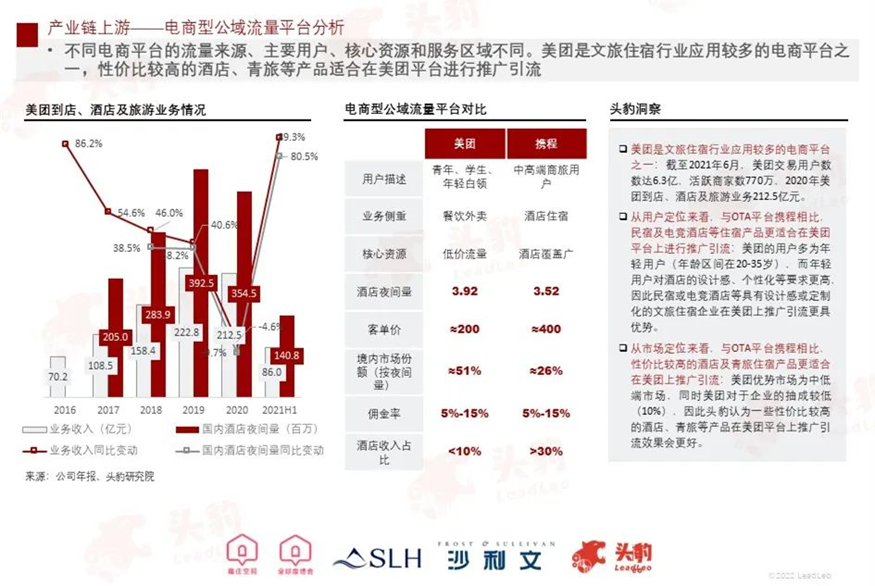
Meituan is one of the e-commerce platforms that are widely used in the culture and tourism accommodation industry. From the perspective of user positioning, it is related toOTACompared with the platform Ctrip, accommodation products such as homestays and esports hotels are more suitable for promotion and traffic generation on the Meituan platform: Most users on Meituan are young users (age range is20 - 35(Year), while young users have higher requirements for hotel design and personalization. Therefore, cultural and tourism accommodation enterprises with a sense of design or customization, such as homestays or esports hotels, have more advantages in promoting and attracting traffic on Meituan.
From the perspective of market positioning, it is related toOTACompared with the platform Ctrip, hotels and travel-related accommodation products with higher cost performance are more suitable for promotion and traffic generation on Meituan: Meituan's dominant market is the mid- to low-end segment, and at the same time, Meituan charges a lower commission rate for businesses10%Therefore, LeadLeo believes that products with a high cost-performance ratio, such as hotels and youth travel agencies, would achieve better promotional and drainage effects on the Meituan platform.
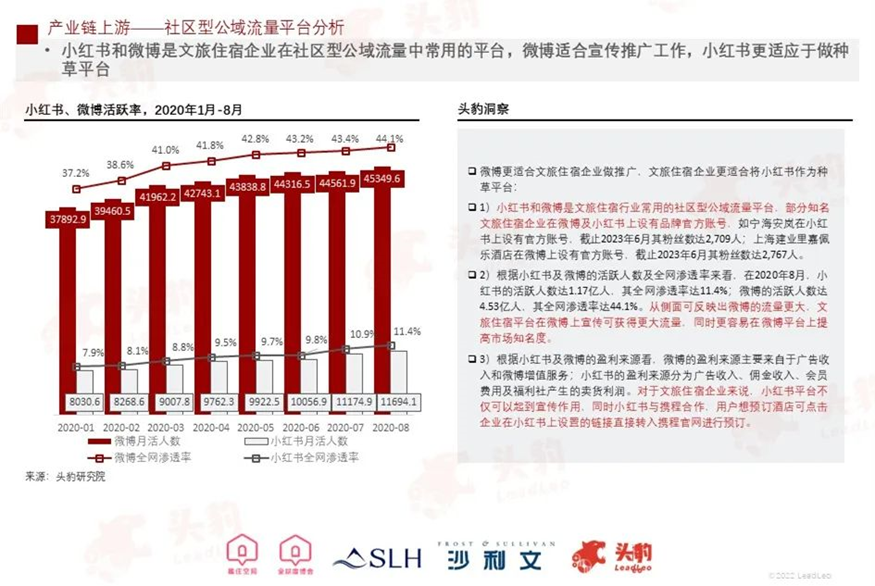
Weibo platforms are more suitable for culture and tourism accommodation businesses to promote their products, while culture and tourism accommodation businesses are more suitable for using Rednote as a referral platform.
(1Rednote and Weibo are commonly used community-based public domain traffic platforms in the culture and tourism accommodation industry. Some well-known culture and tourism accommodation enterprises have brand official accounts on Weibo and Rednote. For example, Ninghai Anlan has an official account on Rednote. As of2023year6In January, its fan base reached2,709People; Shanghai Jianye Lijiale Hotel has an official account on Weibo, as of2023year6Its fan base has reached2,767person.
(2Based on the active user numbers and penetration rate across the entire network of Rednote and Weibo, Weibo has greater traffic. Cultural tourism accommodation platforms can obtain more traffic by promoting on Weibo and are also more likely to increase their market awareness on this platform.
(3Based on the profit sources of Rednote and Weibo, Weibo's main sources of profit come from advertising revenue and Weibo's value-added services; Rednote's profit sources include advertising revenue, commission income, membership fees, and the sales profits generated by the welfare society. For cultural tourism accommodation enterprises, the Rednote platform can not only serve as a promotional tool but also cooperate with Ctrip. Users who want to book hotels can click on the link set up by the enterprise on Rednote and directly transfer to the Ctrip official website for booking.
The traffic of the industry's overall market has peaked, highlighting the low-flowing nature of short video. As the two most commonly used video content platforms by culture and tourism accommodation providers, in terms of user scale, the monthly active user bases of Douyin and Kuaishou have reached6.72hundreds of millions,4.61Hundred million users. Although both Kuaishou and Douyin are short-video platforms, there are differences between them in terms of positioning, features, traffic distribution methods, monetization methods, etc. Taking traffic distribution as an example, Douyin is a typical centralized platform, while Kuaishou is a typical decentralized one. The more centralized the platform is, the less attention small and medium-sized enterprises receive, making it difficult for their own traffic to accumulate and be converted. Based on the differentiated positioning of the platforms.
For cultural and tourism accommodation enterprises, the centralized platform Douyin is more suitable for increasing brand exposure and awareness in the short term; the decentralized platform Kuaishou is more suitable for helping them accumulate their own traffic to increase conversion rates.

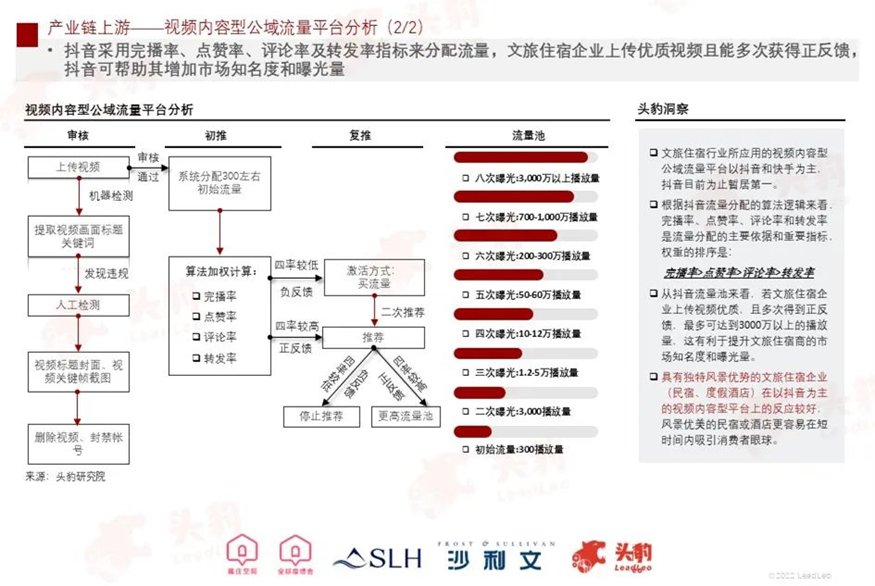
The video content-based public domain traffic platforms used in the culture and tourism accommodation industry are mainly Douyin and Kuaishou, with Douyin currently ranking first.
According to the algorithm logic of Douyin traffic distribution, completion rate, likes rate, comment rate, and repost rate are the main bases and important indicators for traffic distribution. The weight ranking is as follows: completion rate>likes>Comment rate>Forwarding rate.
From the perspective of Douyin traffic pool, if cultural and tourism accommodation enterprises upload high-quality videos and receive positive feedback multiple times, they can achieve3,000Over 10,000 plays indicate that this is beneficial for enhancing the market awareness and exposure of cultural and tourism accommodation providers.
Cultural and tourism accommodation enterprises (homestays, resorts) with unique scenic advantages perform well on video content platforms dominated by Douyin, where homestays or hotels with beautiful scenery are more likely to attract consumer attention in a short period.
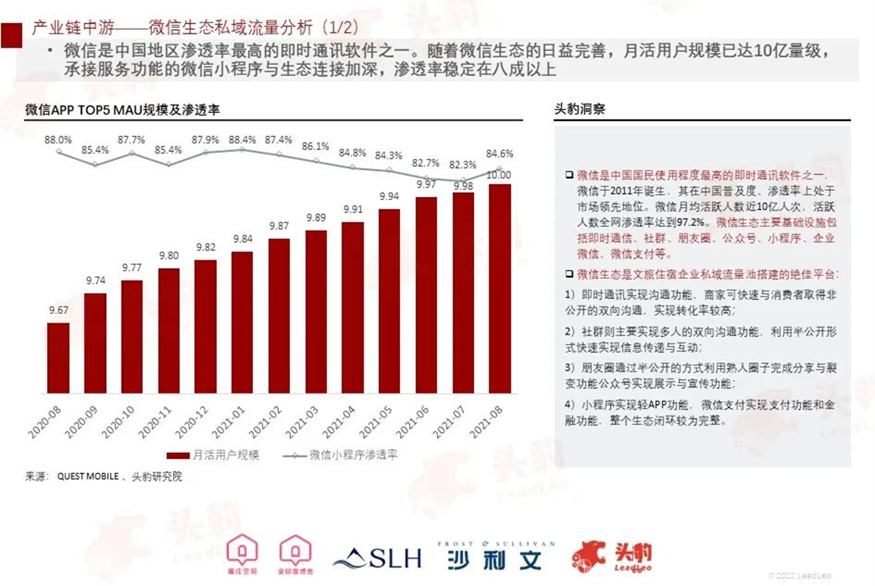
WeChat is one of the most widely used instant messaging apps in China, with a user base of2011Founded in [year], it leads the market in terms of popularity and penetration rate in China. The average monthly active user of WeChat is nearly101000 million person-times, with the penetration rate of active users across the entire network reaching97.2%The main infrastructure of the WeChat ecosystem includes instant messaging, communities, Moments, official accounts, mini-programs, WeCom, WePay, and more.
The WeChat ecosystem is an excellent platform for cultural and tourism accommodation enterprises to build their private domain traffic pools:
(1IM enables communication functions, allowing merchants to quickly establish private two-way communication with consumers and achieve a higher conversion rate.
(2Communities mainly implement a two-way communication function for multiple people, using a semi-public format to quickly achieve information transmission and interaction;
(3The Moments account enables sharing and fission through a semi-public approach, utilizing the acquaintance network. The official account serves to display and promote content.
(4) Mini Programs Achieve LightweightAPPFunctionally, WeChat Pay has achieved payment and financial functions, with a relatively complete closed-loop ecosystem.
Today, private domain traffic is bundled with “private domain traffic=The image of 'WeChat business individual' has been tagged with negative labels such as poor product quality and severe marketing harassment. In the context of cultural and tourism accommodation enterprises, especially homestays and chain cultural and tourism accommodation businesses, which are gradually strengthening the application of private domain traffic, LeadLeo believes that in the future, private domain traffic for cultural and tourism accommodation will develop towards specialized and precise operations, thereby enhancing brand image and increasing user purchase rates.
Private domain traffic is characterized by 'anytime accessibility', but 'anytime accessibility' does not mean 'anytime availability'. The management of private domain traffic for culture and tourism accommodation needs to leverage the advantages of comprehensive services, using instant communication tools to quickly respond to customer needs and achieve refined marketing management, rather than over-marketing.

2022year China Rural Resort Boutique Homestays
2010Since the beginning of this year, the Yangtze River Delta region has set a precedent in China's vacation market. Homestays clustered around Moganshan have emerged as a new business format, and the boundaries between boutique rural vacation homestays and traditional ones are gradually becoming clearer. After the outbreak of the epidemic, the uneven development of homestays in various regions has become more prominent.

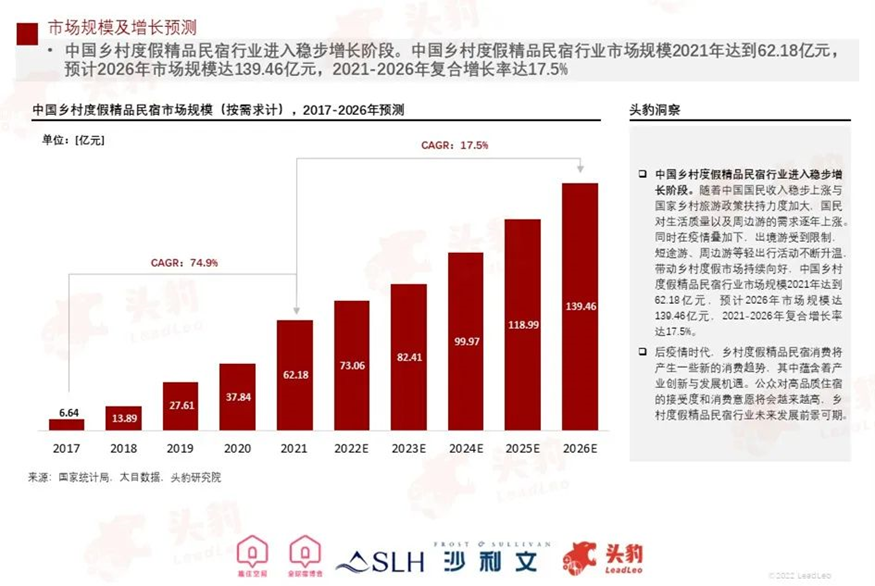
The rural vacation boutique homestay industry in China has entered a stage of steady growth. With the steady increase in national income and the enhanced support of national rural tourism policies, the demand for quality of life and surrounding travel by nationals has been rising year by year. At the same time, under the backdrop of the pandemic, outbound travel has been restricted, while light travel activities such as short-distance trips and local tours have been heating up continuously, driving the rural vacation market to continue improving. The market scale of China's rural vacation boutique homestays2021Annual achievement62.18Yuan billion, expected2026The annual market scale reaches139.46yuan,2021 - 2026The annual compound growth rate reached17.5%.
In the post-pandemic era, rural vacation boutique homestays are expected to see some new consumption trends, which contain opportunities for industrial innovation and development. The public's acceptance and willingness to consume high-quality accommodation will continue to increase, making the future prospects of the rural vacation boutique homestay industry promising.
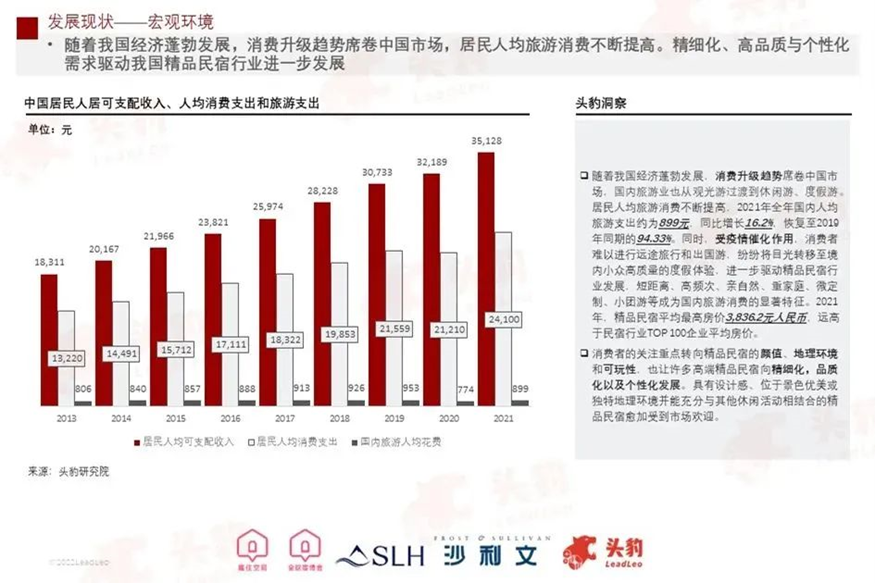
With the vigorous development of China's economy, the trend of consumption upgrading has swept across the Chinese market. Domestic tourism has also transitioned from sightseeing to leisure and vacation travel. Per capita tourism consumption among residents continues to rise.2021The annual per capita tourism expenditure in China is about899Yuan, year-on-year growth16.2%, restored to2019During the same period of the year94.33%.
At the same time, driven by the pandemic, consumers find it difficult to travel long distances or abroad, turning their attention to niche high-quality domestic vacation experiences. This further drives the development of boutique homestays, with short distances, high frequency, nature-based travel, family values, micro customization, and small group tours becoming prominent features of domestic tourism consumption. 2021Year, average highest price per boutique homestay3,836.2Renminbi, much higher than that of the homestay industryTop 100Average housing price per enterprise.
Consumers' focus has shifted towards the aesthetics, geographical environment, and playability of boutique homestays, which has also led many high-end boutique homestays to develop towards refinement, quality, and personalization. Boutique homestays with a sense of design, located in beautiful or unique geographical environments, and that can fully integrate with other leisure activities are increasingly popular in the market.
from2021NationalTop 10In terms of the distribution of tourist source cities, the main source of homestays in China is concentrated in first- and second-tier cities.Top 5The cities are Beijing, Shanghai, Chengdu, Guangzhou, and Haikou. It meets consumers' desire to experience rural homestays for leisure and relaxation due to urban pressure.
Due to the high dependence of homestays on natural ecology and local cultural customs, they often gather in tourist attractions or natural ecological areas, leading to a continuous increase in the number of homestays in regions such as Moganshan, Dali in Yunnan, and Kunming. As of2021In [year], the distribution of homestays was as follows: Moganshan850Home, Dali5,691Home, Kunming4,912Home, among which, the average occupancy rate of homestays in Yunnan region is38%The break-even point for the occupancy rate of boutique homestays in our country is at25%-30%Currently, the industry is in a stage of regional overcapacity, with extremely uneven development levels of homestays across the country.

The trend of younger customers for boutique rural holiday homestays is evident. Among the proportion of national customer age distribution,2021year30Percentage of customers under2019The average annual growth trend is positive, accounting for the total number of customers33%relatively2019Year-on-year growth32%.2021year50Proportion of customers over [age range]15%relatively2019Decrease in annual value18%Overall, the audience base is gradually becoming more balanced, and the main consumers are becoming younger.
Taimu Technology data shows that its platformTop 100Among the national sources of high-quality homestays,95Post-Customer Segment Proportion27.3%As the main audience of the 'appearance economy', they are keen on checking in for consumption and place more emphasis on the experiential and entertainment aspects of homestays.
Accommodation+XIt has gradually become the most dynamic force in the non-standard accommodation sector. Rural holiday boutique homestays generally have their own themes and characteristics, focusing on enjoying daily life and experiencing the local culture of the countryside. They can well meet the travel needs of couples and families. Homestays have also launched special series of homestays such as private courtyards, hot spring homestays, and forest aerial wooden houses to meet the needs of parent-child entertainment and family life.

In the future, the rural vacation boutique homestay industry will develop towards a trend of greater refinement, quality, and personalization. By creating regional homestay brands through homestay clusters, it is possible to fully transform the brand driving effect of individual stores into a regional brand effect for the homestay cluster, thereby supporting and driving the overall development of other homestays within the region.

About the White Paper
"The2022China's Vacation Industry White Paper 2019
cover12A niche area
Interpretation of the Authoritative Evolution of the Vacation Industry
Forward-looking development forecasts for the vacation industry
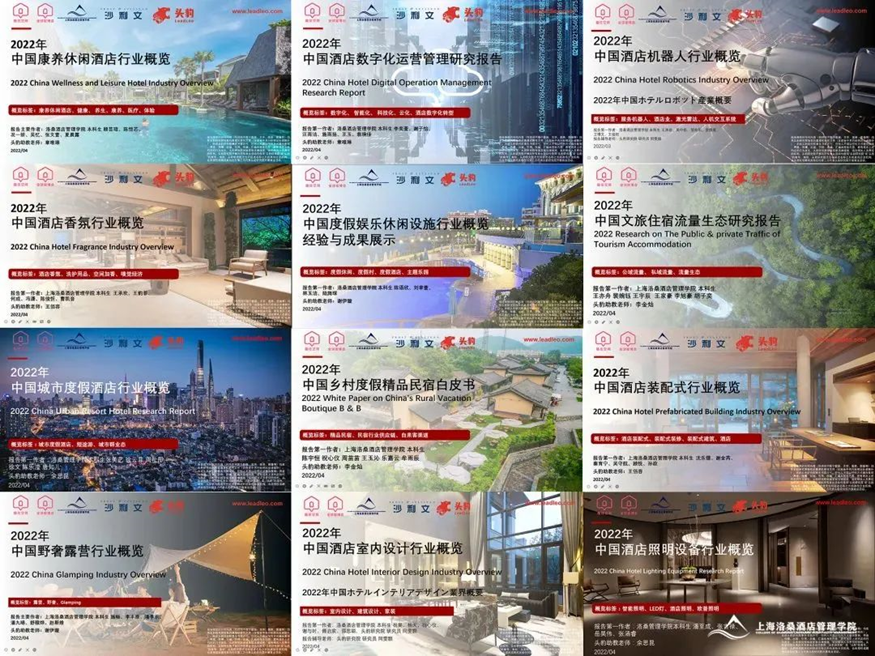
To read12Research Report on This Segmented Field
1How will future health and wellness leisure hotels in China develop? The market demand for the Chinese health and wellness leisure hotel industry is growing and it will become a sunrise industry in the future; the industrial chain of Chinese health and wellness leisure hotels covers a wide range and has broad market prospects; through diversified development, the Chinese health and wellness leisure hotel industry is undergoing unprecedented new changes.
2Where is the future digital transformation of Chinese hotels heading? Currently, the trend of digital transformation in China's hotel industry is gradually deepening. However, the hotel industry still faces many challenges and difficulties in digital development, such as insufficient investment in digital projects and limited development of digital talent. Despite this, there are still some hotels in the industry that are continuously exploring and developing digital development paths suitable for themselves, leading the entire hotel industry towards a diversified digital operation and management development path.
3The hotel robot industry is developing rapidly, driven by the dual needs of hotels and guests. The market size of hotel robots is continuously rising due to the impact of the pandemic and the growth of digital trends in hotels. In the future, robot services will become more diverse to meet consumer needs, and at the same time, robots can be used to effectively establish big data networks. The accuracy of hotel robot services will directly affect consumers' experience, and how will the operational precision of robots be achieved?
4Where is the future direction for China's hotel fragrance industry? Affected by the pandemic, outbound travel has been restricted, and vacation destinations for high-net-worth individuals in China have shifted from overseas to domestic locations. The influx of high-net-worth individuals has driven hotels to pursue more stringent details in their operations, leading to an expansion in demand for high-quality hotel fragrance products. Consumption upgrades have made boutique hotels with customized fragrances more popular among consumers. In the future, more hotel brands will create a unique brand experience through their fragrance offerings.

Market scale of the Chinese hotel fragrance industry2017 - 2026annual forecast
(Unit: millions of RMB, calculated based on sales)
5How will vacation and leisure travel develop in the post-pandemic era? The Chinese tourism market has evolved from an excursion economy to a vacation economy;80,90The post-parent-child travel family has become the main consumer group in the leisure vacation market; light assets and high-endization are future development trends.
6How can the traffic ecosystem better empower China's culture and tourism accommodation industry? As an important channel for communication and sales between consumer and cultural tourism accommodation enterprises, the traffic platform is showing a diversified development trend. The diversity of platforms also increases the marketing costs and selection difficulty for cultural tourism accommodation enterprises. How can cultural tourism accommodation enterprises choose traffic dissemination channels based on brand positioning and target audience groups to achieve precise marketing effects of 'one person, one face'?
7Where are the future opportunities and development points for the urban resort hotel industry in China? Due to the short-term non-relaxation of travel restrictions by pandemic policies, the recovery of tourism will be slow. At the same time, the uncertainty of travel plans brought about by the pandemic has reduced people's demand for advance reservations, gradually shortening the decision-making period for travel. This has led to a trend where people can travel at will, resulting in an incremental demand for hotels from consumers seeking suburban and urban vacations in the future.
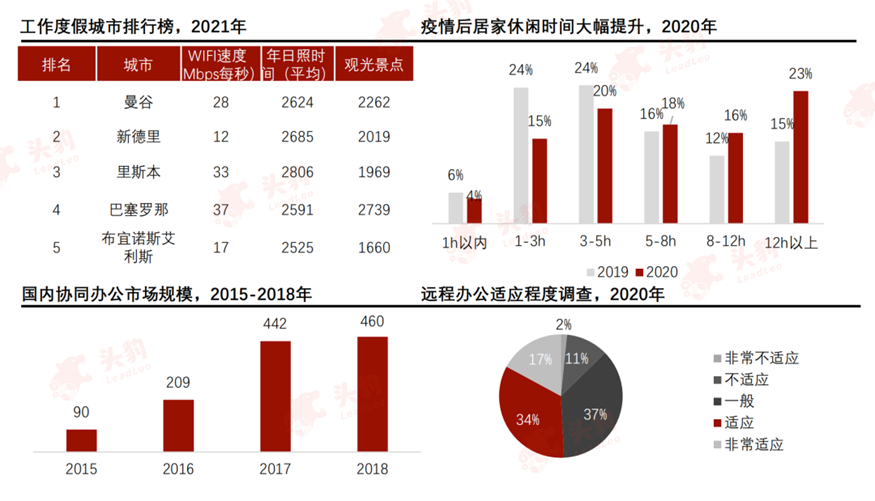
Development Trends of Urban Resort Hotels in China - Meeting New Needs for Working Vacationers
8What is the current development status and growth potential of the rural boutique homestays industry in China in the future? What are the driving and constraining factors for industry development? What are the differences between Chinese and foreign vacation boutique homestays?
9Where is the development of prefabricated building industry in hotels in China in the future? Hotel prefabrication, as an emerging industry, currently has a low penetration rate in China. With increasing recognition from society and the market, its development space is vast; environmental protection concepts and consumption upgrades are also continuously driving the in-depth development of the hotel prefabrication industry.
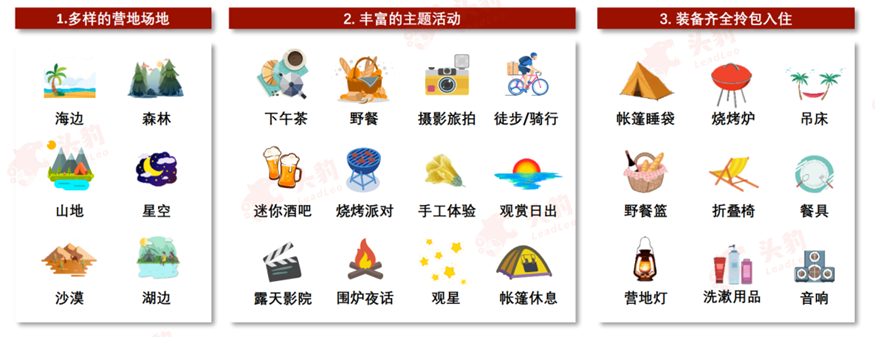
10With the booming vacation economy, will refined camping become the next trend?2020The year is known as the inaugural year of refined camping in China. Affected by the pandemic, overseas travel and long-distance tourism markets have cooled down. After the pandemic eased in the second half of the year, fast and safe short-distance travel and self-driving tours became the preferred mode for residents to relax and unwind. The leisure vacation economy has seen a boom, and camping has become one of the fastest-growing cultural and tourism products after the pandemic's recovery, with year-on-year growth.303.5%Is the booming camping economy a flash in the pan or a new trend?
11What is the future development direction of the interior design industry in Chinese hotels? Under the impact of the pandemic, the hotel industry has been negatively affected. However, as the consumer group begins to changeZFor generations, the concept of 'holiday' has undergone significant changes among consumers. The concept of 'holiday' has evolved from the earlier 'scenic spot visits' to the current 'leisure and entertainment'. Boutique resorts and niche homestays are highly sought after, while the internet celebrity culture has created a broader influence of the 'holiday' concept among consumer groups. As a result, the hotel interior design industry has developed rapidly and is expected to continue in this direction.2024Yearly escape from the "quagmire" of the pandemic.
12How can the hotel lighting equipment industry in China continue to grow in the future? From the perspective of the current trend of high-end development in the hotel industry, it is expected that the future market increment for hotel lighting equipment will lie in the integration of lighting design, fixtures, and intelligent control systems by hotel lighting designers and users, aiming to meet consumers' personalized needs and achieve customized, intelligent development.

Six Pain Points in the Application of Intelligent Lighting in Chinese Hotels