Recently, after its initial public offering, Atos announced the signing of an investment agreement with the Hohhot government, finalizing a significant investment project. The initial phase of the investment has reached180Yuan. For many years, Atos has been a leading enterprise among global photovoltaic module manufacturers, and its dynamics have, to some extent, reflected the development direction of the photovoltaic industry.
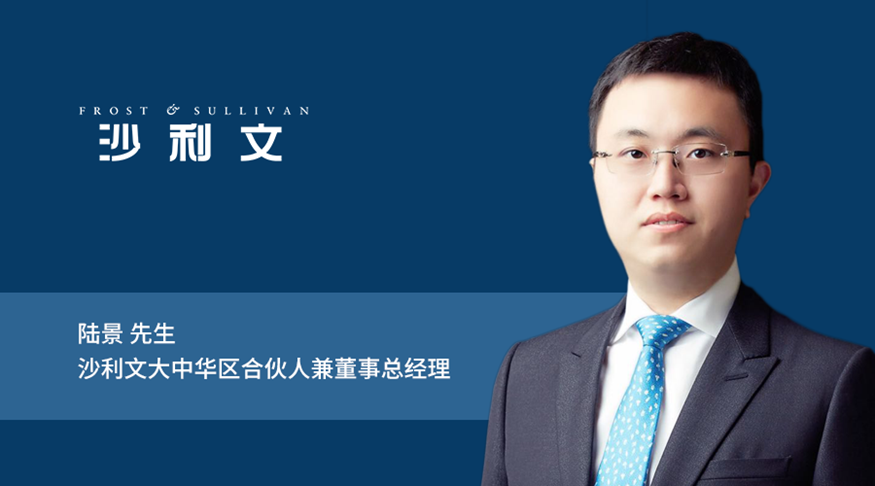
When there is a trend towards multi-crystalline to monocrystalline conversion in the industry, what factors may delay the transformation of manufacturers' production capacity? From the current situation, will there be overcapacity in the photovoltaic industry? In the future of the photovoltaic industry, will the power of discourse increasingly concentrate among photovoltaic module manufacturers? Frost & SullivanFrost & SullivanLu Jing, Partner and Managing Director of Frost & Sullivan's Greater China Region, was interviewed by Economic Observer Network to discuss the development of the photovoltaic industry.
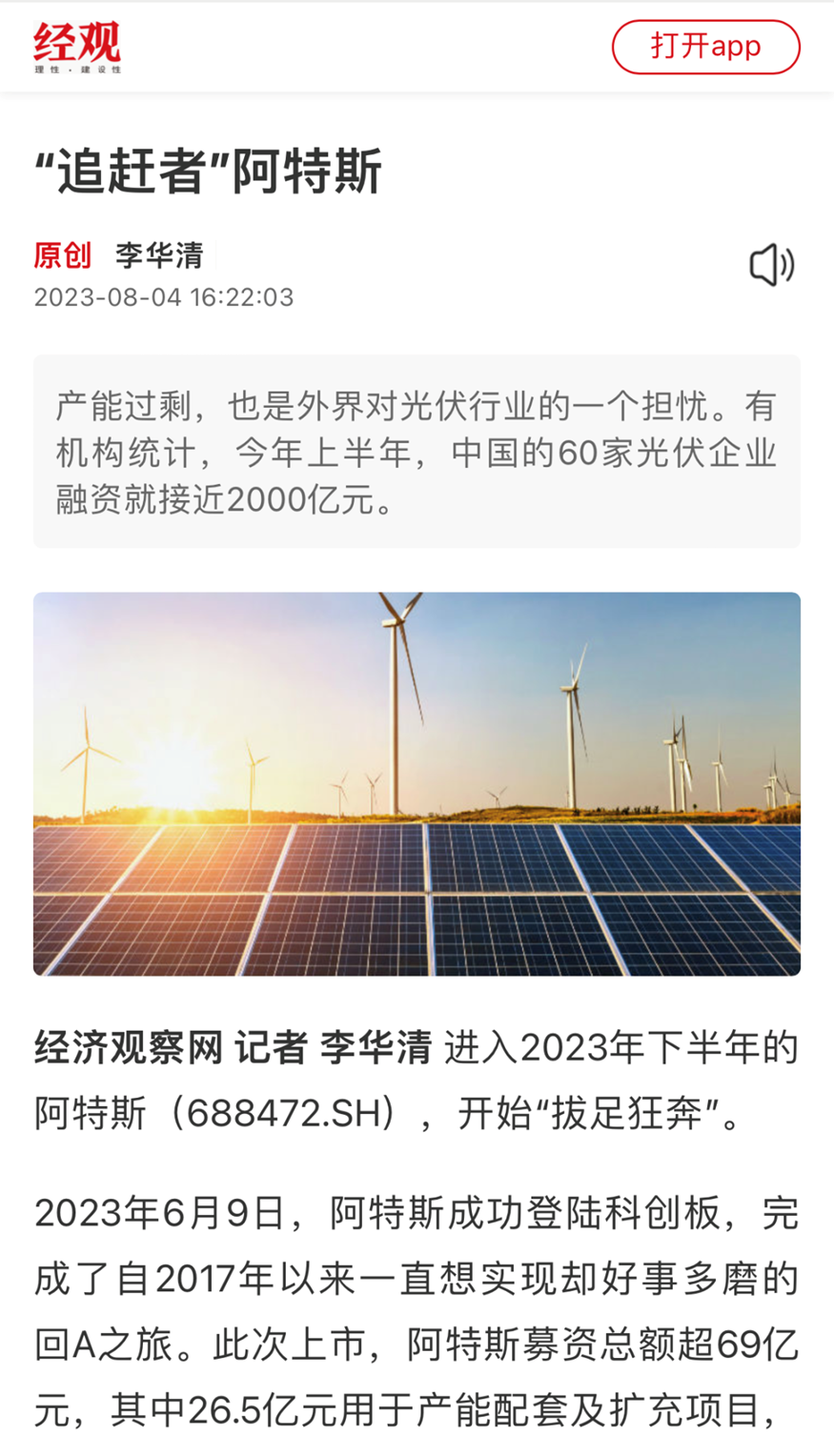
*Click "Read the Original Article" at the end of this text to read the full report.
Economic Observer Network
Q
The photovoltaic industry indeed goes through a process of transitioning from polycrystalline to monocrystalline. Based on your observation, when there is a trend towards polycrystalline to monocrystalline conversion in the industry, what factors may delay the capacity transformation of manufacturers?
The photoelectric conversion efficiency of single crystals is about 15% higher than that of polycrystals.1%-2%Although many companies in the industry have continuously introduced emerging technologies such as diamond wire cutting to reduce the production cost of single crystals, the cost of single crystals remains high, hindering an increase in their market share. With further development of technology leading to cost reductions,2017Since the beginning of the year, leading photovoltaic module manufacturers in the industry have been deploying monocrystalline production to improve energy use efficiency. From an engineering application perspective, under the industry trend of shifting from polycrystalline to monocrystalline, market actual demand, technical barriers, and their own strategic planning will all affect manufacturers' capacity transformation between polycrystalline and monocrystalline.
Q
Can you introduce the specific process of the technological route transformation in the photovoltaic industry? The timing and reasons for the transition from polycrystalline to monocrystalline cells?NType battery swapPThe timing, reasons, etc., of the battery failure.
The photovoltaic industry has gone through multiple technological development processes during its development. In the early stages of the photovoltaic industry, due to lower costs, polycrystalline silicon dominated the market, but it had characteristics such as low conversion rates and poor crystal quality. With the significant cost reduction brought about by breakthroughs in monocrystalline silicon production technology, monocrystalline silicon has gradually shown its advantages, possessing higher conversion efficiency, better low-light response, lower temperature coefficients, and better long-term reliability. Therefore2019The market share of single-crystalline silicon products has exceeded that of polysilicon, becoming the mainstream silicon wafer material in the industry.
Affected by factors such as manufacturing process and cost, currentlyPType battery packs remain the mainstream choice in the market. With advantages such as high efficiency, high power, and low attenuation,NType battery packs have begun to become the best choice for large-scale projects. Under the same installation area,NType battery packs can be installed approximately2.5%-3%The system capacity is thus reduced, saving component quantity, array, and land area, while also lowering installation time and operational costs.
In the future, the photovoltaic industry will return to the track of efficiency improvement, focusing on enhancing efficiency, power, and single-watt generation to offset rising material, transportation, and land costs and improve project economics.NModule batteries are set to become a new growth point in the photovoltaic industry, with their market share expected to continue expanding.
Q
Some believe that the current period is a window for expansion in the photovoltaic industry, while others worry about overcapacity among Chinese photovoltaic companies. What do you think? From the current situation, will there be overcapacity?
The photovoltaic industry is still in a period of capacity expansion, with overcapacity only existing in relatively backward production lines, while advanced capacity continues to be in short supply.
Currently, the world is undergoing a critical energy transformation period. The intensification of the Russia-Ukraine war and complex international relations have led to a continuous rise in traditional energy prices. As a result, the importance of photovoltaics in the global market, especially in Europe, has further increased, and high-quality photovoltaic products will gain more market favor.
Different from the previous overcapacity in the photovoltaic industry, China's photovoltaic industry now accounts for more than80%At the same time, its industrial scale and technological level are leading other countries, and it is leading the development of the global photovoltaic industry.
In addition, Chinese photovoltaic enterprises are actively deploying vertical integration into the industrial chain, aiming to alleviate cost pressures and ensure the stability of production expansion costs and supply costs. Given the rapid growth in overseas photovoltaic demand, the pivotal position of China's photovoltaic industry chain globally, and the development trend towards vertical integration among Chinese photovoltaic enterprises, future production capacity will develop towards high-end photovoltaic industrial chains. Backward and excess capacity will be rapidly phased out, and the industry will tend towards concentration and scale.
Q
2021Since the second half of the year, the price of silicon-based materials for photovoltaics has been high for a considerable period of time, causing great distress to downstream manufacturers. This year, the prices of silicon-based materials have gradually declined. Some believe that the normal state of the industry should be for photovoltaic module manufacturers to become the dominant players in the supply chain, rather than upstream raw material companies. What is your opinion on this view? Will the future of the photovoltaic industry increasingly concentrate power in the hands of photovoltaic module manufacturers? Why?
Due to the significant price fluctuations in photovoltaic raw materials in recent years, the integration of the photovoltaic industry chain has become an important phenomenon and one of the main trends in China's photovoltaic industry today. Focusing on various aspects such as polysilicon materials, large-size silicon wafers, and photovoltaic solar cells, many photovoltaic module manufacturers have begun to integrate upstream silicon-based materials and silicon wafer production. By integrating all aspects of the photovoltaic manufacturing industry chain, industrial integration can effectively reduce enterprise production costs, withstand supply chain price fluctuations, control production scheduling and supply, and achieve collaborative operations. With the continuous advancement of industrial integration, major photovoltaic module manufacturers are able to better control raw material supply and quality, improve resource utilization efficiency, and promote the continuous enhancement of their position within the industrial chain.
*This interview was published in Economic Observer Network Reporter: Li Huaqing Original title: "Chaser" Atlas >> .
2023Frost & Sullivan's New Investment Conference