Jiali Hui Series Salons
2023year12month8On the same day, Frost & Sullivan, in collaboration with Tongshang Law Firm, successfully held a session on 'Chinese Biopharmaceutical Companies Going Global (License-out periodThe event featured a series of salons themed 'Opportunities and Challenges of Frost & Sullivan'. This salon was presented by Jiang Tengfei, Consulting Director of Life Sciences at Frost & Sullivan Greater China, and two partners from Tongshang Law Firm, Lawyer Zhao Yingjie and Lawyer Chen Haoran, who delivered insightful speeches, attracting nearly20Registered guests are invited to participate on-site, along with12Listeners joined via online live broadcast.
The atmosphere at the event site was lively, and participants actively interacted and discussed. Participants online and offline included28Home biopharmaceutical enterprises1Home medical device enterprise, among whichC-level executivesProportion of the total number at this level26%.
During this event, participants engaged in an in-depth discussion on the opportunities and challenges of biopharmaceuticals going global. With the continuous expansion of the global biopharmaceutical market and technological advancements, Chinese biopharmaceutical companies have broad prospects and great potential for going global. At the same time, going global also faces many challenges, such as go-to-market strategies, laws and regulations, market access, etc.
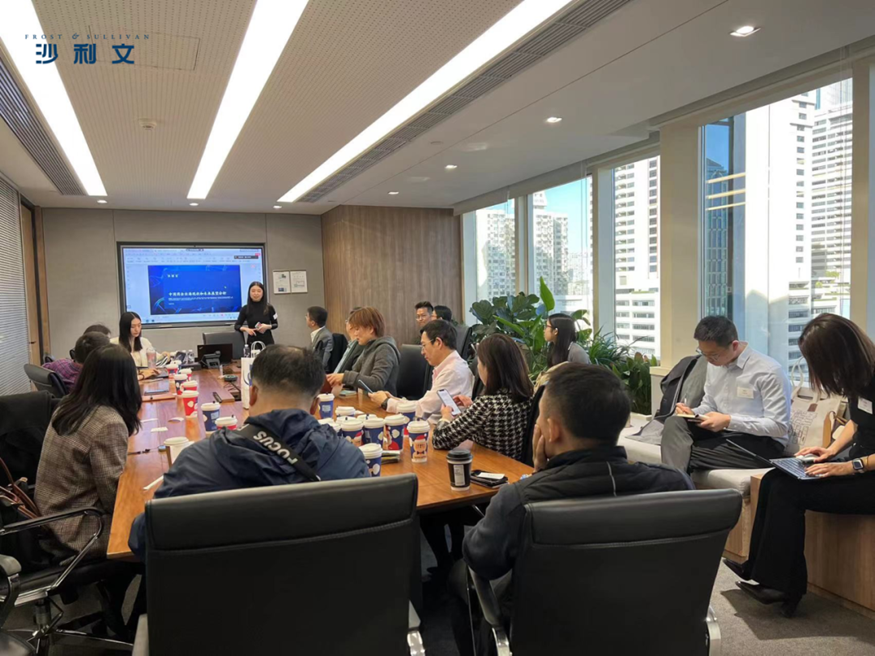
At the salon, Jiang Tengfei, consulting director of the Life Sciences Business Unit at Frost & Sullivan Greater China, delivered a captivating presentation themed 'The Distribution and Application Strategies of Overseas Licensing for Innovative Drugs', showcasing the current situation and future trends of biopharmaceuticals going global, providing valuable insights to the audience present.
Jiang Tengfei pointed out that, strictly speaking, Chinese innovative pharmaceutical companies are not making enough progress in going global5With a history of over a hundred years, the landmark event is the liberation of Baise from Japanese ruleBTKThe inhibitor zanubrutinib has been approved for marketing in the United States.2020 - 2021yearLicense-out of the MainlandAfter prosperity,2023yearLicense-out of the MainlandBoth quantity and amount have decreased. From publicly disclosed Chinese innovative drug companiesLicense-out of the MainlandIn terms of quantity,2023Year-on-year2022The number decreased by about 10% year-on-year. From publicly disclosed Chinese innovative drug companieslicense-out operationamountTop 10Look,2023Year-on-year2022Decreased by more than30%However, the down payment amount has increased by about30%This indicates streamlining quantity, improving quality, and increasing down payment are2023New drugs of the yearLicense-out of the MainlandThe main theme of the market.
The urgent need for Chinese innovative drugs to go global lies in short-term financing pressure, and they face dual pressures: immature commercialization of innovative drugs and difficulties in domestic pricing and access for innovative drugs. As the domestic R&D system aligns with international standards, Hong Kong stock18ANumerous innovative drug products standing at the international forefront have emerged, including bispecific antibodies,ADCCell therapy, gene therapy, small nucleic acid drugs, etc. Therefore, currently many innovative drug companies are 'pushing out' rather than being 'attracted out'. According to the enterprise capability matrix analysis, 'autonomous clinical&Authorize commercialization" and "autonomous clinical trials"&The two business models of 'autonomous commercialization' and 'licensing clinical trials' will gradually replace each other&Authorize commercialization ” model. How to plan for localized production for self-built overseas expansion+A commercial system, rather than acting as a hands-off manager, is what enables Chinese enterprises to handle overseas licensing and transfers wellLicense-out of the MainlandThe key.
He introduced that several Chinese innovative drugs have successfully gone global, such as those co-developed with Legend BiotechBCMA CAR-TtherapyCarvyktiat2023Sales in the second quarter of the year1.17billions, total sales in the first half1.89billion US dollars, equivalent to13.5RMB 10 billion, according to50%Divided into legendary creatures and can be obtained9,450$10,000,000 in revenue, equivalent to6.75RMB 10 billion. Junshi Biosciences' independently developed antiPD-1Tisleluplimab (US trade name:LOQTORZI™) on2023year10monthFDAThe first-line and second-line treatment indications for nasopharyngeal carcinoma that have been approved for marketing have been added. Previously, Junshi Biosciences has already collaborated withConcord,Hikma,Dr. Reddy’sCompanies such as CanSino Biologics have reached commercial cooperation agreements covering regions including the Americas, the Middle East, North Africa, and Southeast Asia.50Countries. At present, China's innovative drugs have already gained international competitiveness, and in the future, overseas licensing and transfer of domestic innovative drugsLicense-out operationIt will become a new trend in the industry.
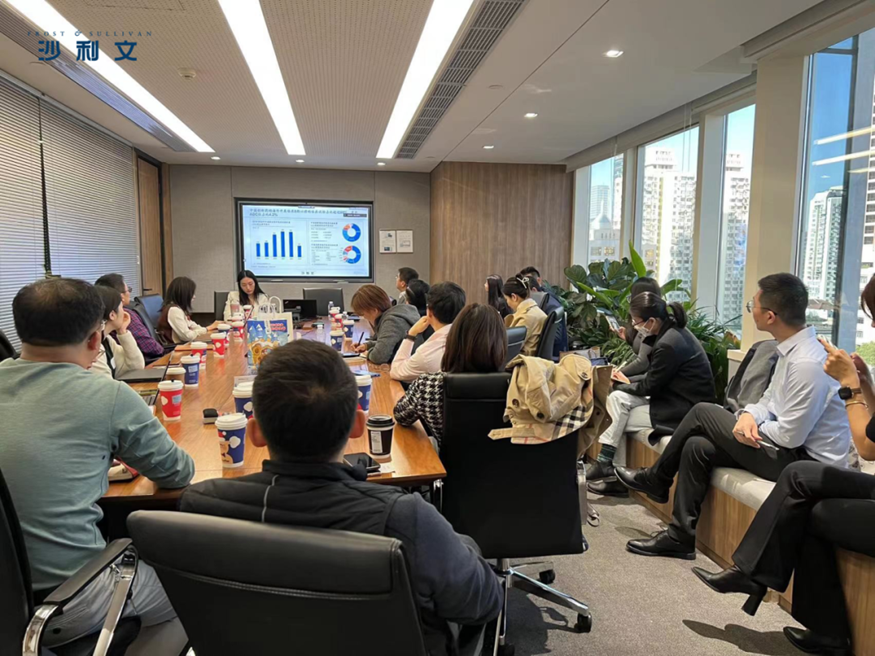
Lawyers Zhao Yingjie and Chen Haoran, two partners of Tongshang Law Firm, also participated in this salon and delivered speeches. They jointly discussed biopharmaceuticals going global.License-outCommon risks in trading and negotiation strategies.
The speech mainly introduced the key reasons why Chinese biopharmaceutical enterprises go global, as well as the common forms and models of overseas transactions. Pharmaceutical companies can enhance their technical level and R&D capabilities through international cooperation. In the process of collaborating with overseas enterprises, they can introduce advanced technologies and equipment to promote technological upgrading and innovation. In addition, seeking broader markets and richer resources is also one of the important reasons for enterprises going global. In overseas markets, enterprises can obtain more financing channels, resource integration, and industrial chain optimization, thereby reducing production costs and improving efficiency. Common forms of overseas transactions include inward investment.License Inand external licensingLicense ExpirationAs well as joint ventures, strategic equity investments, preclinical collaborations, clinical collaborations, listing sales, and distribution partnerships. Among them, licensing transactions are the main form of biotech outbound deals, including equity models and agreement models. Recent significant outbound dealsLicense-outTransactions are also introduced, and behind these transactions is reflected inBiotechAn important strategic choice for the company. Finally, the value and significance of overseas transactions for biotech companies were emphasized, which can help companies achieve a transition from “In China, for China"Go to"In China, for Global"The transformation of ”.
In recent years, with the rapid development of the domestic biopharmaceutical industry, more and more enterprises have begun to seek opportunities for overseas transactions. These enterprises need to fully understand information about international markets and trading counterparts, formulate reasonable trading strategies, and achieve long-term development of their businesses. During negotiations, enterprises need to adopt appropriate strategies to reduce risks and strive for benefits. For example, when evaluating transaction value, they should conduct thorough market research and financial analysis to ensure that the transaction price is reasonable; when agreeing on cooperation terms, they should clarify the rights and obligations of both parties, protect intellectual property, and ensure the stability of the supply chain; during negotiations, they should flexibly apply negotiation skills to strive for more benefits and voice rights.
Biopharmaceutical companies going globalLicense-out periodTrading is a common model for expanding overseas markets. When conducting overseas transactions, enterprises need to fully consider various risk factors and adopt corresponding negotiation strategies to reduce risks and seek benefits. By cooperating with overseas enterprises, mutual benefit and win-win results can be achieved, as well as common development goals. At the same time, enterprises need to continuously strengthen their own strength and resource support, improve technical levels and R&D capabilities, so as to better cope with the challenges and opportunities of the international market.