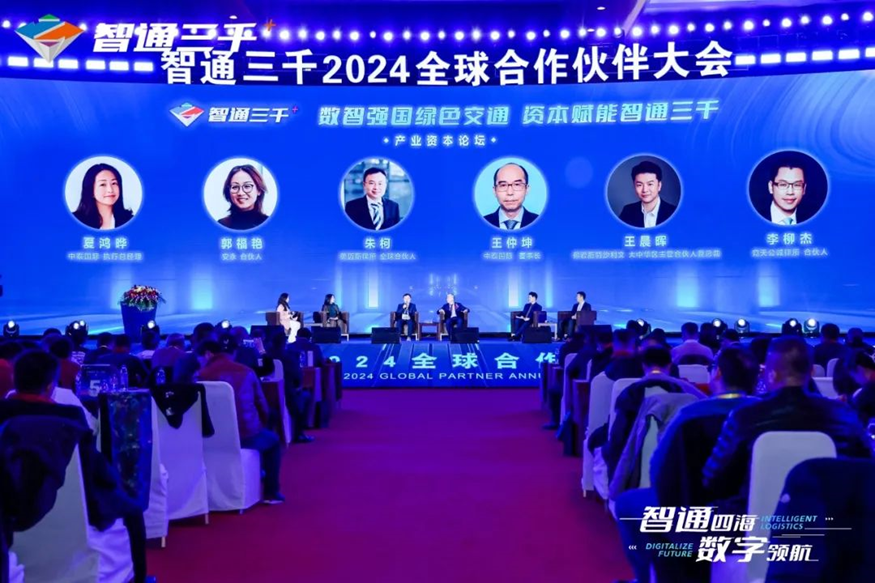
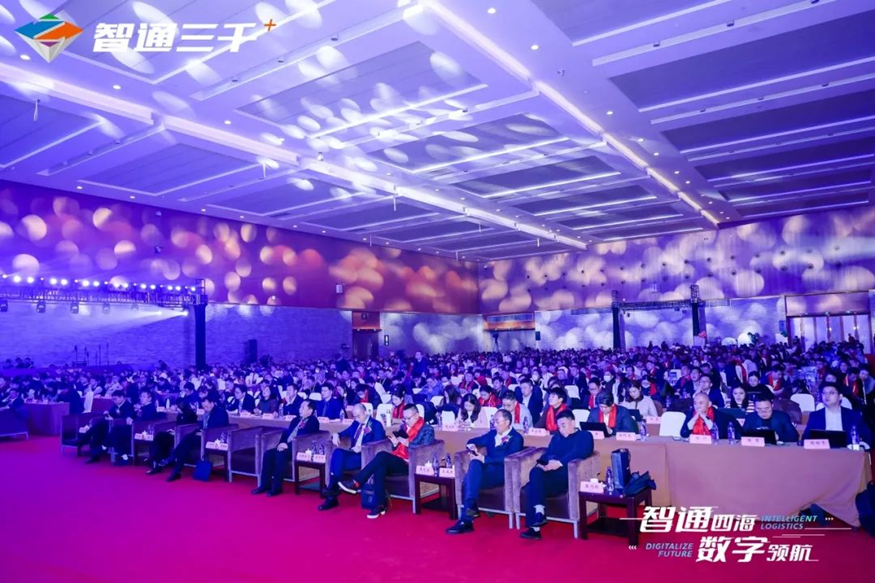
2024year2month21Today, Zhitong 30002024The Global Partners Conference was held at the International Expo Center in Jianye District, Nanjing, China. It brought together leading domestic and international enterprises, industry representatives, financial institutions, association think tanks, partners, government authorities, and representatives of important entrepreneurs.1,000bits, total1,500The remaining guests gathered together to discuss “Digital+Finance", "Data+Computing power ” explores new technologies and models for the development of smart logistics, aiming to help China reduce the overall logistics costs of society, and build a modern logistics system that is supply-demand compatible, internally and externally connected, safe, efficient, smart, and green.
Frost & SullivanFrost & SullivanWang Chenhui, Partner-in-Chief and President of Frost & Sullivan Greater China, was invited to attend the conference. He signed a capital strategic cooperation agreement on behalf of Frost & Sullivan with Zhitong 3000 at the event and participated in “Digital Intelligence for a Green Transportation Future in a Strong Country The "Capital Empowering Smart Connectivity: Three Thousand ” Capital Industry Forum engaged in lively discussions with Wang Zhongkun, Chairman of China International Group, Zhu Ke, Global Partner of Mays Law Firm, Guo Fuyan, Partner of EY, and Li Liujie, Partner of Jingtian Gongcheng Law Firm.
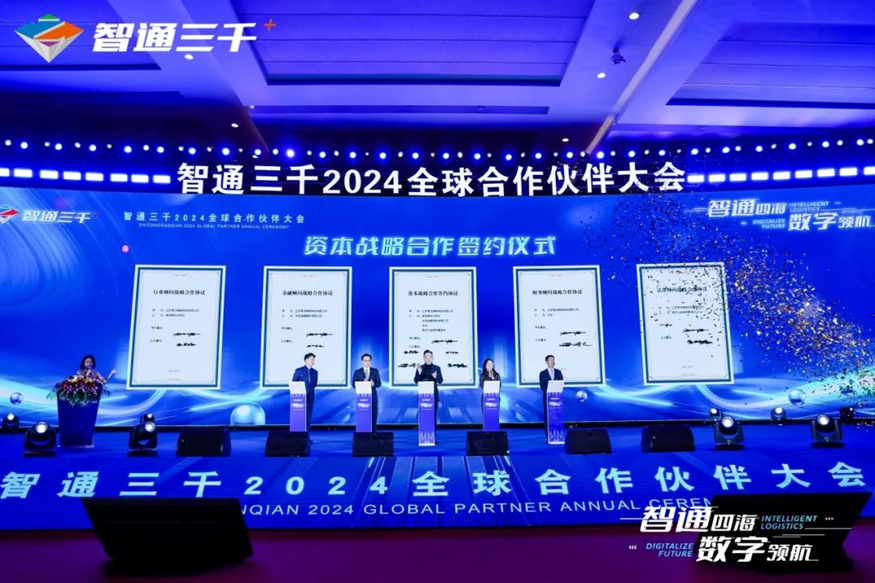
Capital Strategic Cooperation Signing Ceremony
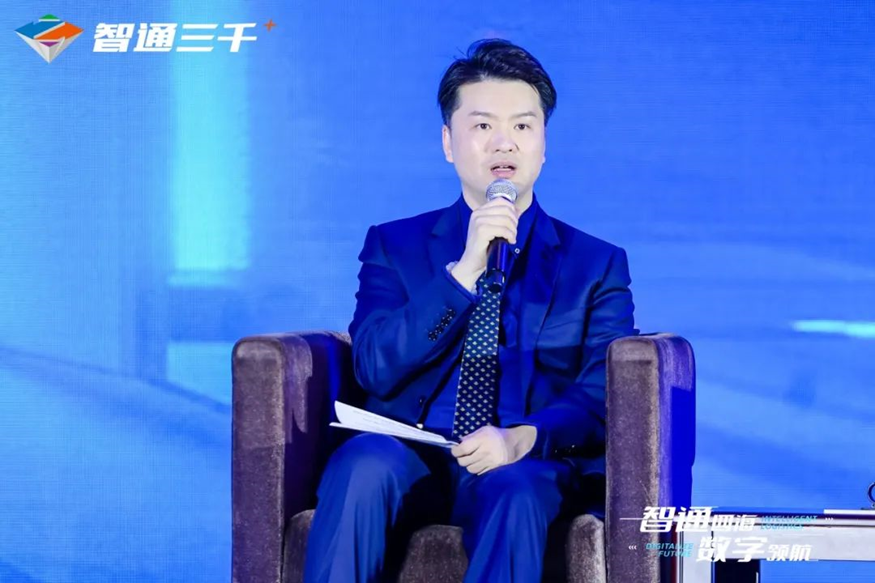
Managing Partner and President of Frost & Sullivan Greater China Region Wang Chenhui
"
Q: What do you think are the disruptions and opportunities brought about by the current digital transformation and upgrading to the market and industry?
Wang Chenhui: The widespread application of digital technology has made the operation of the entire logistics industry more intelligent and efficient. Empowered by digital technology, logistics enterprises can achieve real-time monitoring and refined management of various links such as transportation and distribution, improving the operational efficiency and response speed of the entire supply chain.
At the same time, by building digital platforms, it is also possible to promote the green development of the logistics industry and transform it towards a more environmentally friendly and sustainable direction. For example, by using technologies such as the Internet of Things and big data, optimizing logistics transportation routes, developing multimodal transport, improving transportation efficiency, reducing energy consumption and carbon footprint, and so on.
"
Q: As is well known, Frost & Sullivan, as the industry advisor with the highest market share, possesses very rich data and an advanced research system across various industries. Could you please introduce to us the types and characteristics of participants in the smart logistics industry?
Wang Chenhui: Logistics warehousing and logistics transportation are the two cornerstones of new infrastructure for logistics. Currently, China's warehousing industry has developed quite maturely. From the perspective of industry development, future innovative smart logistics capacity resources services will become the new core growth driver of the industry.
With technological empowerment and policy support, the market scale of future transportation capacity platforms is expected to exceed one trillion. Logistics transportation capacity services are not a new concept. In terms of business forms, there are two types of players in the industry.
One category is vertical players, who either focus on providing capacity scheduling services to match supply and demand between cargo providers and transportation logistics providers (logistics companies or individual drivers), or on services related to the supply chain, such as financial and tax services, or enterprise tools.
Another type is the comprehensive player, which takes the transportation platform as its core business and extends supporting supply chain services upstream and downstream. Compared to vertical players, comprehensive players often have a richer product matrix, meeting the deeper-level supply chain logistics needs of upstream and downstream customers. They possess higher commercial and social value, and their business has stronger risk resistance capabilities.
Putting aside the business model, let's categorize them based on business strategy. Players in this industry can also be divided into supply companies (BTerminal) guidance and freight truck driverCEnd) two types of guidance. Enterprise-oriented players not only buildSaaSThe system provides supply chain financial services and can match down on practical capacity scheduling and resource services. In terms of business outcomes, customer service has a higher stickiness, and its scope of services is continuously expanding, greatly expanding the investor's imagination;CEnd-oriented enterprises place more emphasis on order matching.
Looking at the entire freight industry, especially the road freight sector, it is characterized by the principle 'where there is cargo, there is a vehicle.' In fact, truck drivers have relatively weak loyalty to platforms, and the main consideration for choosing a platform is the richness of orders. Therefore, 'where the cargo is, there the vehicle follows' is the core development feature of the industry.
At present, the technological development of China's logistics supply chain is still in its early stages, and more than 90% of players in the industry areTo CGuidance is strategy, but from the perspective of leading industry upgrades, the futureBCustomers who are strategy-oriented have stronger development potential, are more likely to become comprehensive leaders, and may even end up with the potential for a 'winner takes all'. According to our Frost & Sullivan assessment, adoptingTo BCompanies with guiding strategies and the capability to fully extend into supply chain technology are currently a scarce target in China, with the number of such enterprises being in single digits.
"
Q: Could you please share with us some outlooks for the future of smart logistics and green transportation industries? Could you provide us with more data and practical insights?
Wang Chenhui: Logistics new infrastructure construction is an important focus of the 14th Five-Year Plan. The future trend of the logistics industry is market-led and government-guided, further leveraging the effectiveness of various players within the industry to achieve healthy and high-quality development.
As an important part of the logistics technology industry, the smart supply chain management platform needs to play a role in ensuring transportation safety and promoting cost reduction and efficiency improvement within the industry. It must effectively address the pain points of shippers and drivers, ensure the stability of upstream and downstream supply chains, and meet the expectations of the people and government. Specifically, in the future, China's smart logistics supply chain technology will comprehensively upgrade China's large logistics industry through three major trends:B2B"Technology" and "channel fulfillment".B2BThe topic of 'players' has already been shared in the previous section, so I won't go into detail here. The core development strategies of 'technology' and 'channels' are the foundation for the implementation of intelligent logistics upgrades. In simple terms, 'technology' is an efficient means, while 'channels' are the basis for application implementation. Only by making comprehensive efforts around 'technology' and 'channels' can we truly apply intelligent supply chain technology in actual production and development practices.
In addition, from the perspectives of sustainable industrial development and industry risk resistance, Frost & Sullivan believes that green logistics is a topic that we must take seriously. Reducing the carbon footprint of the logistics industry by replacing oil vehicles with electric ones is one of the focal points of the industry's green transformation.
In the practice of transformation, one of the challenges faced by many new energy vehicle companies is the inability to reach upstream supply companies, which hinders market promotion progress. However, transportation resource platforms can serve as a bridge, helping new energy vehicle companies establish cooperative relationships with supply companies and play their role in green transformation. In addition, optimizing transportation routes through technology empowerment and reducing energy losses are also ways for players in the transportation platform industry to assist in the green transformation of the industry.
From the perspective of capital market development strategies, various green financial instruments are emerging continuously, such as green bonds, green trusts, environmental equity financing tools, etc. Players with a green logistics gene have more diversified and convenient financing conditions compared to traditional players, and they will also be favored by the capital market in the future.