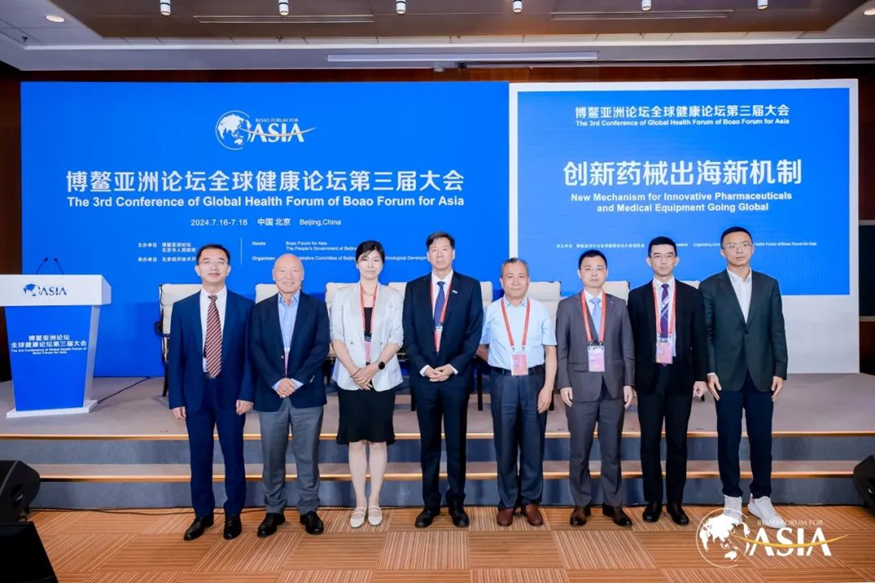
7month18On the same day, the third session of the Boao Forum for Asia Global Health's sub-forum 'New Mechanisms for Innovative Drugs and Medical Devices to Enter Overseas Markets' was held. The forum focused on exchanges and discussions on topics related to the trend of innovative drugs and medical devices entering overseas markets, policy innovation, sharing of overseas market and investment opportunities, and the path to internationalization.
Frost & SullivanFrost & SullivanMao Hua, Partner and Managing Director of Frost & Sullivan's Greater China Region, attended the event and participated in roundtable discussions. Under the chairmanship of Wang Junping, Deputy Editor-in-Chief of Health Times and on the People's Daily Health client, he exchanged views with guests on topics such as 'How policy innovation promotes the high-quality development of innovative drugs through international cooperation' and 'How industrialization is globalizing'.
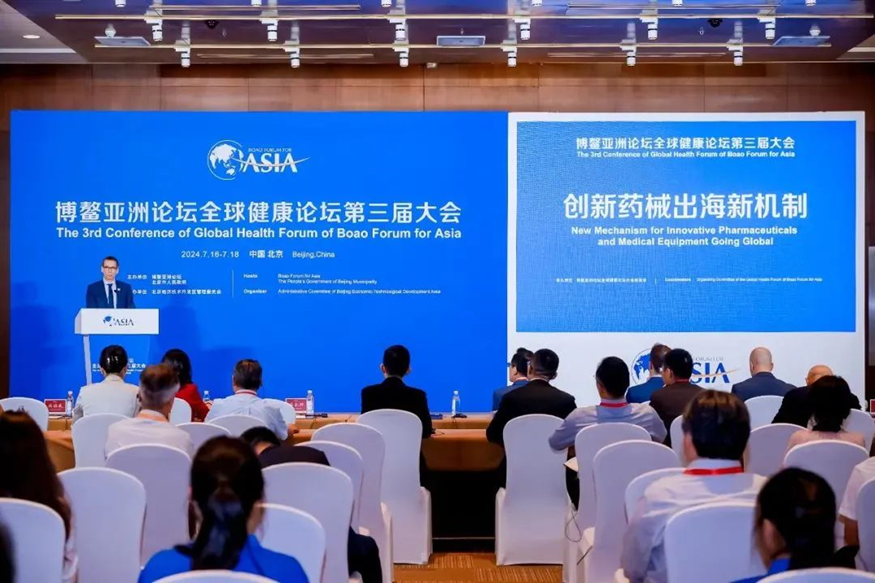
In his forum speech, World Health Organization Representative in ChinaMartin TaylorIt is stated that the secure and effective access to drugs, vaccines, and medical products is crucial for maintaining confidence in the healthcare system and ensuring universal health insurance. In recent years, China has been continuously innovating and developing in the field of pharmaceuticals and medical devices, promoting enterprises to go global and playing an important role in the global supply chain. The World Health Organization and China have a long-standing20The cooperation for the year, followed by further unified management standards, is of great significance to China and developing countries around the world. In the future, cooperation between the two sides will also ensure that China plays a key role in global pharmaceutical and medical device supply.
During the keynote speech session, Dr. Lam Man-kee, Director of Health Services of the Hong Kong Special Administrative Region Government, stated that there are three core reasons why Hong Kong has become a rapid passage connecting the Chinese mainland with the world in the field of pharmaceuticals and medical devices: a strong foundation in clinical trials, the convenience of registering medical products in Hong Kong, and stable support from the mainland. In terms of clinical trials, Hong Kong has world-class research and medical standards, which include not only multipleNMPAThe identified clinical trial sites also plan to establish an international clinical research institute in the Greater Bay Area to promote international cooperation; in terms of registered medical products in Hong Kong, the Hong Kong drug regulatory system is excellent and has already joinedPICSandICHWait for international organizations to driveGood Manufacturing PracticeStandardization in line with international norms is also the 'bridgehead' for the internationalization of traditional Chinese medicine. In addition, Hong Kong has received strong support from the mainland, including the implementation of the 'Hong Kong-Macao Medical Device Clearance', allowing the use of registered medical products from Hong Kong in the Greater Bay Area. In the future, Hong Kong will strive to play the role of a 'super contact person', becoming an important fulcrum for the 'importation' and 'exportation' of innovative medical devices.
European Medical Imaging, Electronic Medicine and Health Informatics Industry AssociationCOCIRChina's representative Yuan Jie shared the future management framework for the medical technology industry in the EU market. She introduced it from four aspects: pre-market launch, post-market supervision, progress in implementing EU medical device regulations, and industry recommendations. In particular, regarding the progress in implementing EU medical device regulations,MDRandIVDRThe implementation has faced numerous challenges, such as limited authorization capabilities of announcement agencies, time-consuming and costly evaluations, strict requirements before and after listing, and the risk of supply shortages. As a non-profit trade association,COCIRAdvocate for structural reforms in the regulatory and policy frameworks of medical devices, establishing a single governance structure with specific functions for medical devices to facilitate regulatory convergence and ensure the safety and effectiveness of medical devices in the global market.
Hong Xiaoming, Secretary-General of the Third-Party Testing Branch of the China Medical Devices Association, shared the listing process for innovative medical devices in the United States. She stated,CDRHThe U.S. Food and Drug AdministrationFDA) the department responsible for supervising medical devices, from2011Starting from [a specific year], the goal is to clarify that "the United States becomes the preferred global listing destination for innovative medical device products". At the same time, for innovative productsDe NovoandBreakthrough achievementTwo approaches, she said,De NovoApplies toIclasses andIIFor innovative products, if there is no similar technology or product with a similar intended use that has been approved in the United States, this route can be used for application;Breakthrough achievementthen forIIIFor high-risk innovative products, a fast-track approval process is provided.
In the 'Global Markets and Investment Opportunities' section, the UK Embassy in China's Department of Commercial Trade, Life Sciences and Healthcare CounsellorRahul AgarwalIt is stated that the UK is a world leader in the field of life sciences, committed to collaborating with Chinese investors to contribute to global health development. As one of Europe's largest life science clusters, the UK's government strategy focuses on science and research, building a leading university system, creating a favorable business environment, supporting startups, and particularly focusing on areas such as early dementia diagnosis, vaccines, obesity, respiratory health, aging, and mental health, aiming for early diagnosis and cooperation both domestically and internationally. In the future, the UK looks forward to collaborating worldwide to further address the challenges and problems faced by humanity.
Zheng Jie, Deputy Representative of the German Federal Foreign Trade and Investment Agency Beijing Office, stated that Germany is the 'bridgehead' for Chinese enterprises entering Europe. With continuously growing demand in areas such as pharmaceuticals and medical devices, and the emergence of new treatment methods and equipment, the market provides more opportunities. In the future, the main trends in the German market are reflected in automation, digitization, intelligence, visualization, as well as micro-robot technology, advanced therapeutic drugs, and precision medicine. As more Chinese enterprises enter Europe, it is recommended that they seize the development opportunities in the German market.
Chief Investment Officer and Deputy Director of the Swiss Trade and Investment Section at the Swiss Embassy in ChinaKuno GschwendIt is stated that Switzerland has formed a cluster in life sciences, focusing on the construction of an ecosystem in the field of life sciences, including global health for the future, digitization, and automation, and looks forward to cooperation with Chinese enterprises. Switzerland can serve as a fulcrum for Chinese enterprises entering the European market, facilitating the establishment of R&D centers in Europe.
Gai's (China) Senior Business Development ManagerRoger GermannIt is stated that the Life Sciences Committee of the China-Switzerland Chamber of Commerce consists of a series of companies in the life sciences field, with annual R&D investments exceeding90One hundred million Swiss francs. Looking forward to more cooperation with Chinese enterprises in the future to achieve a win-win situation.
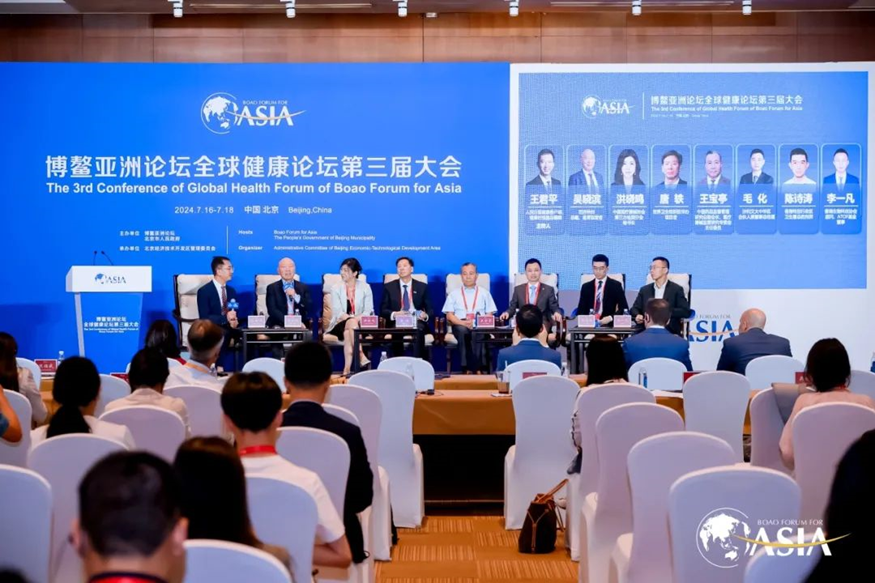
During the roundtable discussion session themed 'Policy Innovation and International Cooperation to Promote the High-Quality Development of Innovative Drugs and Medical Devices', Wang Junping, Deputy Editor-in-Chief of Health Times and Editor-in-Chief of People's Daily's Health Client, served as the host. He engaged in exchanges and discussions with guests on issues such as 'how policy innovation can contribute to international cooperation in promoting the high-quality development of innovative drugs' and 'how industrialization can be globalized'.
Tang Yi, Program Officer at the World Health Organization's Office in China, said,WTOThe ultimate goal of prequalification is to address accessibility issues. By conducting prequalification,WTOFilter products to include those on the World Health Organization's prequalification list, which is primarily used to provide a list of eligible items for United Nations procurement. Enterprises interested in applying for prequalification need to first determine whether the products they are applying for fall within the categories published on the official website.
Wang Baoting, Vice President of the China Pharmaceutical Regulatory Research Association and Director of the Medical Device Regulatory Research Committee, stated that with a series of national encouragement policies, the development situation of China's medical device industry is very good, with continuous emergence of innovative products. At the same time, globalization in the field of medical devices also aligns with the interests of humanity as a whole. Domestic enterprises need to strengthen three elements when 'going global': paying attention to the laws and regulations of the countries or regions where the products are exported, considering the market conditions of the overseas markets, and organizing group trips for enterprises to go abroad.
Hong Xiaoming, Secretary-General of the Third-Party Testing Branch of the China Medical Device Association, stated that policies are closely related to the development of the biopharmaceutical industry. Policies have a certain lag, but they can be continuously optimized and adjusted during implementation. For enterprises, this can be utilizedCDMO companyFirst-class international experience helps accelerate the transformation from R&D to product delivery. We entrust production and regulatory affairs to professional institutions, while introducing global thinking at the early stages of product development.
 Frost & Sullivan Greater China Partner and Managing Director, Huahua
Mao Hua, Partner and Managing Director of Frost & Sullivan Greater China, stated that the development of innovative drugs is driven by the 'three carriages' that propel it forward: variety, capital, and policy. Firstly, variety is at the core; innovative drugs with clinical value and capable of addressing unmet clinical needs are the cornerstone of success. Secondly, capital is the accelerator, helping enterprises bridge the gap from clinical development to market entry. Lastly, regulatory policies at home and abroad provide clear guidance for innovative drugs, standardizing market access. Going global still requires firmly grasping the 'variety, capital, policy' carriages, consolidating R&D and technical strength, deeply understanding the regulatory environment, market demand, and development potential of target overseas regions, seeking to integrate resources in target areas, and responding to changes in the international environment with a more open attitude and flexible international strategies. In addition to product globalization, the brand globalization of enterprises is also crucial for continuously expanding overseas markets.
Wu Xiaobin, President and Chief Operating Officer of BeiGene, stated that in the globalization process of Chinese enterprises, one of the main obstacles to market access in developing countries lies in unclear policy standards. As a biopharmaceutical company with a high degree of internationalization, BeiGene has been listed on NASDAQ, the Hong Kong Stock Exchange, and the Shanghai Science and Technology Innovation Board, among other places. This is related toWTOMultiple factors such as national policies and corporate collaboration are inseparable. In the future, we hope to do more together to enable more developing countries to access innovative drugs.
Chen Shitao, the Chief Pharmacist of the Hong Kong Special Administrative Region Department of Health, stated that regulatory policies are not a hindrance but rather aim to provide safer and more effective products, which requires moving forward with innovative development. As the 'super contact person' between the mainland and the world, Hong Kong will further improve the 'importation' and 'exportation' of drugs. At the same time, Hong Kong will promote innovative research and development of clinical trials in the Guangdong-Hong Kong-Macao Greater Bay Area and further enhance its regulatory capabilities.
Li Yifan, an industry consultant at the Hong Kong Biotechnology Association, stated that investments in the biopharmaceutical sector are cyclical. The current stage is only temporary rather than a continuous trough. Fund investments are determined by the pricing of returns and risks. The market needs patient capital and long-term capital, as well as policy support. In terms of company investment considerations, there is a greater focus on the development plans of entrepreneurial teams at the beginning of their ventures.