Enterprise valuation methods and investment logic analysis
During the event, Mao Hua delivered a speech on the theme of enterprise valuation methods and investment logic analysis for the top 50 companies. He stated that the choice of valuation method should be combined with two dimensions: the company's life cycle and industry characteristics, with the DCF (Discounted Cash Flow) valuation method being the most commonly used valuation technique in Biotech at present. The DCF valuation method adopts the logic of discounting future cash flows, taking into account both dynamic growth potential of the company and risk factors such as clinical failures.
Mao Hua pointed out that drugs with high valuations often possess high commercial value, which are measured by factors including disease burden, unmet clinical needs, policy benefits, and pipeline competition.
The disease burden has placed a huge pressure on public health and the socio-economy. Alleviating the burden of major diseases is one of the important goals of innovative drug research and development, and addressing the alleviation of high-burden diseases is also a reflection of the high commercial value of drugs.Taking liver cancer as an example, approximately half of all liver cancer patients worldwide come from China. In 2020, the number of deaths from liver cancer in China was 371,000, accounting for 45% of the global total deaths.
The unmet clinical needs of Chinese patients are mainly reflected in: a lack of effective diagnosis, limited treatment options, and low accessibility to medications.Data shows that due to the lack of effective screening and diagnosis, about 59% of liver cancer patients in China are diagnosed at an advanced stage. The five-year survival rate for liver cancer patients is about 12%, while due to late detection and high costs, less than 10% of liver cancer patients receive targeted drug treatment.
As a key focus of current pharmaceutical policy reforms, inclusion in medical insurance directly affects the sales performance of drugs in the market and is an important consideration for investment.Including drugs in the medical insurance catalog helps improve the accessibility of innovative drugs among patients and reduce their economic burden; at the same time, doctors can promptly grasp the clinical manifestations of these drugs during the prescription process for new medical insurance drugs. They can widely recommend effective drugs, thereby promoting drug sales.
The pipeline competition reflects the flow of invested capital, which can be demonstrated through the distribution of clinical pipelines for related diseases and their corresponding success rates.Investment funds flowing into companies often cover multiple therapeutic areas due to the company's product portfolio, making it impossible to split the funds by therapeutic area at the financial level. However, the vast majority of investments and financings in the biotechnology sector are used for research and development (R&D). Therefore, the number of clinical pipelines can reflect the enthusiasm for R&D in therapeutic areas promoted by investment.
New drug projects that pursue high commercial value also come with high risks, and investments need to comprehensively weigh the risks from research and development to post-marketing stages.Mao Hua further explained that the risks of new drug projects are mainly divided into two categories: pharmaceutical property risks and commercialization risks. Pharmaceutical property risks focus on the drug research and development stage, with different research and development difficulties corresponding to different pharmaceutical property risks. Commercialization risks, on the other hand, concern the risks associated with drug review and approval, drug production, and post-marketing sales."How to find a balance between business value and risk is at the core of the investment logic of biotech companies," said Mao Hua.

Subsequently, Zhu Yi, Executive Director of Frost & Sullivan Greater China, and Jiang Tengfei, Senior Consulting Director of Frost & Sullivan Greater China, demonstrated valuation case studies to the audience.

Zhu Yi brought a case study on the valuation of innovative devices, using the percutaneous puncture surgical robot as an example. Medical devices mainly refer to two categories: medical equipment and consumables. The logic for product penetration and valuation varies accordingly; the improvement in the valuation of medical devices requires both increased revenue and control over cost items.Zhu Yi made sales forecasts for percutaneous puncture surgical robots and their consumables based on the sales prediction logic of equipment and consumables respectively. The conclusion was reached that the commercialization of surgical robots faces many challenges, and achieving rapid volume growth requires efficient market strategies and continuous clinical exploration.

Jiang Tengfei then presented a case study on the valuation of targeted drugs. He stated that, first and foremost, products suitable for inclusion in valuation must have entered clinical trials and have clear indications. Targeted drugs should specify the accessible patient population for subdividing indications as the basis for calculation. In addition to the clinical value of the drug, determining market share also involves factors such as R&D, commercialization efficiency, and production capacity support. The pricing and price reduction strategies of new products should respect macro policies and the business competition environment. Finally, Jiang Tengfei concluded withThe three key success factors in valuing targeted drugs can be summarized into three words: 'Dao', 'Fa', and 'Shu'. The so-called Dao means making choices based on the purpose, the so-called Fa involves balancing relevant stakeholders, and the so-called Shu requires standardization of valuation for easy adjustment and response.
The entire event was packed with valuable content, and representatives from participating companies expressed that they had gained a lot. Project valuation not only determines the investor's stake in equity financing negotiations between entrepreneurs and investors but also serves as a measure of the entrepreneur's own judgment on the industry, market, and trends.
In the future, Frost & Sullivan's Healthcare Practice in Greater China will continue to help clients accelerate their business growth with a global perspective, achieving industry-leading benchmarks in terms of growth, innovation, and leadership.
Introduction to Frost & Sullivan's Healthcare Practice in Greater China
Frost & Sullivan has rich research experience in the healthcare industry, providing consulting services to healthcare enterprises throughout the entire process from early strategy to business operations. It particularly focuses on corporate growth and investment and financing decisions.
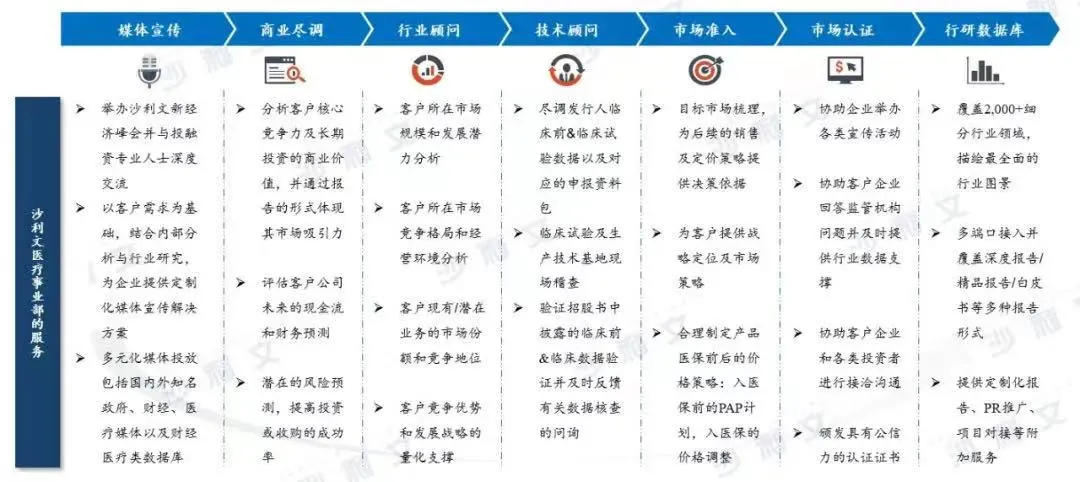
The Healthcare Business Unit of Frost & Sullivan Greater China provides due diligence services, valuation services, assessment services, strategic consulting, management consulting, planning consulting, technical advisory, financing and financial advisory, IPO industry advisory, and other services to nearly a thousand outstanding domestic and international biopharmaceuticals, medical devices, healthcare services, and internet healthcare companies. The clients served include Genentech, Hutchison MediTech, Novartis Oncology, WuXi AppTec, Tianjing Biotech, KangLung Chemical, RuiLi Medical Beauty, JD Health, and others.
Relying on the global think tank resources of Frost & Sullivan and its cross-industry business development platform in Greater China, the Healthcare Practice Group of Frost & Sullivan Greater China has unique core strengths in providing strategic development support services for investment and financing in the healthcare industry and various sub-sectors:
Relying on Frost & Sullivan's global resources
The Frost & Sullivan global healthcare team has strong capabilities and extensive experience in the life sciences, as well as a broad global customer network. The healthcare team in Greater China communicates with the global team in real time and collaborates on numerous international projects with them every year.
Project team focusing on consulting
The Frost & Sullivan healthcare team in Greater China consists of nearly 100 members, with 80% dedicated to the pharmaceutical and medical device industries. The remaining members focus on healthcare services, medical AI, and digital healthcare respectively. All team members have a relevant educational background in medicine, pharmacy, biology, or life sciences.
Gain an in-depth understanding of healthcare and niche markets
Frost & Sullivan has a wide range of healthcare enterprise clients in China and has established a vast network of partnerships and an expert database over the past 20 years, covering in-depth analysis and professional judgment of China's innovative drug market. Frost & Sullivan has established good and extensive cooperative relationships with KOLs, industry experts, and experts from relevant institutions across the entire industrial chain.
Rich consulting and research experience
Frost & Sullivan completes over 200 projects each year, accumulating extensive experience in various healthcare sub-sectors. Project types include growth consulting, market entry, sales team assessment, global pricing strategies, operational optimization, business due diligence, and more.
Professional technical advisory services
A senior technical advisory team with decades of clinical development experience in innovative drugs and medical devices for both clinical practice and corporate use. Frost & Sullivan has provided clinical audit services to dozens of biotech companies and investment banks, covering types such as biosimilars, innovative biologics, small molecule targeted drugs, and Class III innovative medical devices.
Perfect enterprise product valuation and media promotion services
Frost & Sullivan has a team of professionals with a composite background in finance and healthcare. They possess a deep understanding of various corporate financial and valuation models, providing comprehensive valuation services for enterprises, including overall valuations related to corporate investment and financing, as well as product valuations related to product development decisions. In collaboration with well-known domestic and international information platforms and investment and financing institutions, they publish press releases and industry white papers on the fields of pharmaceuticals and medical devices, attracting widespread attention from investors.