From December 1st to 4th, 2021, the 21st China Pharmacy Summit Forum was held at the Qingdao Oriental Film Capital Convention Center in Shandong Province. The theme of this forum is "Digital Intelligence-driven, Symbiosis for Long-term Growth," bringing together high-quality resources and heavyweight guests from government, industry, academia, and research. Through the collision of diverse perspectives, participants jointly depict a new blueprint for the industry under the rapid drive of digital intelligence, seeking the "long-term" forces that can promote the regeneration and growth of the industry.
Mao Hua, Partner and Managing Director of Frost & Sullivan Greater China, was invited to attend this event and delivered a keynote speech on the digital transformation of retail enterprises.
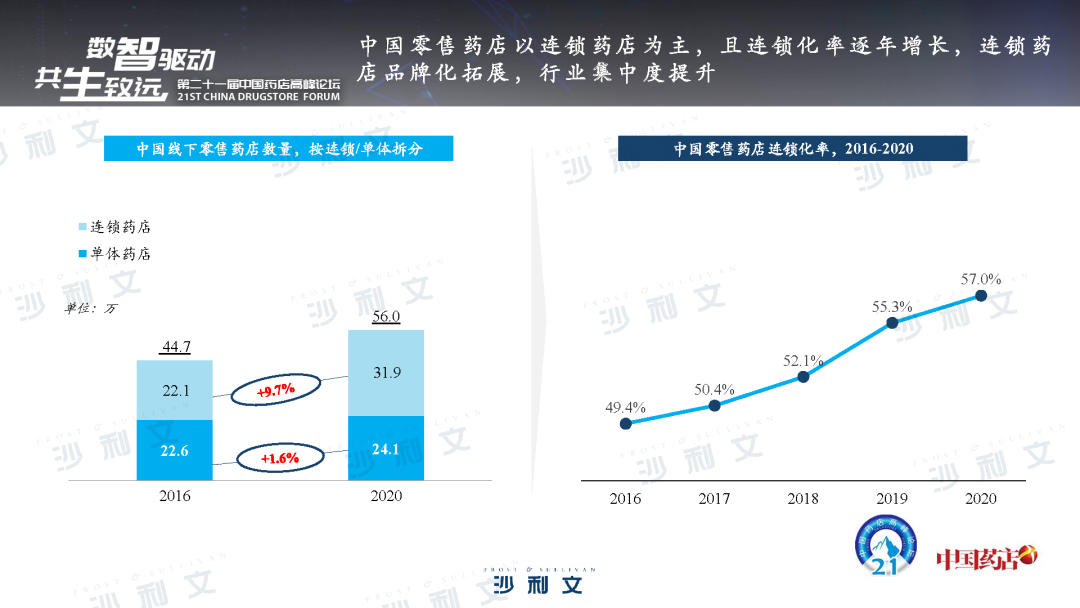
At the meeting, Mao Hua started with an overview of the pharmaceutical retail industry and analyzed the industrial chain of China's pharmaceutical industry. According to him, this industrial chain includes upstream pharmaceutical basics, midstream pharmaceutical research and development and manufacturing, and downstream pharmaceutical distribution, with retail pharmacies being at the sales end within the downstream pharmaceutical distribution. Drug retail encompasses three major terminals: public hospitals, retail pharmacies, and primary healthcare facilities, among which public hospitals and retail pharmacies are the main channels. Retail pharmacies are mainly chain pharmacies, and the chain rate is increasing year by year. The brand expansion of chain pharmacies continues, and the industry concentration is constantly rising.
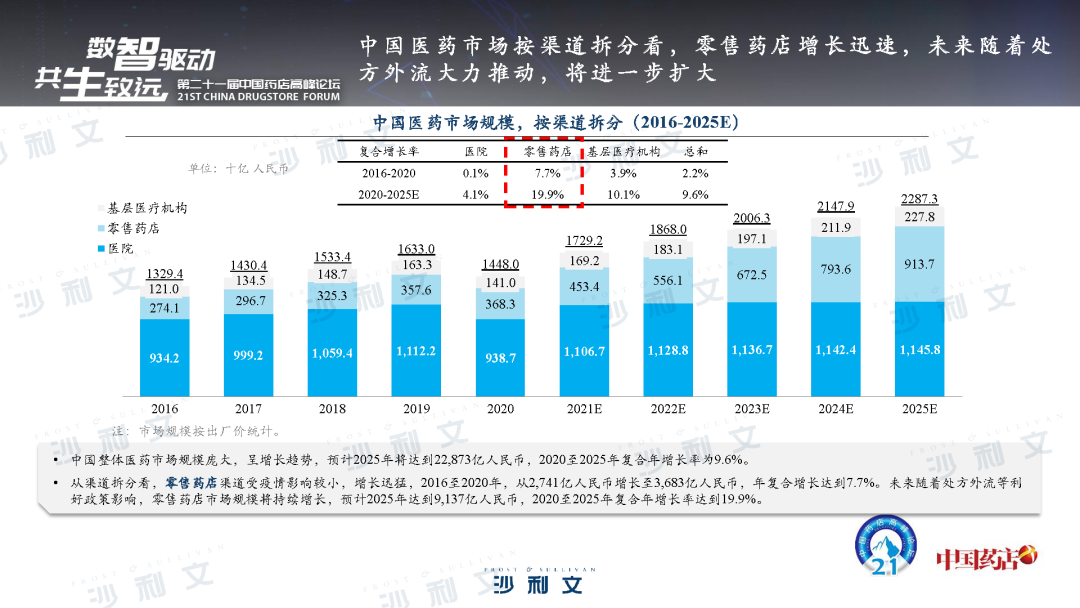
Since 2017, the state has continuously introduced policies to promote the outflow of prescriptions. The separation of medicine from healthcare services and the outflow of prescriptions will become a long-term trend. Retail pharmacies, as one of the terminals that undertake the outflow of prescriptions, have received significant benefits.Mao Hua said that the overall pharmaceutical market scale in China is huge and shows a growth trend, with an estimated value of 2,287.3 billion yuan by 2025, at a compound annual growth rate of 9.6% from 2020 to 2025.Breaking down by channel, retail pharmacies have seen rapid growth. In the future, driven by the significant outflow of prescriptions, it is expected to reach 913.7 billion yuan by 2025, with a compound annual growth rate of 19.9% from 2020 to 2025.
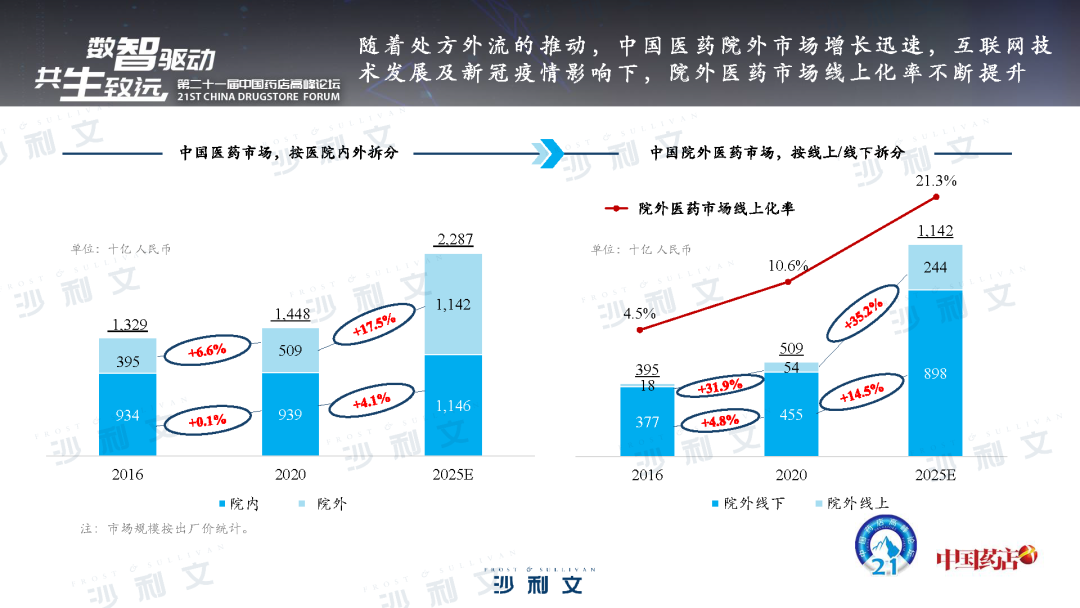
At the same time, driven by the outflow of prescriptions, China's off-campus medical market has grown rapidly. Under the rapid development of internet technology and the impact of the COVID-19 pandemic, the online rate of the off-campus medical market has been continuously increasing, with an expected growth to reach 244 billion RMB in 2025, at a compound annual growth rate of 21.3%.
Mao Hua believes that traditional retail pharmacies suffer from pain points such as a single business model, limited service coverage radius, and the inability to meet growing customer needs. New retail and digital upgrading are an inevitable trend.
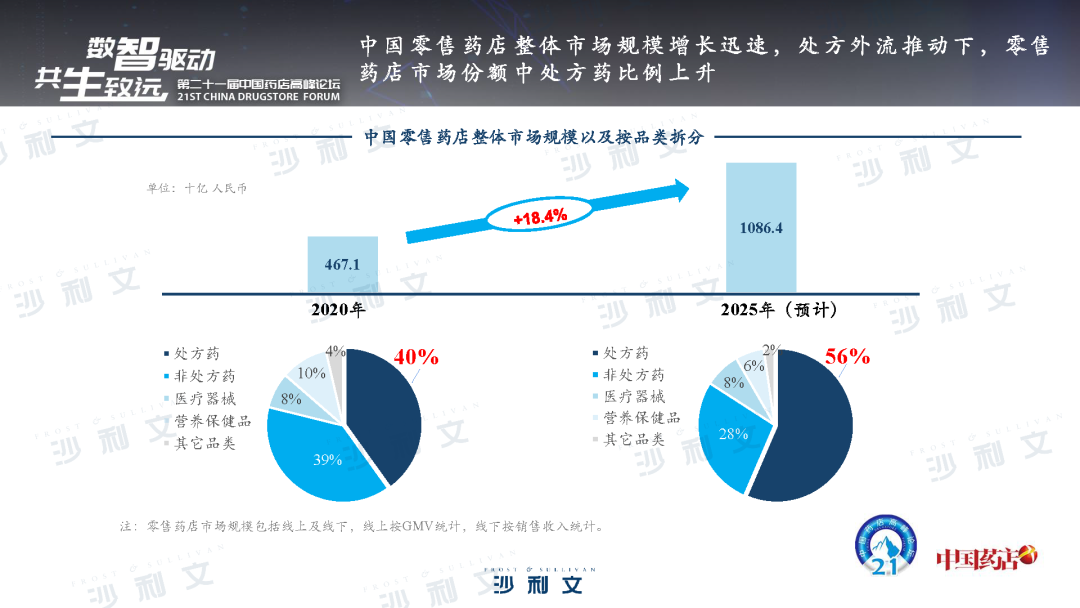
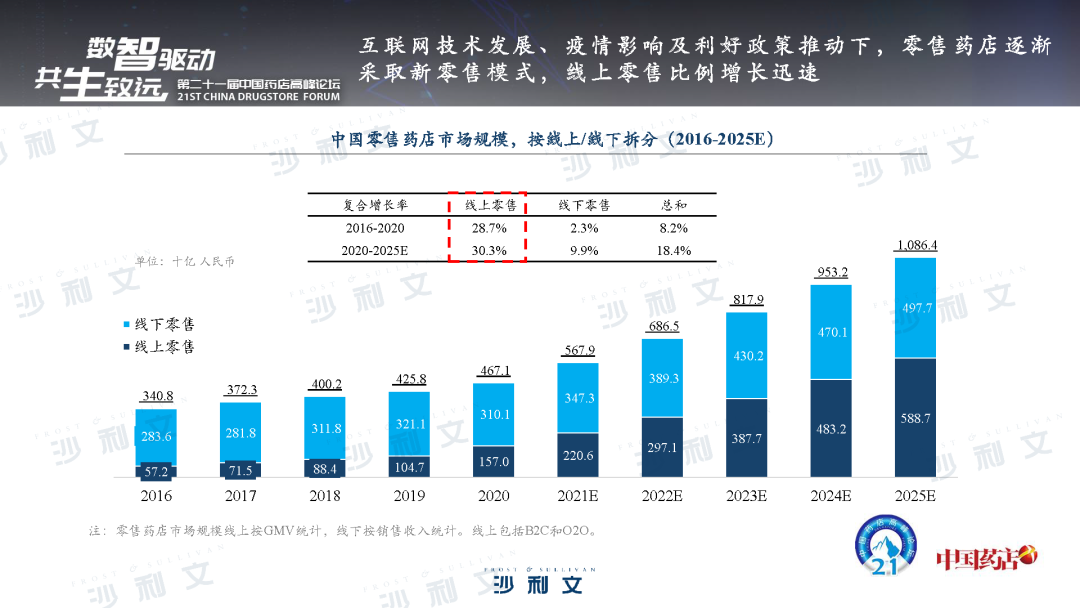
Data shows that the overall market scale of retail pharmacies in China has grown rapidly. Driven by the outflow of prescriptions, the proportion of prescription drugs in the retail pharmacy market share has risen. In 2020, prescription drugs accounted for about 40%, and it is expected that this figure will rise to 56% by 2025.Driven by the development of internet technology, the impact of the pandemic, and favorable policies, retail pharmacies are gradually adopting new retail models, with a rapid increase in online retail sales. From 2016 to 2020, the annual compound growth rate of online retail was about 28.7%, and it is expected to reach 30.3% from 2020 to 2025.
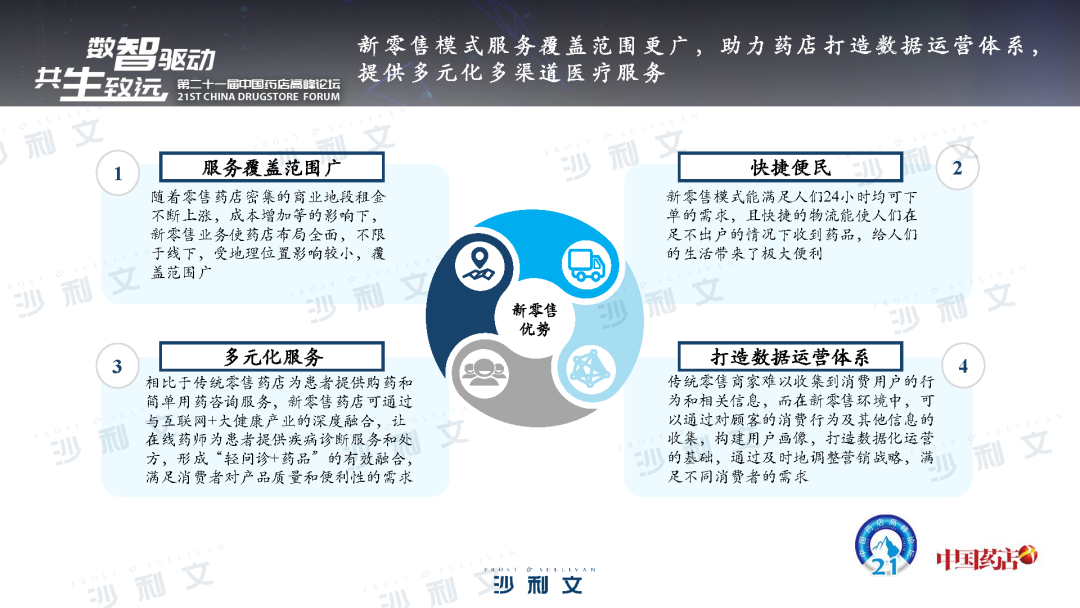
Subsequently, Mao Hua mentioned that the new retail model has advantages such as a wider service coverage and convenience, which can help pharmacies build data operation systems and provide diversified and multi-channel medical services for patients. Currently, traditional retail chain enterprises are deploying in the field of internet new retail. Compared to third-party platform merchants, they have advantages in both online and offline consumption scenarios. For example, Yifeng Pharmacy has adopted an O2O + B2C model, built its own Yifeng Health app, mini-programs, and WeChat mall, and established its official mall on third-party platforms. In 2020, its e-commerce revenue reached 680 million yuan.
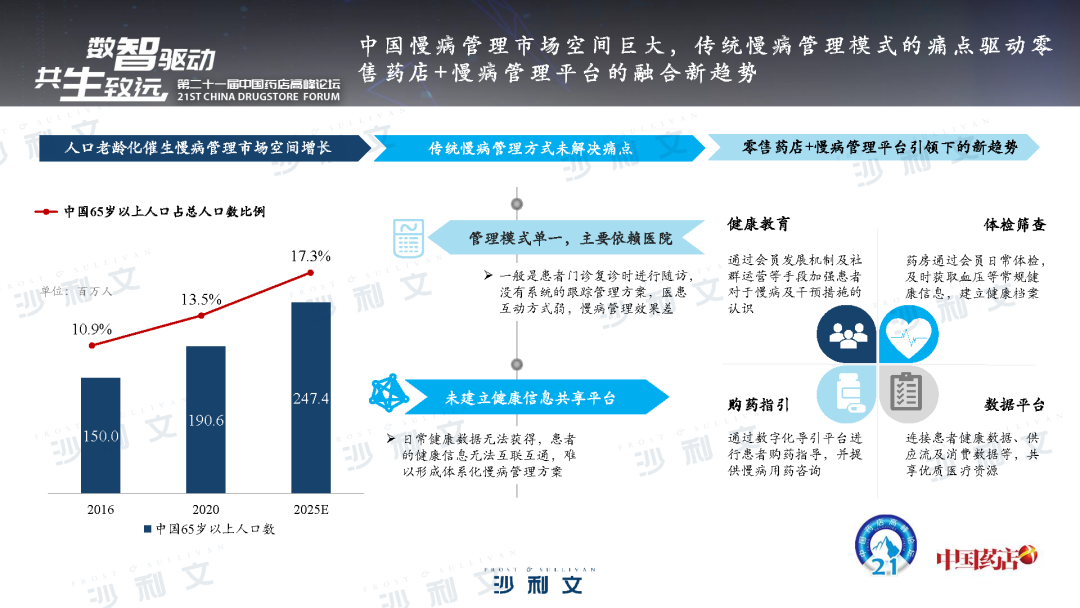
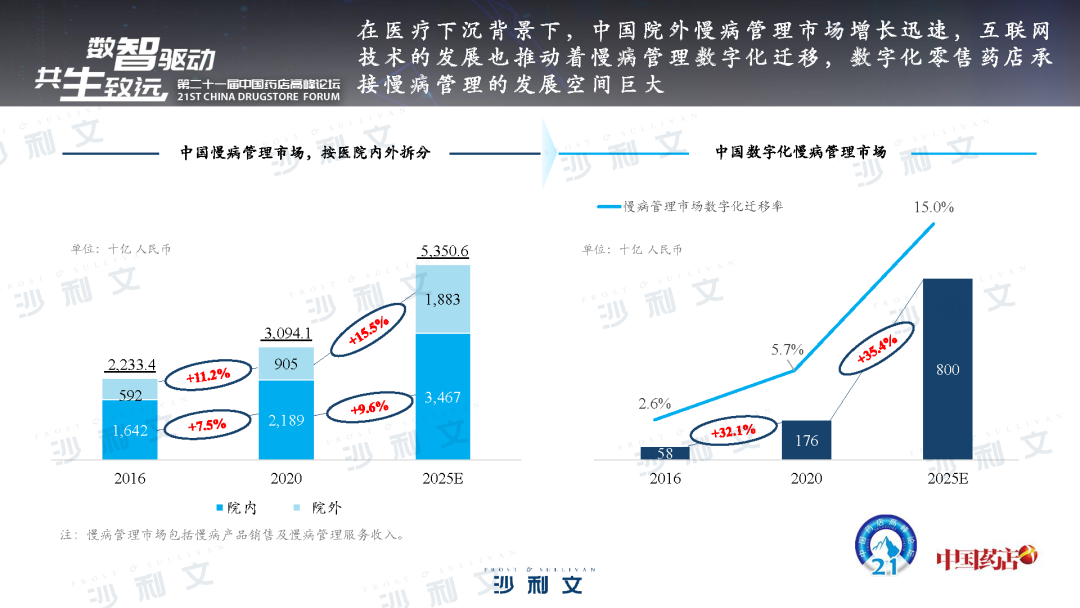
When discussing the development trend of digital pharmacies, he stated that there is enormous market potential for chronic disease management in China. Pain points such as single management models and the lack of a health information sharing platform are driving the integration of retail pharmacies with chronic disease management platforms. Additionally, against the backdrop of healthcare decentralization, the out-of-hospital chronic disease management market in China is growing rapidly. The development of internet technology is also promoting the digital migration of chronic disease management, leaving huge development space for digital retail pharmacies to undertake chronic disease management.
Finally, Mao Hua pointed out that in the era of 'Internet thinking redefining all traditional industries', and under the continuous impact and influence of the 'COVID-19' pandemic, retail pharmacies are continuously promoting chain branding development. They are driving digital upgrades through means such as industrial integration, model innovation, operational transformation, and diversified service innovations, accelerating the process of digital transformation and extending medical services.
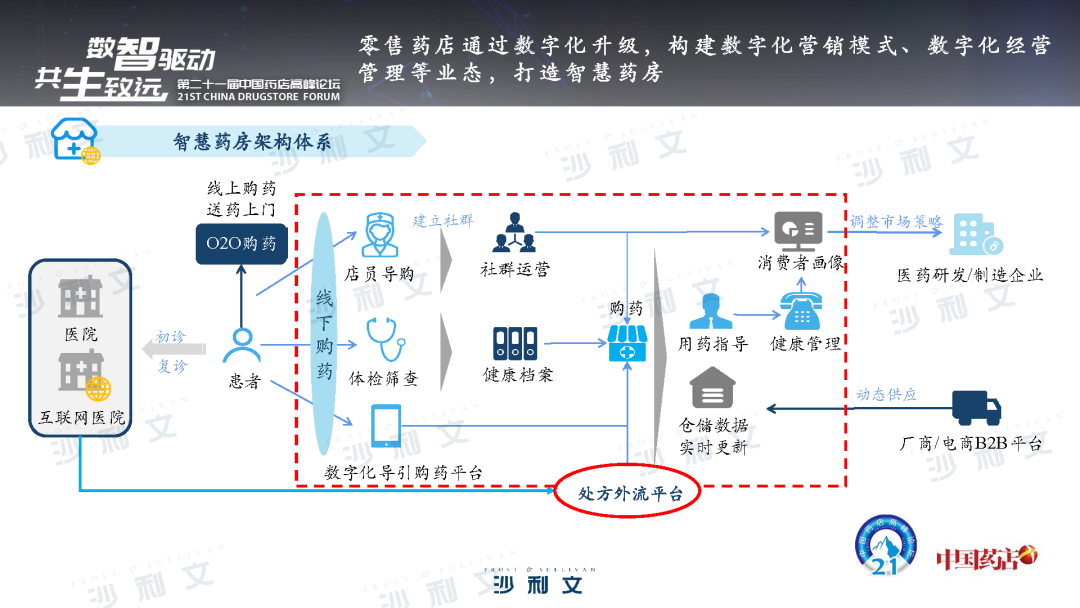
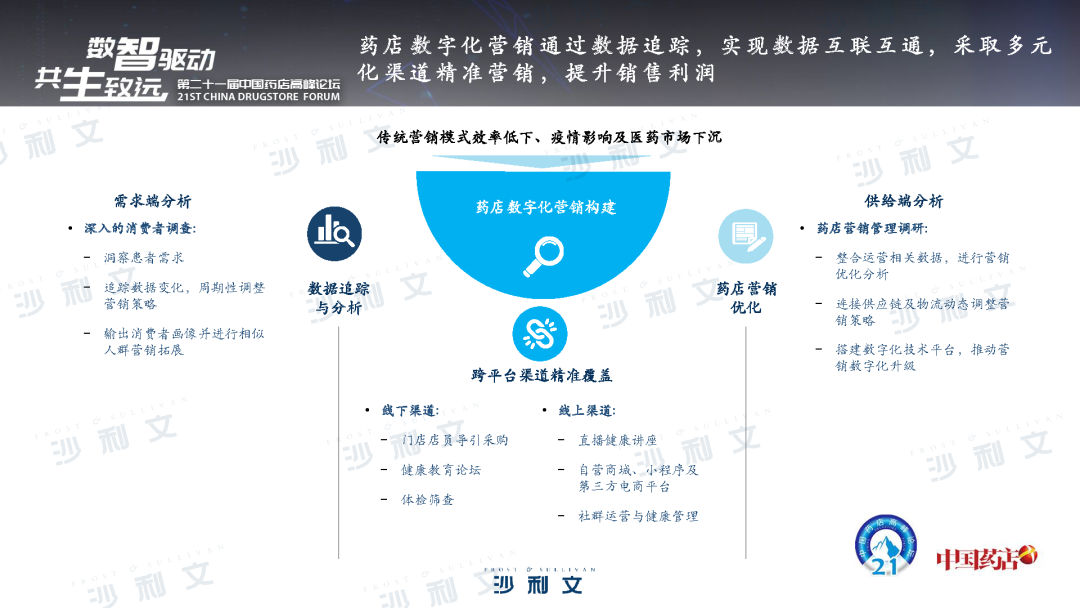
"Through digital upgrading, we can build digital marketing models, digital business operations, and other formats to create smart pharmacies. By tracking data, we achieve interconnectivity of data, adopt diversified channels for precise marketing, and ultimately increase sales profits," said Mao Hua.
It is reported that Frost & Sullivan, integrating 60 years of global consulting experience, has dedicated 23 years to serving the booming Chinese market with a global perspective. They help clients accelerate their business growth and achieve industry-leading benchmarks in terms of growth, innovation, and technology. Over the past six decades, the Frost & Sullivan healthcare team has provided financing financial advisory, IPO industry advisory, strategic consulting, management consulting, and other services for hundreds of outstanding domestic and international biopharmaceuticals, medical devices, healthcare services, and internet healthcare companies. In terms of the number of completed filing projects, the Frost & Sullivan healthcare team maintains an absolute leading position in Hong Kong's healthcare IPO market, continuously occupying more than 90% of the market share from 2018 to 2020.