AIIC2025 Liquor Industry Innovation & Investment Conference
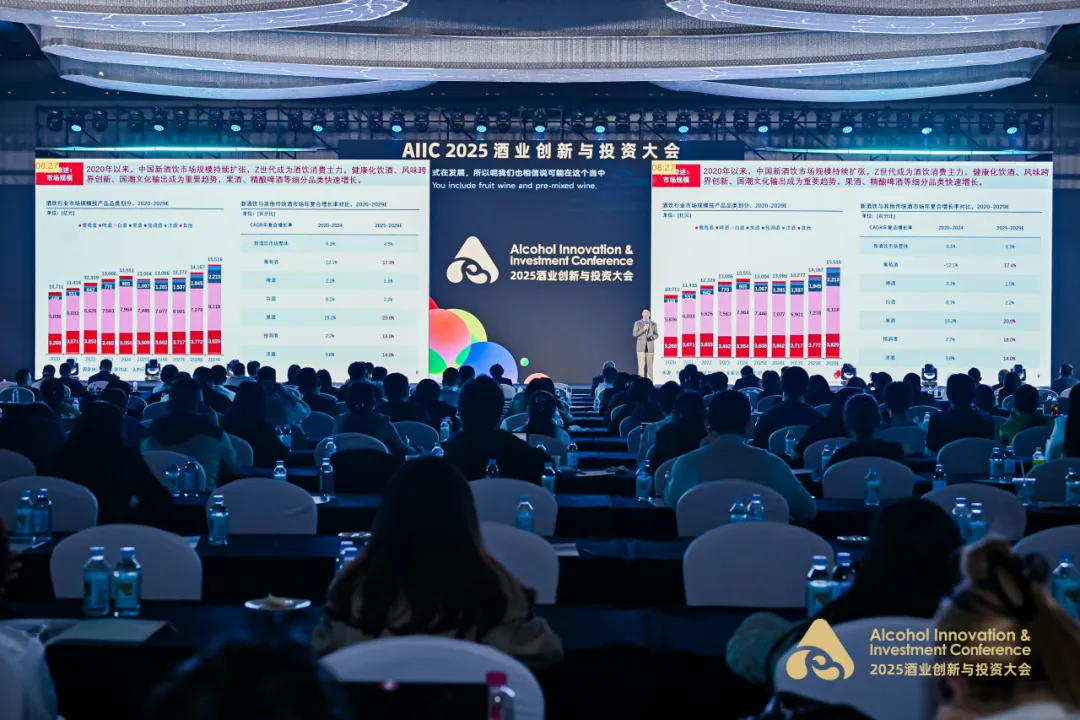
From November 18th to 20th, the AIIC2025 Liquor Industry Innovation & Investment Conference was held at the Xiamen International Convention Center Hotel, bringing together global leaders in the liquor industry, innovators, and investment experts to discuss cutting-edge industry trends and practical cases. With the theme of "New Growth for All Things," the conference focused on new policy interpretations, supply-side changes, and consumer iterations under the unprecedented changes of the past century. It broke new ground with authoritative content and annual cases, breaking the gravitational trap of involution and building a sustainable new industrial order.
Wang Chenhui, Partner-in-Chief and President of Frost & Sullivan (Frost & Sullivan, abbreviated as "Frost & Sullivan") in Greater China, co-founder and President of LeadLeo, was invited to attend and provided an in-depth analysis of "Insights into the New Trends in Chinese New Beverage Consumption in 2025" from a professional perspective.
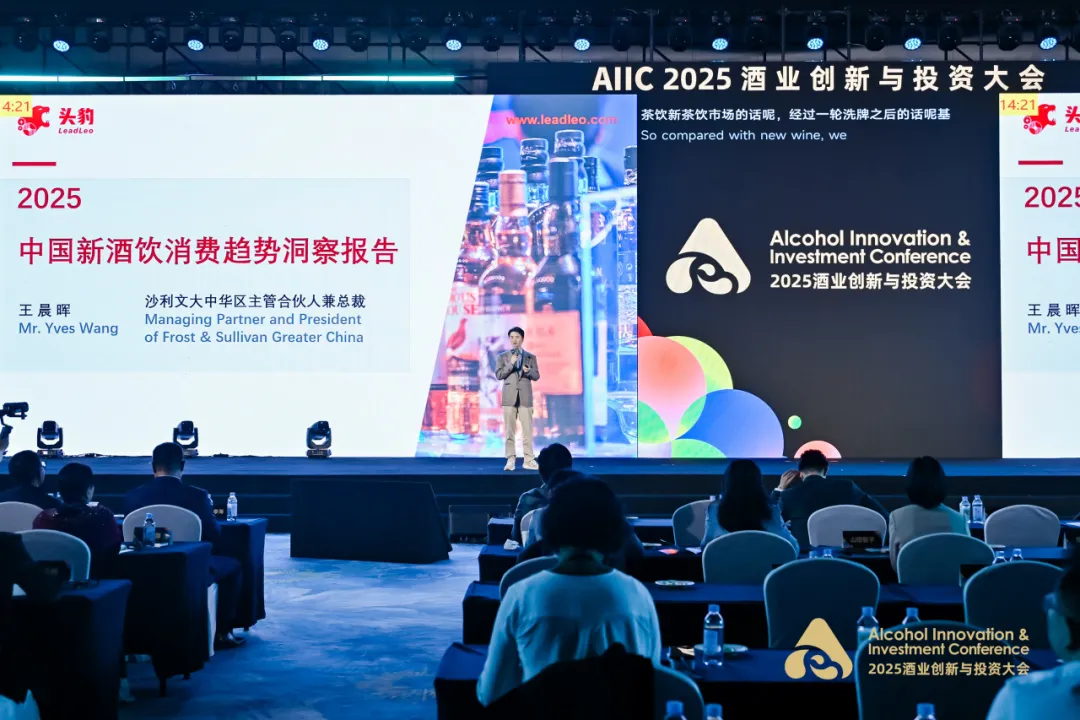
Wang Chenhui, Partner-in-Chief and President of Frost & Sullivan Greater China, co-founder and President of LeadLeo
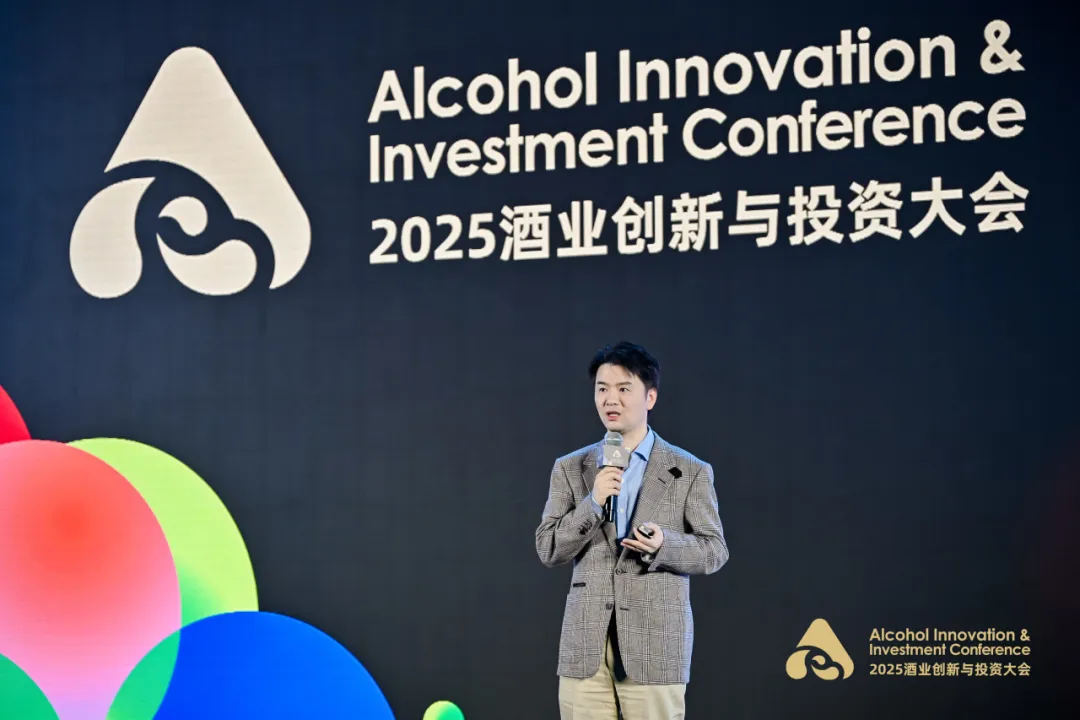
Wang Chenhui, Partner-in-Chief and President of Frost & Sullivan Greater China, co-founder and President of LeadLeo
In his keynote speech, based on the research results of the LeadLeo Research Institute, Wang Chenhui systematically interpreted the industry development stages, growth drivers, consumption trends, and brand opportunities, providing forward-looking insights for the new beverage industry. He pointed out that the new beverage industry is moving from "category expansion" to "in-depth operation," with the industry structure, consumption paths, and innovation models undergoing reshaping.
Wang Chenhui began with changes in growth logic. He stated that the past reliance on "internet celebrity momentum" and "light asset models" for growth is no longer effective, and the industry has entered a new stage centered on "supply chain capabilities, product research and development capabilities, and channel capabilities." Current industry competition has shifted from "short-cycle hits" to "long-term operational capabilities," with brand growth characterized by "longer time windows, stronger organizational capabilities, and more emphasis on supply-side construction." Since 2020, the market scale of new beverages in China has continued to expand, with the Z generation becoming the main consumer group. Healthy drinking, cross-border flavor innovation, and the export of national trend culture have become important trends, with sub-categories such as fruit wine and craft beer growing rapidly.
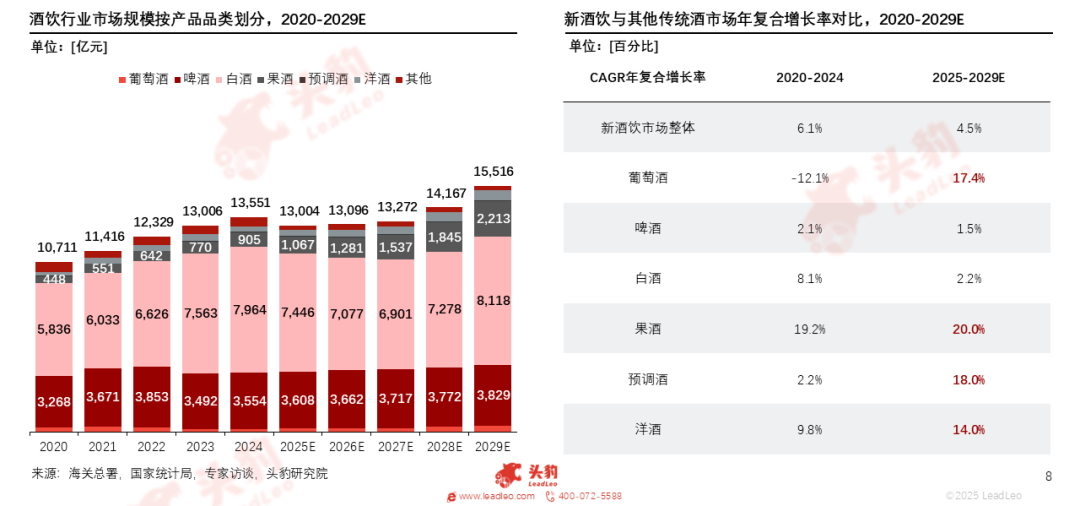
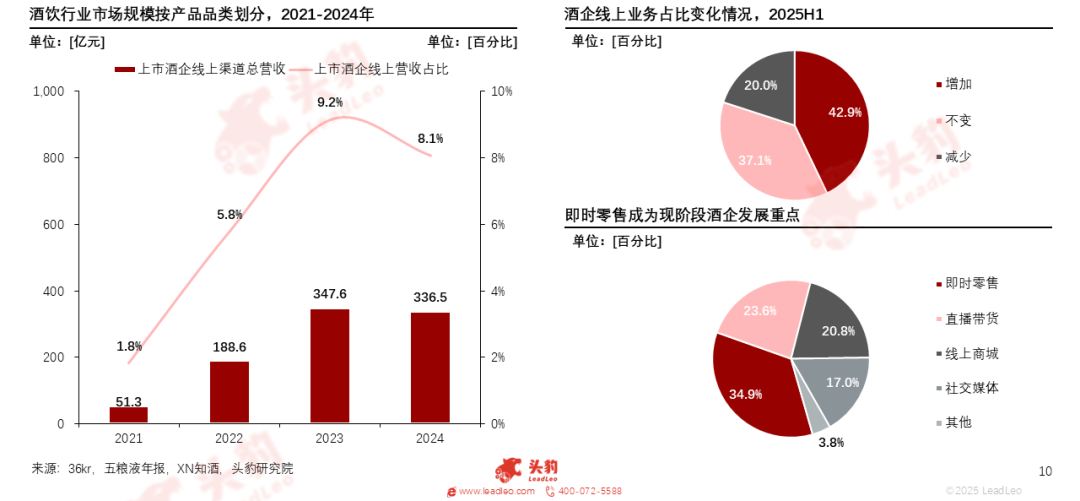
Regarding industry trends, Wang Chenhui highlighted "key challenges to industry transformation." He pointed out that new beverage companies still bear high costs in inventory management and logistics transportation, making it difficult to quickly respond to market demand. At the same time, instant retail has become a new growth engine, and the rapid improvement of online channels is driving industry restructuring. Online channels have become an important source for consumers to purchase beverages, with consumers showing a significant preference for "online purchases" in surveys, further blurring the boundaries between offline and online channels.
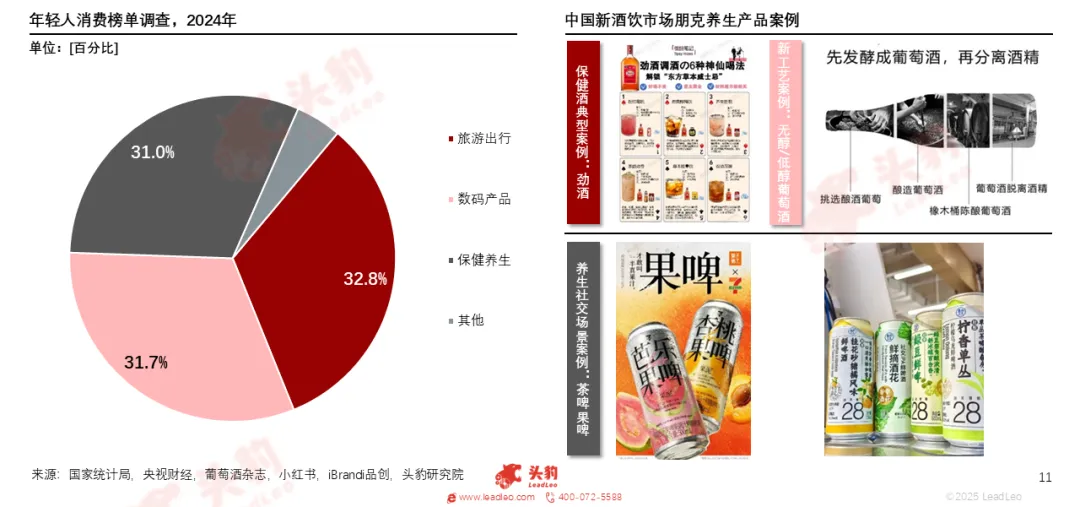
Moving on to industry-level trends, he pointed out that with changes in technology and consumption scenarios, beverage companies need to focus on "cross-border collaborations," "emotional value consumption," and "low-alcohol innovation." Among them, integrated innovations represented by "punk health" products are forming an important choice for young consumers. In terms of flavor, according to the research of the LeadLeo Research Institute, 75% of respondents prefer a "milk + wine" blend flavor, and 86.4% prefer a "tea + wine" blend flavor. These data reflect the growing demand for soft-tasting and more pleasant swallowing experiences among young users.
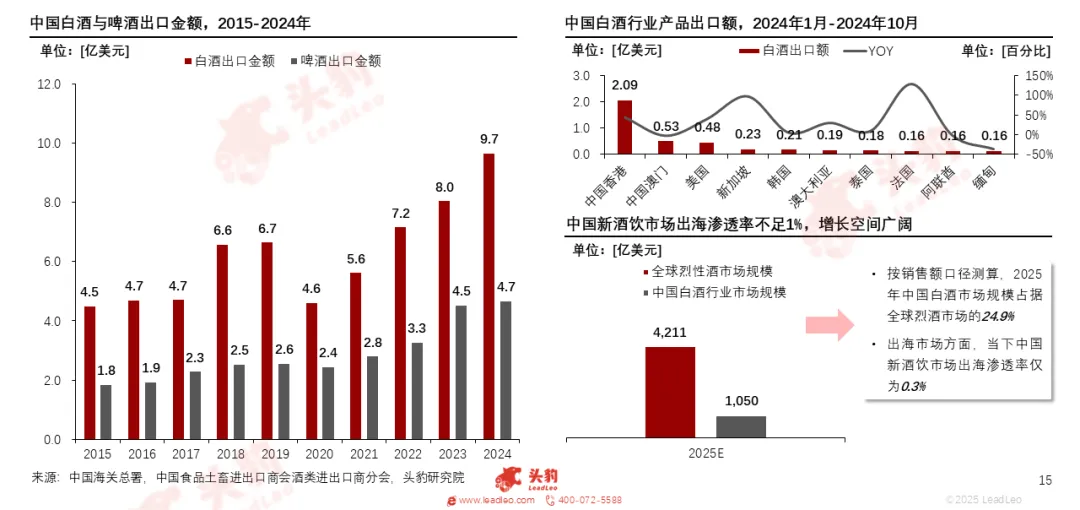
When discussing the external environment for industry development, he emphasized the "going global trend." According to the data of the LeadLeo Research Institute, China occupies an important share of the global spirits market, with Chinese liquor accounting for 24.9% of the global spirits market in terms of sales (2025E). However, in comparison, the global penetration rate of new beverage categories is only 0.3%, still in an extremely early stage. He stated that in the future, Chinese beverage brands have the potential to enter international markets in terms of supply chain stability, product standardization capabilities, and brand cultural expression.
In his consumer insights, Wang Chenhui pointed out that the low-alcohol consumption base in densely populated areas along the eastern coast is good for driving future growth in the new beverage market; consumers at all levels of cities prefer new beverages with flavors and taste, with first-tier cities valuing cost-effectiveness more; in terms of marketing methods, third-tier cities adapt to the "intimate economy" model. He further pointed out that Chinese new beverage users are showing an obvious structural stratification. Among them, "freedom drinkers" have an average monthly disposable income of 9,393.9 yuan, with a monthly alcohol expenditure of about 527 yuan, where emotional value and self-regulation become their main drinking motivations; "urban self-indulgent people" are more sensitive to "new flavors, light burdens, and visual design"; "time-honored drinkers" pay more attention to comfort and stable experiences. These differentiated profiles are determining the future product layout and communication direction of brands.

At the end of his speech, Wang Chenhui summarized that the Chinese new beverage industry is moving from "rapid development" to a growth stage of "stable quality." For companies to truly grasp the future, they need to find new balance points between product innovation, supply chain restructuring, consumer insights, and channel deepening. He believes that the industry will welcome new growth opportunities during the process of structural reshaping.